
What Is Conscious Sedation At The Dentist?
Conscious sedation keeps you relaxed and responsive during dental care—not fully unconscious. Learn what it feels like, how it’s given, and recovery.

Reviewed by Dr. Sean Myran, DMDDoctor of Dental Medicine, University of Pennsylvania
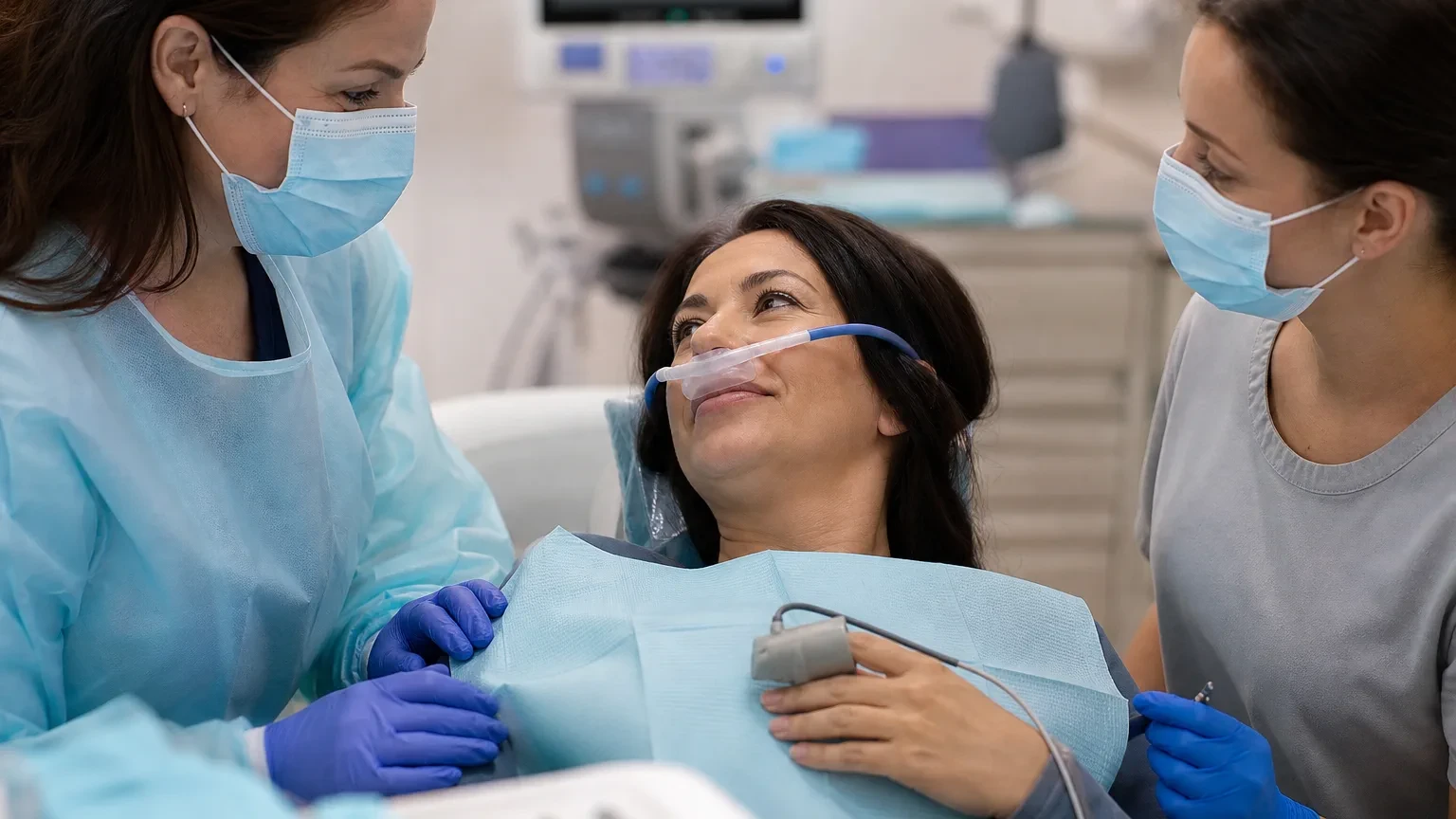
Conscious sedation at the dentist is a drug-assisted state in which you feel deeply relaxed or drowsy but can still respond to verbal cues—unlike general anesthesia, where you are unconscious. Dentists may use oral medicines, IV medicines, or combinations with nitrous oxide to reach that range, always with local anesthetic for the teeth themselves. MouthHealthy describes sedatives that help you relax and notes that deeper sleep-like states are reserved for more complex needs. The short FAQ cluster below unpacks what patients ask most.
Terms vary by office and by state board language—“moderate sedation” is a related clinical label. Ask what you will remember, whether you will sleep through noise, and how monitoring works. Cross-read sedation types and IV safety basics.
Will I be awake?
You should remain responsive enough to answer or follow simple instructions, even if you drift and remember little afterward. If the plan is true general anesthesia, that is a different depth—clarify the words on your consent form.
How is conscious sedation given?
Common routes include an oral pill before the visit, IV medicine during the visit, or inhaled nitrous as a lighter adjunct. AAOMS notes that oral and maxillofacial surgeons train across local anesthesia, sedation forms, and general anesthesia for appropriate office care. Route choice depends on anxiety, procedure length, and medical screening.
Is it the same as “sleep dentistry” ads?
Marketing language is sloppy. Some ads say “sleep” when they mean conscious or moderate sedation with amnesia; others mean general anesthesia. Insist on clinical terms: minimal, moderate, deep, or general—and who is permitted to provide that level.
What will recovery feel like?
Drowsiness, slower thinking, and a fuzzy memory of the appointment are common after oral or IV conscious sedation. Plan an escort and a quiet afternoon. See how long effects may last for timing patterns.
Conscious sedation still requires fasting rules when your office orders them, full medication disclosure, and monitoring of oxygen and vital signs appropriate to the depth. It is not a loophole around medical screening. People with significant systemic disease may need a different setting even for “conscious” plans.
Ask whether you may eat beforehand, which medicines to skip, and how long someone should stay with you after. Bring headphones only if the office allows; many prefer you can still hear instructions. If needles trigger anxiety, ask whether oral sedation first can make IV placement easier when IV is planned.
 Define the depth before the IV starts.
Words on the consent form matter
Write down the exact sedation level promised and the provider responsible. If two staff members use different words—“you’ll be out” versus “you’ll be sleepy but responsive”—pause for clarification before you pay a deposit. Conscious sedation’s value is comfort with retained protective reflexes for appropriate cases; overselling it as guaranteed oblivion creates unsafe expectations. Your questions are part of informed consent, not a nuisance.
When Conscious Sedation May Not Be Enough
- Very long or highly invasive surgeries needing deeper control.
- Patients who cannot cooperate even when moderately sedated.
- Medical or airway risks that push care to a hospital team.
- Cases better split into shorter visits with lighter support such as nitrous oxide alone.
 Responsive care still needs monitors.
Relaxed does not mean unmonitored
Even when you can respond, trained eyes watch oxygen and responsiveness. Ask who monitors you and what emergency equipment is in the room. For a practice that explains conscious sedation without hype, use Find a Dentist and request a conscious sedation consult when you book. Understanding the category helps you choose comfort that still respects safety.
Conscious sedation calms you while keeping you arousable for dental care. Use precise language, follow screening rules, and treat marketing “sleep” claims as questions to decode—not answers.
Related articles
Keep exploring related topics from Dental Country.
What Types Of Dental Sedation Are There?
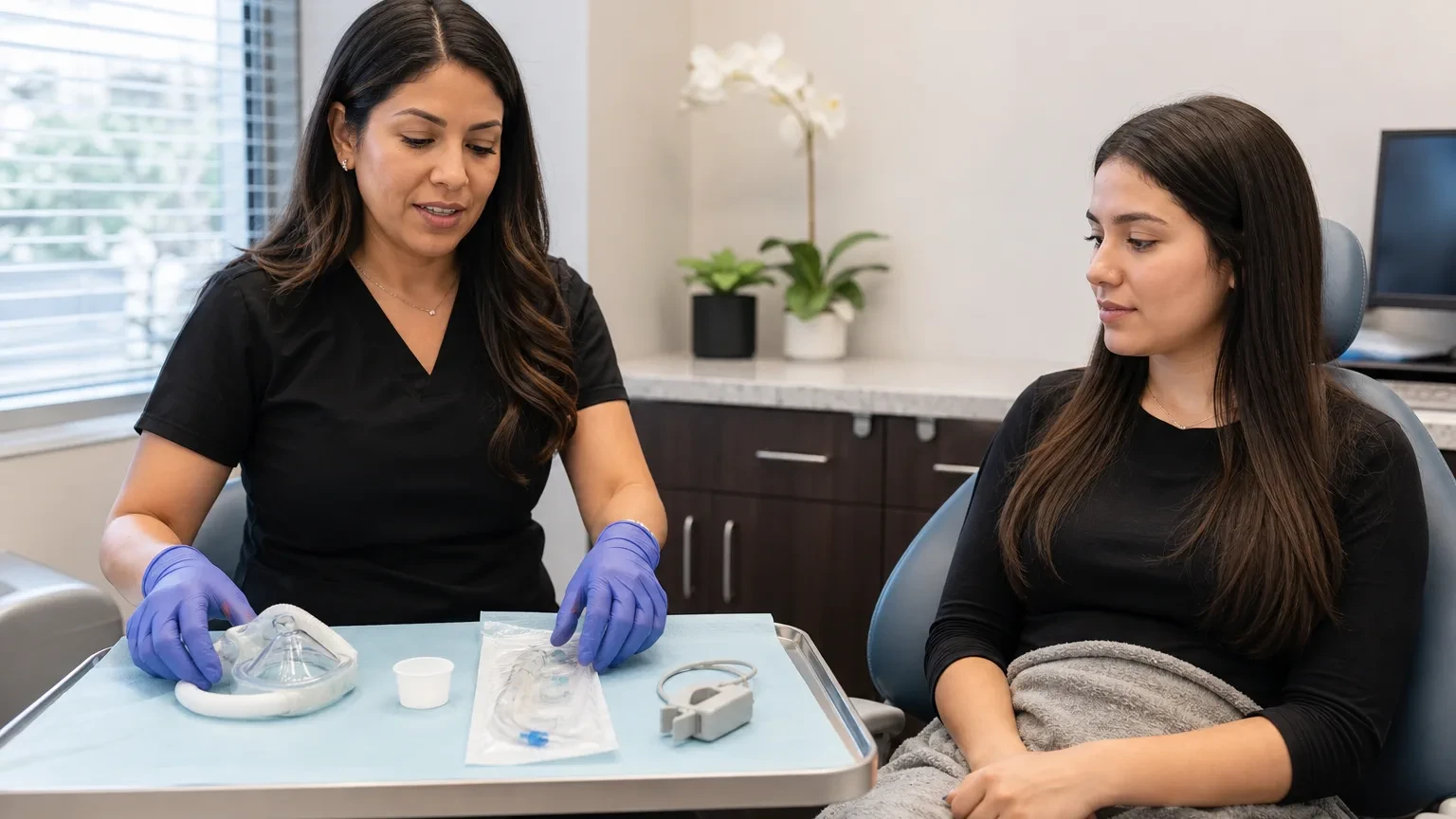
Dentists match sedation to the procedure and your health—from light nitrous oxide to deeper IV or general anesthesia—so “sedation” is a spectrum, not one drug.
Read article
Is IV Sedation Safe For Dental Work?
IV sedation is often used safely for dental and oral surgery when patients are screened, monitored, and matched to an appropriately trained team—but it is not risk-free for every health profile.
Read article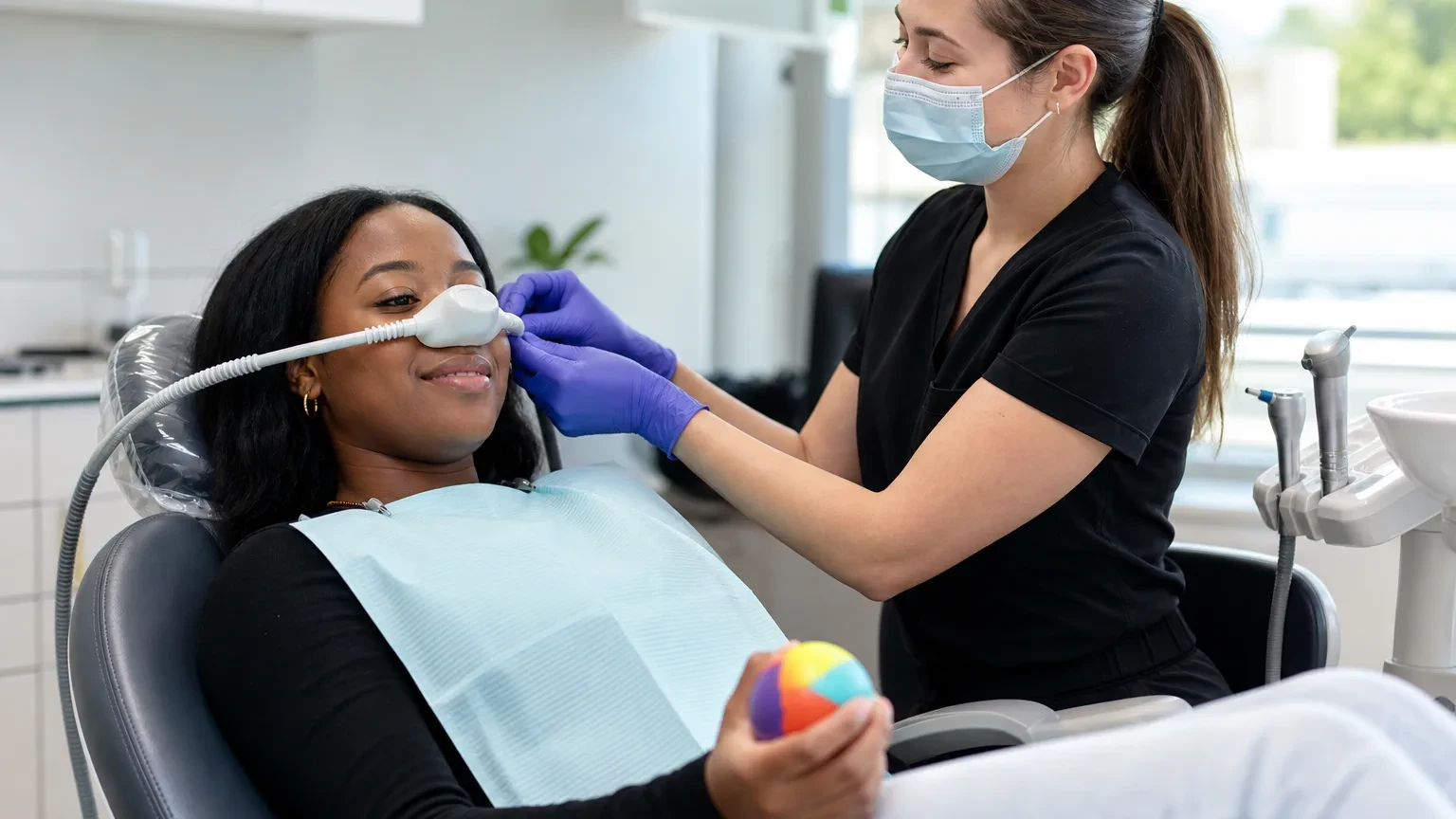
What Is Nitrous Oxide At The Dentist?
Nitrous oxide at the dentist is a mild inhaled sedative blended with oxygen that eases anxiety while you remain awake and able to respond—effects that typically fade soon after the mask comes off.
Read article
Can You Drive After Dental Sedation?
Plan on not driving after oral or IV dental sedation—judgment and reflexes can stay impaired even if you feel “fine”—while nitrous-only visits sometimes allow driving once you are fully clear per office rules.
Read article