
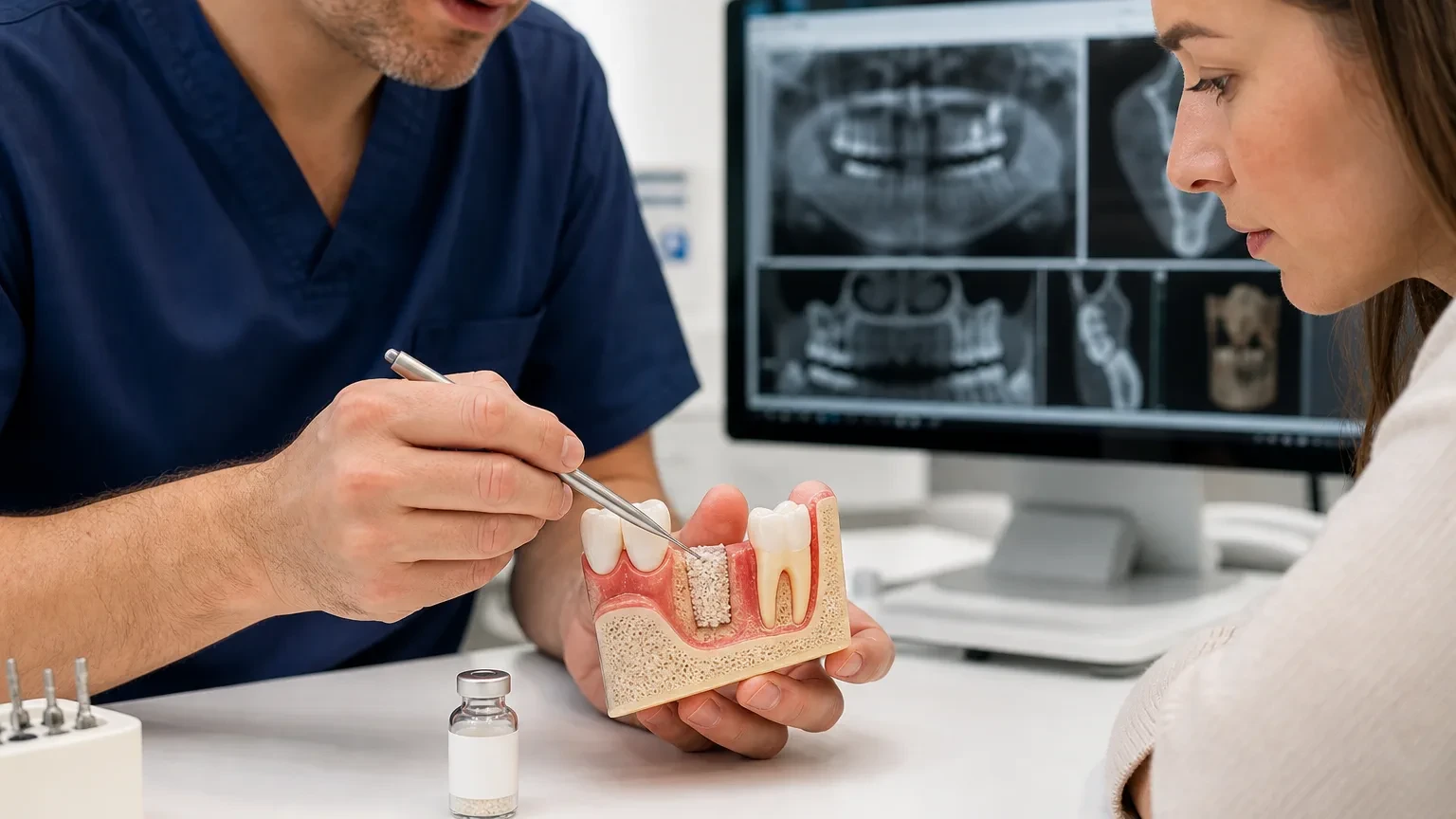
What Is A Dental Bone Graft?
A dental bone graft adds or preserves jawbone for implants or stability. Learn graft types, healing timelines, costs to expect, and questions to ask.

Reviewed by Dr. Sean Myran, DMDDoctor of Dental Medicine, University of Pennsylvania
A dental bone graft is a procedure that places bone, bone-like material, or a combination into the jaw to rebuild volume or preserve the socket after tooth loss. Clinicians use grafts so future implants, dentures, or neighboring teeth have better support—or to protect form after extraction. MyOMS describes bone grafting as a way to provide good quantity and quality of bone for proper form and function, with material choices guided by the surgeon. It is scaffolding for your biology, not an instant “new jaw.”
MyOMS notes that after extraction the supporting jawbone can resorb, and preservation techniques help maintain structure for later treatment. Whether you need a graft depends on anatomy and goals—not every extraction site is grafted. Compare the surgical context in what oral surgery covers and comfort planning in sedation options.
Cost And Timeline Breakdown
- Consult and imaging: exam, radiographs or CBCT, and a written plan (often a separate fee).
- Surgery day: graft placement, possible membrane, sutures; anesthesia fees vary by nitrous, IV, or local-only.
- Weeks 1–2: soft-tissue comfort improves; protect the site from disturbance.
- Months of maturation: graft integration often takes several months before implant placement—your surgeon sets the clock.
- Patient share: materials, membranes, and sedation may be itemized; insurance coverage varies widely.
Graft materials may come from your own bone, a donor source, an animal-derived product, or a synthetic scaffold. Membranes sometimes cover the graft to guide healing. Sinus lifts are a specialized upper-jaw form of grafting when implant height is lacking. None of these details should be vague on your estimate.
Smoking, uncontrolled diabetes, and poor plaque control can undermine graft success. Ask what success rate your clinician quotes for your specific site and what happens if volume is still short later. Second-stage grafting is sometimes needed; sticker shock hurts less when it is explained early.
Recovery pain is often manageable with prescribed or recommended medicines, but swelling and diet limits are real for several days. Plan soft foods and time off proportional to whether the graft is a small socket preservation or a larger ridge build.
Healing is quiet work under the gums. You may feel fine socially while the graft is still immature for an implant load—do not confuse comfort with readiness for the next surgery. Keep follow-up visits even if the site looks closed; radiographs and probing decisions belong to your clinician’s timeline, not to how quickly the stitches vanished.
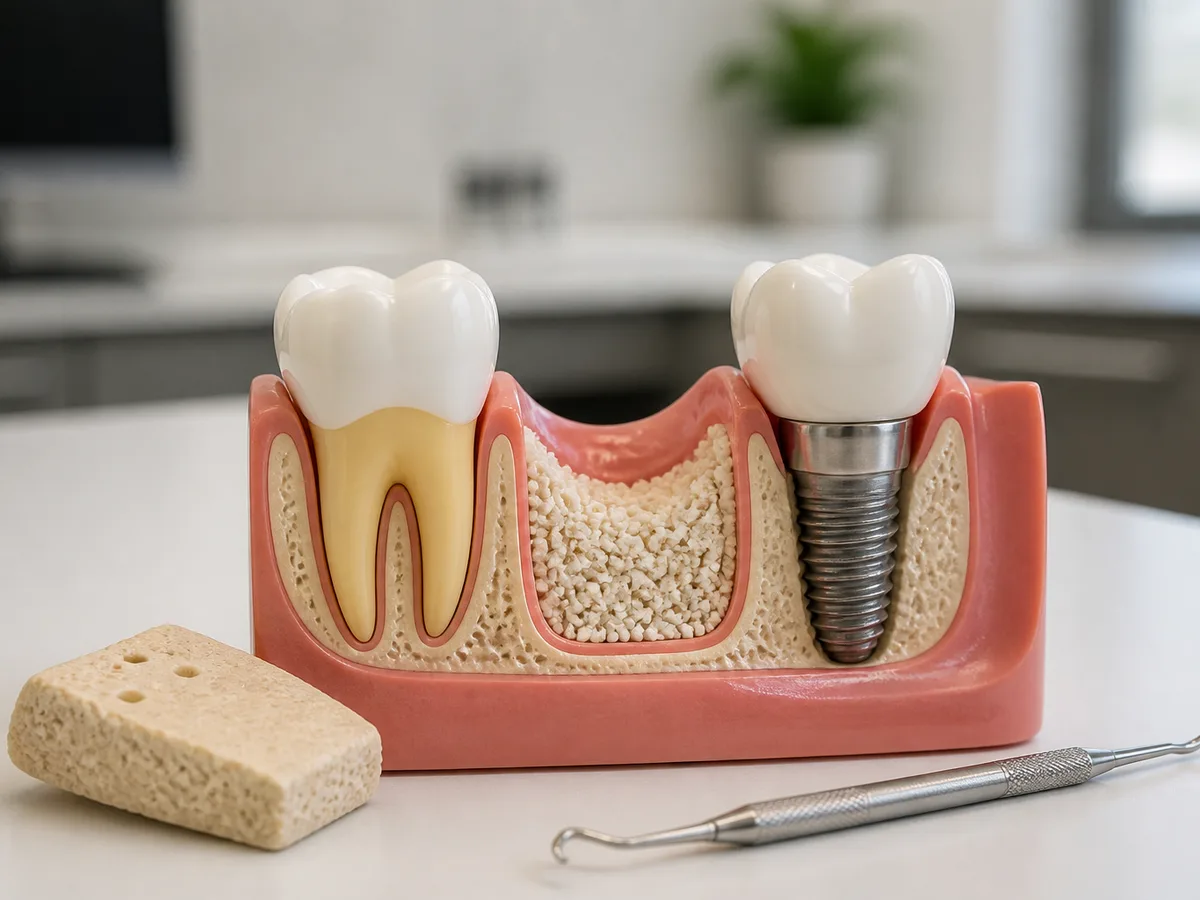 Itemized plans prevent surprise bills.
Materials and anesthesia change the total
Ask for a line-item estimate: surgeon fee, graft material, membrane, sedation, and follow-up visits. Clarify whether implant surgery is a separate future bill. If a quote seems unusually low, ask which materials are included and whether imaging review was thorough. High quotes deserve the same scrutiny—complexity and hospital settings cost more for reasons you should hear explained. Put approvals in writing before the day of surgery.
Questions To Ask Your Dentist Or Surgeon
- Why do I need a graft now—preservation, implant staging, or defect repair?
- Which material and membrane, and why that choice for my site?
- How long until an implant or final tooth is realistic?
- What anesthesia is recommended, and how do I prepare—see surgery preparation?
- What signs of trouble should I call about after grafting?
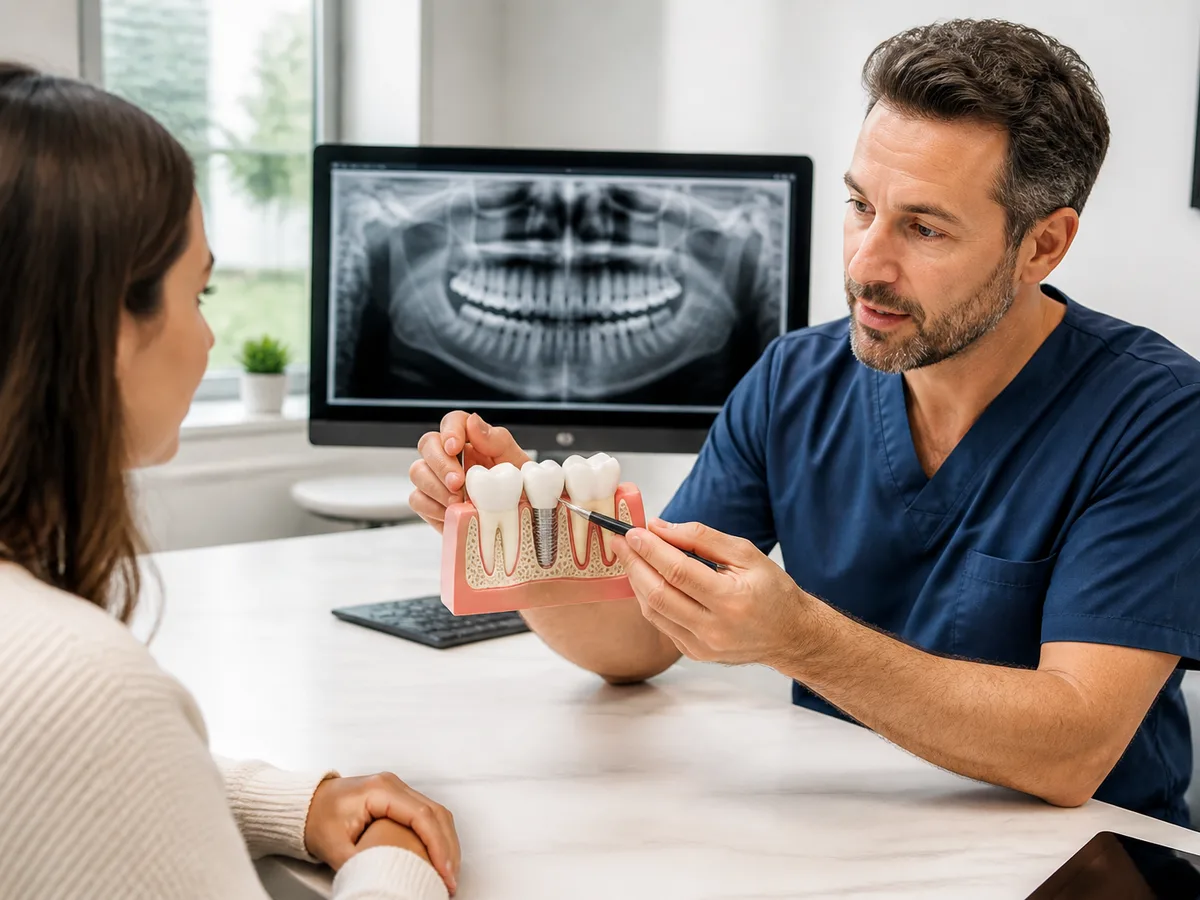 Goals first, graft second.
Timeline honesty matters as much as the graft
Leave knowing whether the graft is optional, recommended, or required for your goal tooth. If you are unsure about implants long-term, say so—preservation still may help denture fit, but priorities change. For a surgeon who explains grafting without rushing, use Find a Dentist and mention bone graft or implant staging when you schedule. A clear timeline turns a technical procedure into a plan you can live with.
A dental bone graft rebuilds or preserves jawbone so later teeth or implants have a foundation. Map cost and healing months early, ask precise questions, and treat maturation time as part of the prescription.
Related articles
Keep exploring related topics from Dental Country.
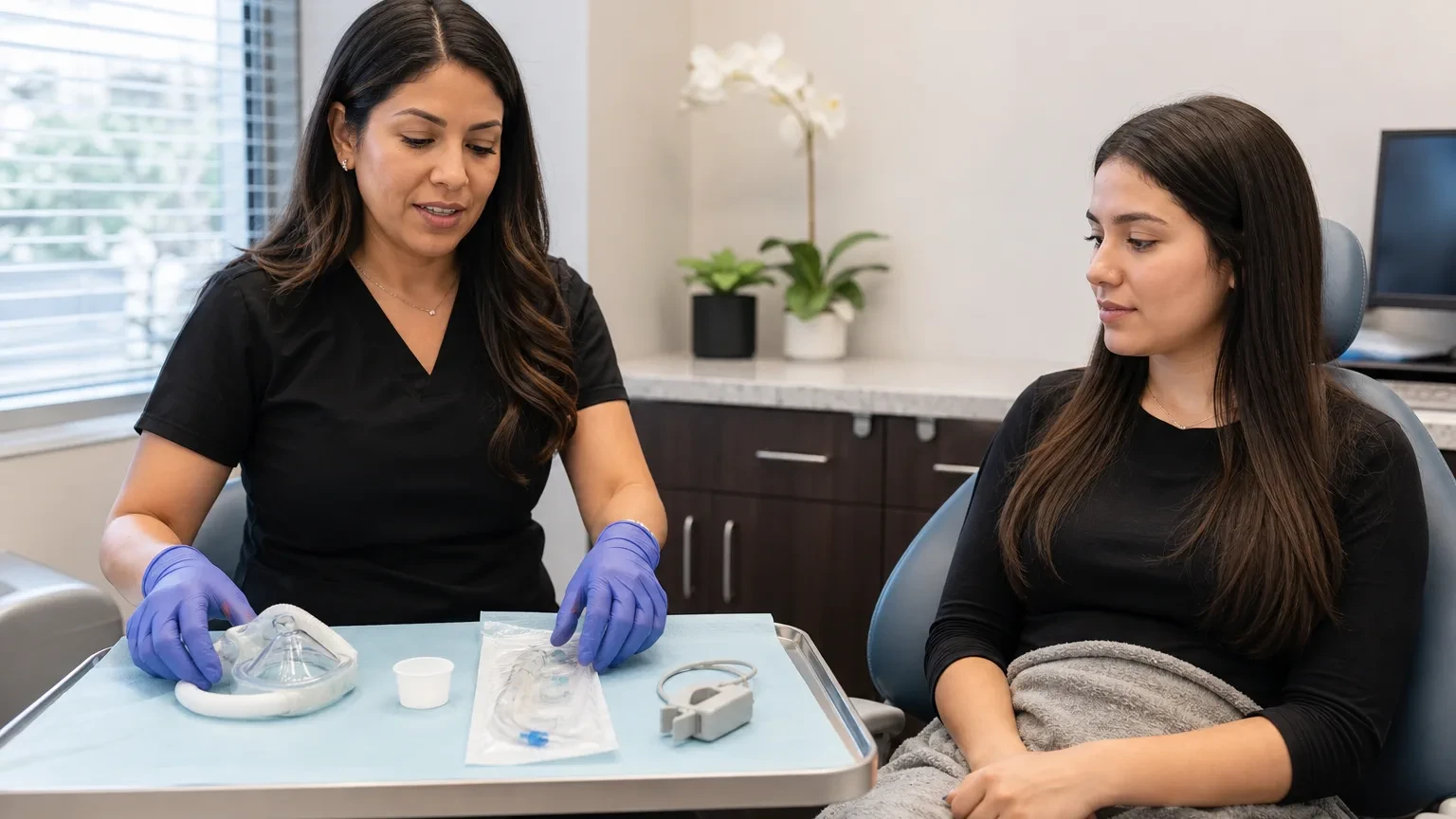
What Types Of Dental Sedation Are There?
Dentists match sedation to the procedure and your health—from light nitrous oxide to deeper IV or general anesthesia—so “sedation” is a spectrum, not one drug.
Read article
Is IV Sedation Safe For Dental Work?
IV sedation is often used safely for dental and oral surgery when patients are screened, monitored, and matched to an appropriately trained team—but it is not risk-free for every health profile.
Read article
What Is Nitrous Oxide At The Dentist?
Nitrous oxide at the dentist is a mild inhaled sedative blended with oxygen that eases anxiety while you remain awake and able to respond—effects that typically fade soon after the mask comes off.
Read article
Can You Drive After Dental Sedation?
Plan on not driving after oral or IV dental sedation—judgment and reflexes can stay impaired even if you feel “fine”—while nitrous-only visits sometimes allow driving once you are fully clear per office rules.
Read article