
What Is The Difference Between TMJ And TMD?
TMJ names the jaw joint; TMD covers disorders of that joint and chewing muscles. Learn the wording difference and why it matters for your care plan.

Reviewed by Dr. Sean Myran, DMDDoctor of Dental Medicine, University of Pennsylvania
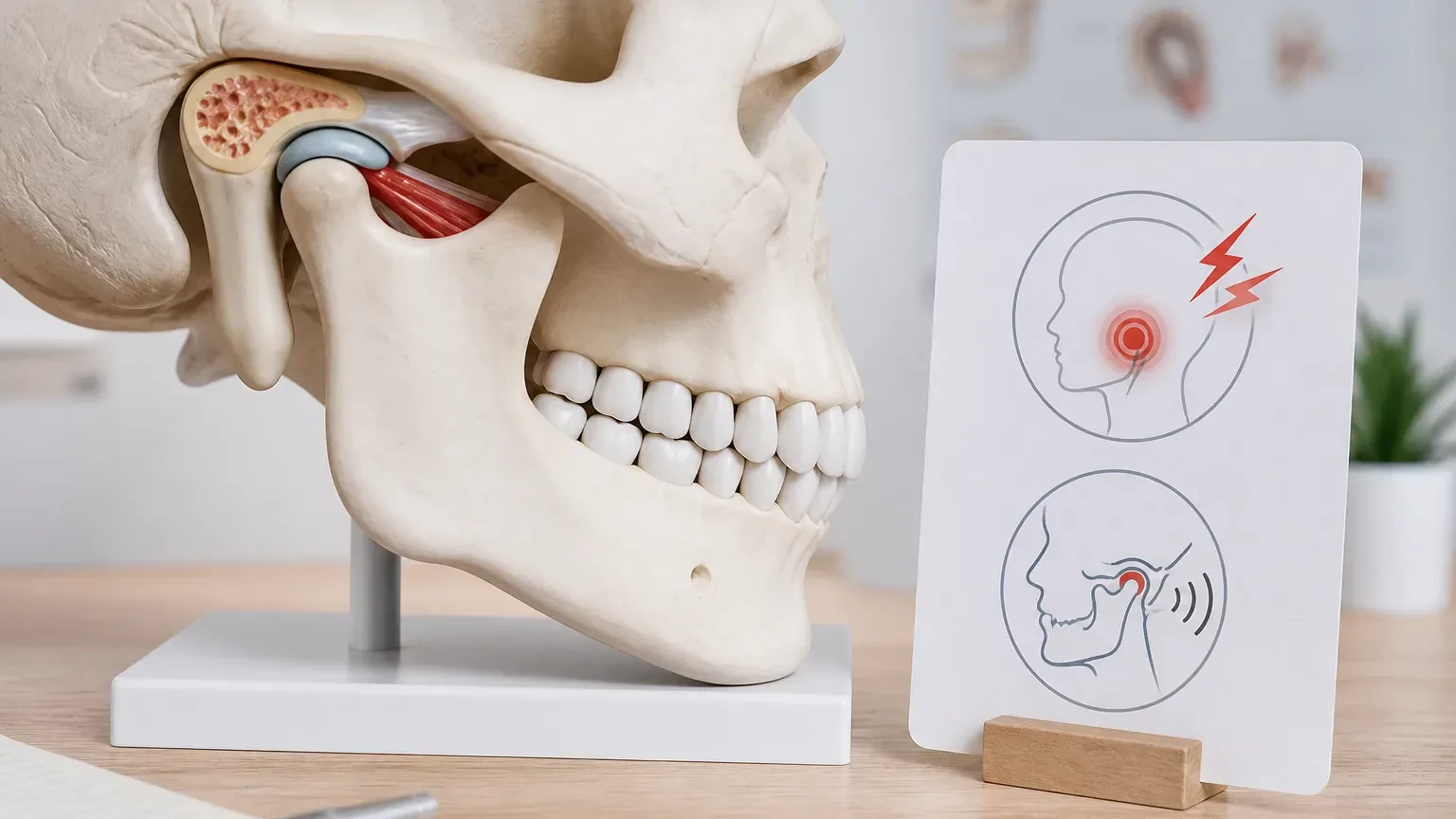
TMJ stands for temporomandibular joint—the hinge-and-slide joints that connect your lower jaw to your skull. TMD stands for temporomandibular disorder (often written as TMDs in plural): the group of conditions that cause pain and dysfunction in those joints and the chewing muscles. NIDCR explains that “TMDs” refers to the disorders, while “TMJ” refers only to the temporomandibular joint itself. Everyday speech often says “I have TMJ” when someone means a TMD; clinicians try to keep the terms clearer.
Why the wording matters: if TMJ only means the anatomical joint, then not every ear-side ache is automatically “a bad TMJ,” and not every treatment should aim at surgically altering that joint. Understanding which symptoms map to muscle problems versus joint problems changes the first therapies you try.
TMJ Versus TMD At A Glance
- TMJ: the joint structures (bone, disc, ligaments) on each side of the jaw.
- TMD / TMDs: disorders involving the joints, chewing muscles, and related pain patterns such as headaches tied to jaw function.
- Common casual phrase: “TMJ” used as shorthand for pain—understandable, but imprecise.
- Care implication: treatment targets a diagnosis within TMD, not the mere existence of a TMJ (everyone has two).
MedlinePlus describes temporomandibular disorders as conditions that affect the TMJs and can cause pain, stiffness, and trouble chewing. Mayo Clinic notes that TMJ disorders are a type of temporomandibular disorder (TMD). Sharing the same vocabulary with your dentist reduces crossed wires about goals.
You still need practical next steps after the vocabulary lesson. If pain and dysfunction are present, you are dealing with a TMD picture that deserves evaluation—whether or not friends call it “TMJ.” Explore what can cause the pain and how treatment is usually staged with that clearer framing, rather than shopping for a product aimed at “fixing TMJ” as if the joint itself were a disease.
Online forums often blur the words further by selling supplements, posture gadgets, or aggressive stretch protocols under a single “TMJ” banner. Precise language will not immunize you against marketing, but it helps you ask whether a product claims to change joint anatomy, muscle tension, or enamel wear. Those are different targets with different evidence bars.
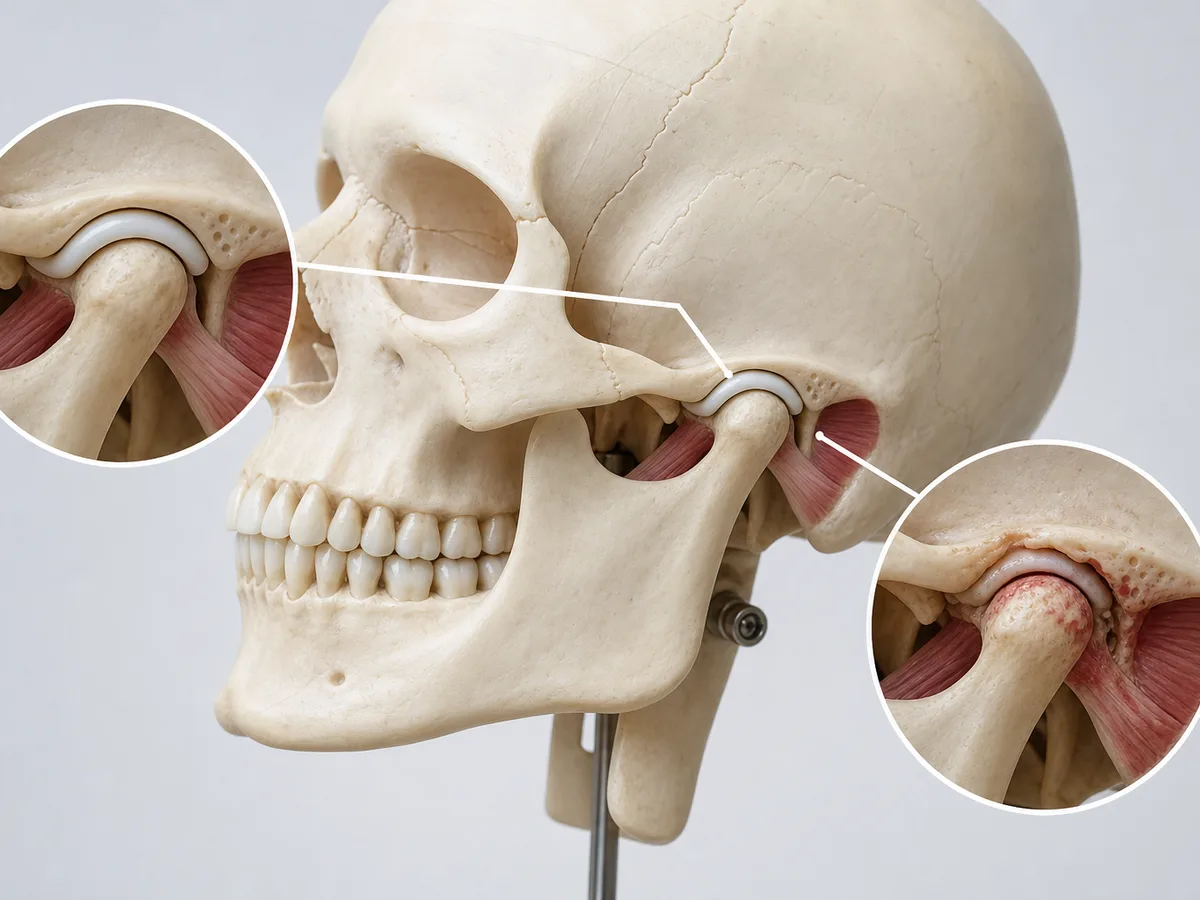 Anatomy versus diagnosis are different ideas.
Everyone has TMJs; not everyone has a TMD
Feel the joints again: fingertips in front of the ears, open gently, notice motion. That exercise finds anatomy. A disorder label usually needs pain, limitation, or painful joint noises that affect life—not the discovery that joints exist. People with silent clicks and full comfortable opening may simply have noisy TMJs without a TMD that requires treatment. That distinction prevents unnecessary procedures aimed at “fixing” a normal variant.
How To Talk With Your Clinician
- Describe symptoms and limits in plain language first.
- Ask whether they see a muscle-dominant TMD, joint-dominant TMD, or mixed picture.
- Clarify which treatments are meant for muscles versus joint structures.
- Confirm you both mean the same thing if someone says “your TMJ.”
 Shared definitions reduce mismatched care.
Clear terms lead to clearer plans
Bring this article’s distinction to your visit if online reading left you confused. Ask how your specific diagnosis—if one is made—fits under the TMD umbrella and what reversible steps come first. For a dentist who will explain findings without jargon fog, use Find a Dentist and mention jaw pain, clicking, or locking when you book. Precise words will not cure pain alone, but they keep decisions about clicking and treatment choices aligned with the tissues actually involved.
TMJ is the joint; TMD is the disorder family that can involve that joint and its muscles. Use the precise terms when you can, focus care on your actual diagnosis, and remember that having TMJs is normal—having a painful TMD is the reason to seek help. When notes or referral letters say “TMJ,” politely ask whether they mean joint anatomy, a muscle disorder, or a mixed TMD so follow-up care stays coherent.
Related articles
Keep exploring related topics from Dental Country.

What Are TMJ Disorder Symptoms?
Common TMJ disorder symptoms include jaw pain or stiffness, clicking or popping with discomfort, headaches, limited opening, and ache near the ear—patterns that deserve a careful exam when they persist.
Read article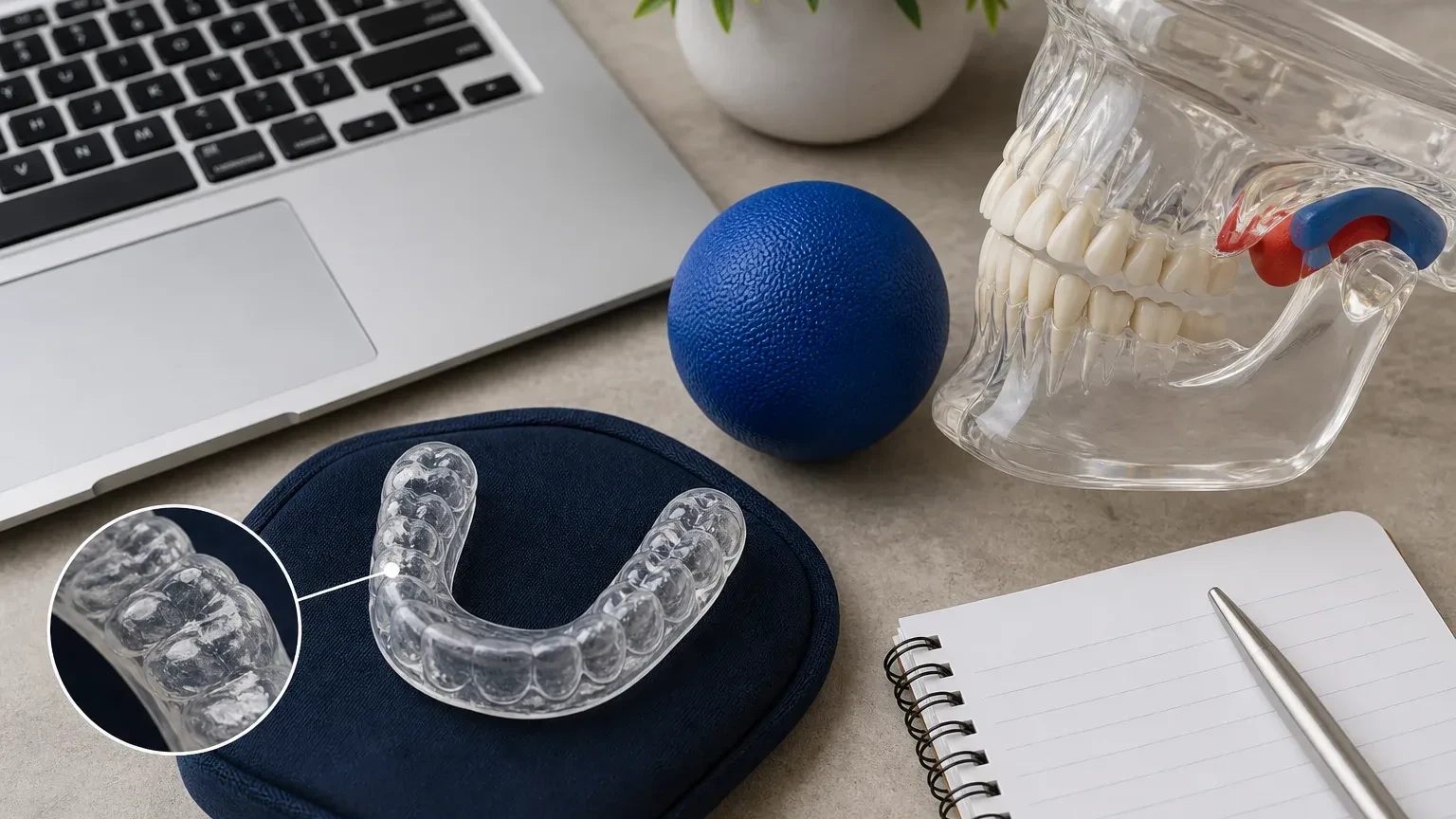
What Causes TMJ Pain?
TMJ pain usually comes from overloaded chewing muscles, irritation inside the jaw joint, or both—often layered with clenching, strain, arthritis, or stress rather than one single villain.
Read article
Does A Night Guard Help TMJ?
A well-fitted night guard can reduce tooth wear and ease some clenching-related TMJ muscle pain, yet it will not fix every joint problem and poorly fitted guards can worsen symptoms.
Read article
Can Stress Cause Jaw Pain?
Yes—stress often shows up in the jaw as clenching, grinding, and muscle guarding that leave the face sore, especially through busy weeks and restless nights.
Read article