
How Is TMJ Treated?
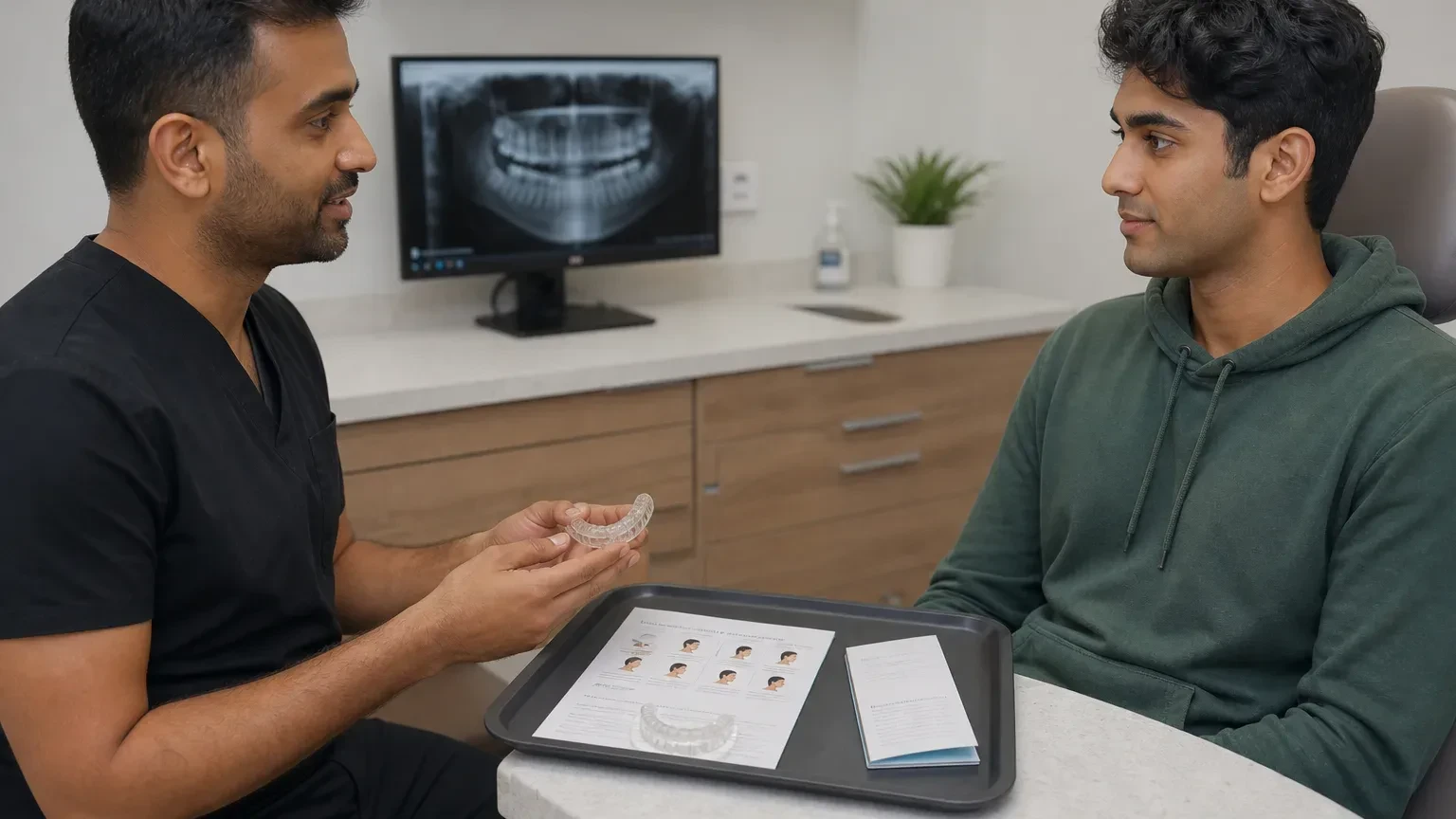
TMJ treatment usually starts with exam, habit changes, soft-diet rest, physical therapy, and appliances before invasive steps. See a typical care timeline.

Reviewed by Dr. Sean Myran, DMDDoctor of Dental Medicine, University of Pennsylvania
TMJ treatment usually starts with a careful diagnosis, then reversible steps: soft-diet rest, habit changes, short-term pain control, physical therapy or guided exercises, and sometimes a custom appliance. Invasive or permanent bite-changing procedures are reserved for specific situations after conservative care is considered. NIDCR emphasizes a cautious approach and advises avoiding treatments that permanently change the jaw joints, teeth, or bite when evidence is lacking. Think timeline, not a single magic appointment.
Your first visits clarify whether muscles, joint structures, teeth, or referred pain dominate. That sorting decides whether a night guard, soft-tissue care, or medical co-management comes next. Many flares improve with layered conservative care, which is why watchful recovery still belongs in the conversation for mild cases—with clear dates to escalate if function does not return.
Expect the early phase to feel ordinary rather than dramatic: softer meals, shorter chewing sessions, and reminders to unclench. That calm groundwork is what makes later physical therapy or appliance wear tolerable. People who skip unload-and-rest often conclude that “nothing works” when the real issue was stacking exercises on still-irritated tissues.
A Typical Step-By-Step Timeline
- Days 0–7: exam, rule out dental infection, begin soft foods, limit gum, try heat or cold as advised, notice daytime clenching.
- Weeks 2–6: structured home care, possible short medication course, referral to physical therapy, appliance impressions if grinding is clear.
- Weeks 6–12: adjust appliances, advance exercises, reassess opening and pain scores.
- Beyond three months: consider specialist input if locking, arthritis, or refractory pain persists—still preferring reversible options first.
Mayo Clinic describes self-care, medications, physical therapy, and mouth guards among treatments, with surgery usually a later consideration. MouthHealthy also outlines softer foods, heat, relaxation, exercises, medicines, and night guards as part of stepped care.
Medications—when used—are usually short-term helpers for inflammation or muscle spasm, not lifelong answers. Exercises should be coached; random social-media stretches can aggravate catching joints. If ear symptoms dominate, coordinate with medical care while you address jaw drivers so you are not treating only one side of an overlapping problem.
Specialist referrals—oral medicine, orofacial pain, physical therapy, or oral surgery—enter when locking persists, arthritis is suspected, or conservative care plateaus. Second opinions are reasonable before procedures that permanently alter joints or bite relationships. Keep copies of prior appliance designs and imaging so new clinicians are not starting from zero.
Workplace and school demands also shape the timeline. If your job requires long talks or wind instruments, ask for pacing strategies during recovery weeks. Athletes may need temporary menu and training edits so neck and jaw load do not undo clinic progress overnight.
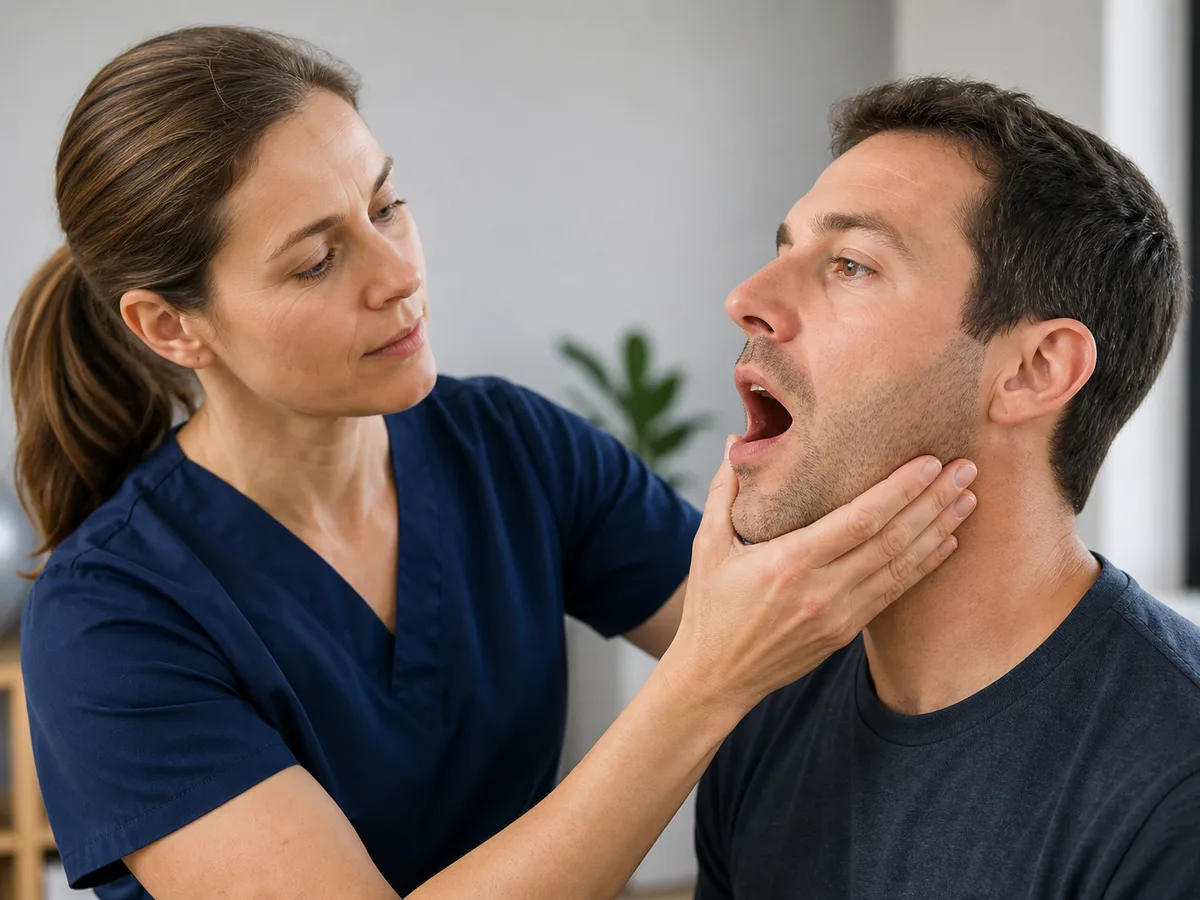 Rest is an active treatment phase.
Unload first, then rebuild function
Early treatment is often subtractive: fewer tough chews, smaller bites, both sides used when comfortable, and no testing your maximum yawn. That pause lets inflamed tissues quiet so later strengthening or appliance wear is tolerable. Keep nutrition practical with eggs, fish, cooked vegetables, yogurt, and well-cut fruit. If stress is driving clenching, fold in the habit tools from stress-related jaw pain while the diet rest runs. Track pain morning and night so progress is visible.
Questions That Keep The Plan Honest
- What tissue are we treating first—muscle, joint, or both?
- Which steps are reversible if they do not help?
- How will we measure improvement in six weeks?
- When would imaging or specialty referral enter the timeline?
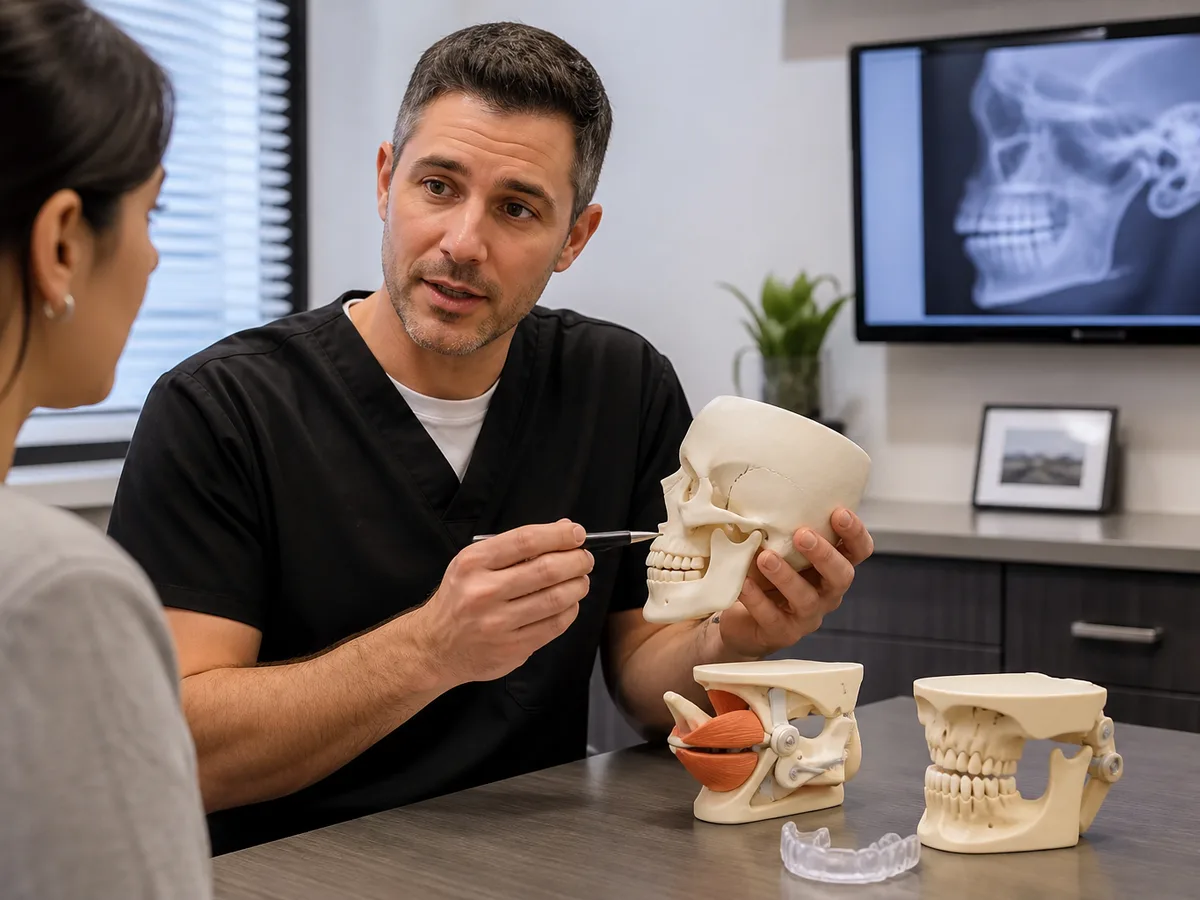 Timeline reviews prevent drift into extremes.
Adjust the plan; do not guess forever
Good TMJ care is iterative. If a guard helps mornings but daytime screen-clenching continues, the plan expands rather than declaring failure. If opening improves but clicking stays painless, you may simply monitor the sound. For a dentist comfortable with conservative sequencing and clear follow-up points, use Find a Dentist and share how long symptoms have lasted when you book. Pair clinical care with soft-food pacing and compress routines so each week builds on the last.
TMJ treatment is usually a stepwise conservative process: diagnose, unload, rehabilitate, and only then consider more invasive tools for carefully chosen cases. Patience with reversible care is not delay—it is often the evidence-aligned path. Keep appliance decisions and stress-habit work inside that sequence rather than treating them as rival silver bullets.
Related articles
Keep exploring related topics from Dental Country.
What Are TMJ Disorder Symptoms?
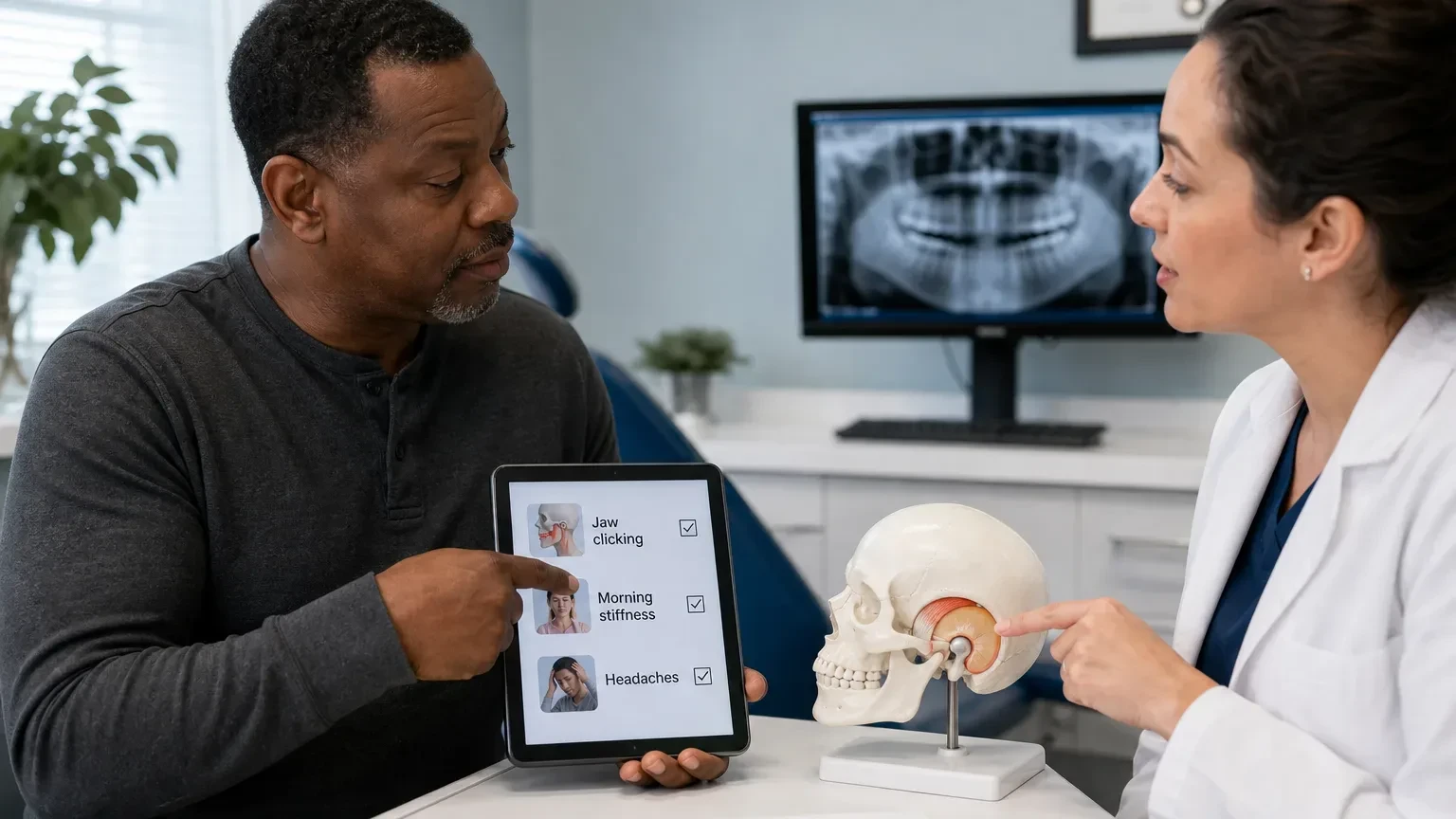
Common TMJ disorder symptoms include jaw pain or stiffness, clicking or popping with discomfort, headaches, limited opening, and ache near the ear—patterns that deserve a careful exam when they persist.
Read article
What Causes TMJ Pain?
TMJ pain usually comes from overloaded chewing muscles, irritation inside the jaw joint, or both—often layered with clenching, strain, arthritis, or stress rather than one single villain.
Read article
Does A Night Guard Help TMJ?
A well-fitted night guard can reduce tooth wear and ease some clenching-related TMJ muscle pain, yet it will not fix every joint problem and poorly fitted guards can worsen symptoms.
Read article
Can Stress Cause Jaw Pain?
Yes—stress often shows up in the jaw as clenching, grinding, and muscle guarding that leave the face sore, especially through busy weeks and restless nights.
Read article