

How Do You Prevent Gum Disease?
Prevent gum disease with daily gumline brushing, interdental cleaning, routine dental visits, tobacco avoidance, and risk-based maintenance.

Reviewed by Dr. Sean Myran, DMDDoctor of Dental Medicine, University of Pennsylvania
Preventing gum disease means keeping bacterial plaque from sitting at the gumline long enough to trigger chronic inflammation. The basics are simple, but the details matter: brush the gumline, clean between teeth, see a dentist regularly, avoid tobacco, manage medical risks, and follow a maintenance schedule if you have had periodontitis before. MouthHealthy emphasizes brushing, flossing, and dental visits for gum disease prevention.
A Daily Gum Protection Routine
- Brush the gumline: use a soft brush and angle bristles where tooth meets gum.
- Clean between teeth: floss, interdental brushes, or picks should match your spacing.
- Use fluoride toothpaste: cavity prevention and gum health habits work together.
- Rinse when helpful: an antimicrobial rinse may be recommended for certain risks.
- Check patterns: notice repeat bleeding, food trapping, or bad breath that returns quickly.
 Prevention needs a repeatable tool.
The right between-teeth tool matters
String floss is useful for tight contacts. Interdental brushes may work better in open spaces, around bridges, and near recession. The best tool is the one that cleans the area without injuring the gum and that you will actually use.
Habits That Lower Risk
Do not smoke or use tobacco. If you already do, quitting or reducing exposure can improve healing and lower periodontal risk. Keep diabetes as controlled as possible with your medical team. Tell the dentist about dry mouth, new medications, pregnancy, immune conditions, or family history of severe gum disease. These factors can change how often you need cleanings and which home tools make sense.
Routine dental visits are prevention because tartar cannot be brushed away at home. A hygienist can remove hardened deposits, show missed areas, and identify early pocket changes. People with past periodontitis often need periodontal maintenance more often than twice a year. That is not punishment; it is risk-based care for a condition that can reactivate.
Food choices are not the whole story, but frequent sugary snacks and drinks feed plaque. Water, balanced meals, and limiting all-day sipping help. If you have braces, crowded teeth, bridges, implants, or partial dentures, ask for a custom cleaning demonstration. Those surfaces create plaque traps that generic advice can miss.
 Technique turns advice into habit.
Ask to be watched cleaning
A two-minute demonstration in your own mouth can reveal missed angles faster than a printed handout. If bleeding, breath, or tartar keeps returning, use find a dentist and ask for hygiene coaching with periodontal measurements.
When Prevention Needs An Exam
Schedule care if gums bleed repeatedly, swelling persists, bad breath returns quickly, teeth loosen, or a tooth seems longer. Prevention cannot replace diagnosis when periodontitis has already begun. For the early warning list, read What Are Early Signs Of Gum Disease?. If you already have bone loss, How Is Periodontal Disease Treated? explains why maintenance becomes part of the plan.
The best prevention routine is not extreme. It is accurate, consistent, and adjusted when your risks change.
Build the routine around predictable triggers. Keep interdental tools where you already pause, such as beside the toothbrush, in a work bag, or near the television if evenings are easier. Pair cleaning between teeth with something that already happens daily instead of relying on motivation at bedtime. If bleeding discourages you, set a two-week technique goal and then ask for help if the same area still bleeds. Prevention improves when habits are visible and easy to repeat. A product only works if it reaches the plaque that is actually causing trouble.
Keep prevention boring and visible. The routine that happens most days will protect gums better than an elaborate routine that rarely survives the week, especially between dental visits.
Related articles
Keep exploring related topics from Dental Country.
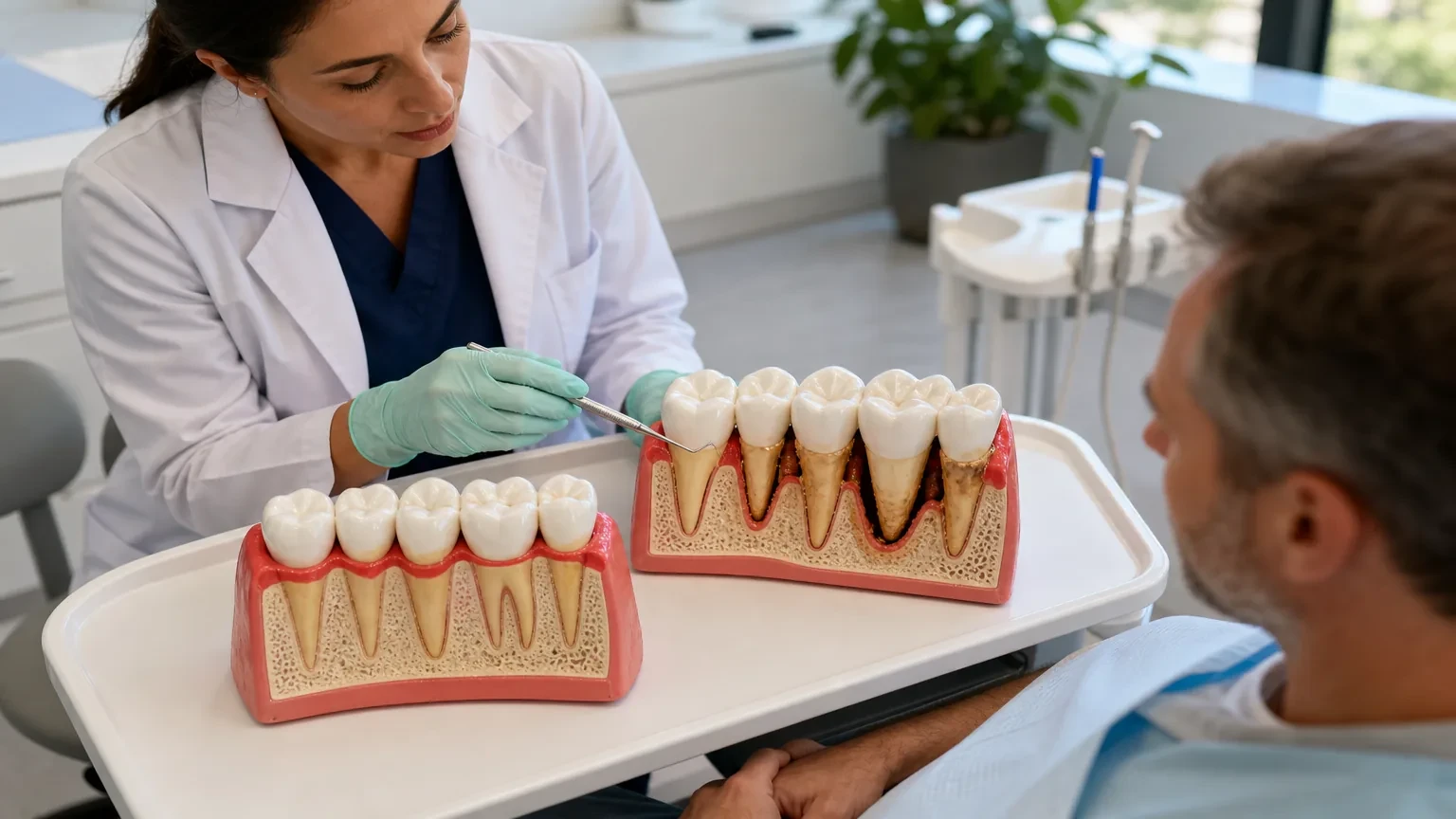
What Is The Difference Between Gingivitis And Periodontitis?
Gingivitis and periodontitis can both bleed quietly, but the real difference is whether deeper tooth support has started to break down.
Read article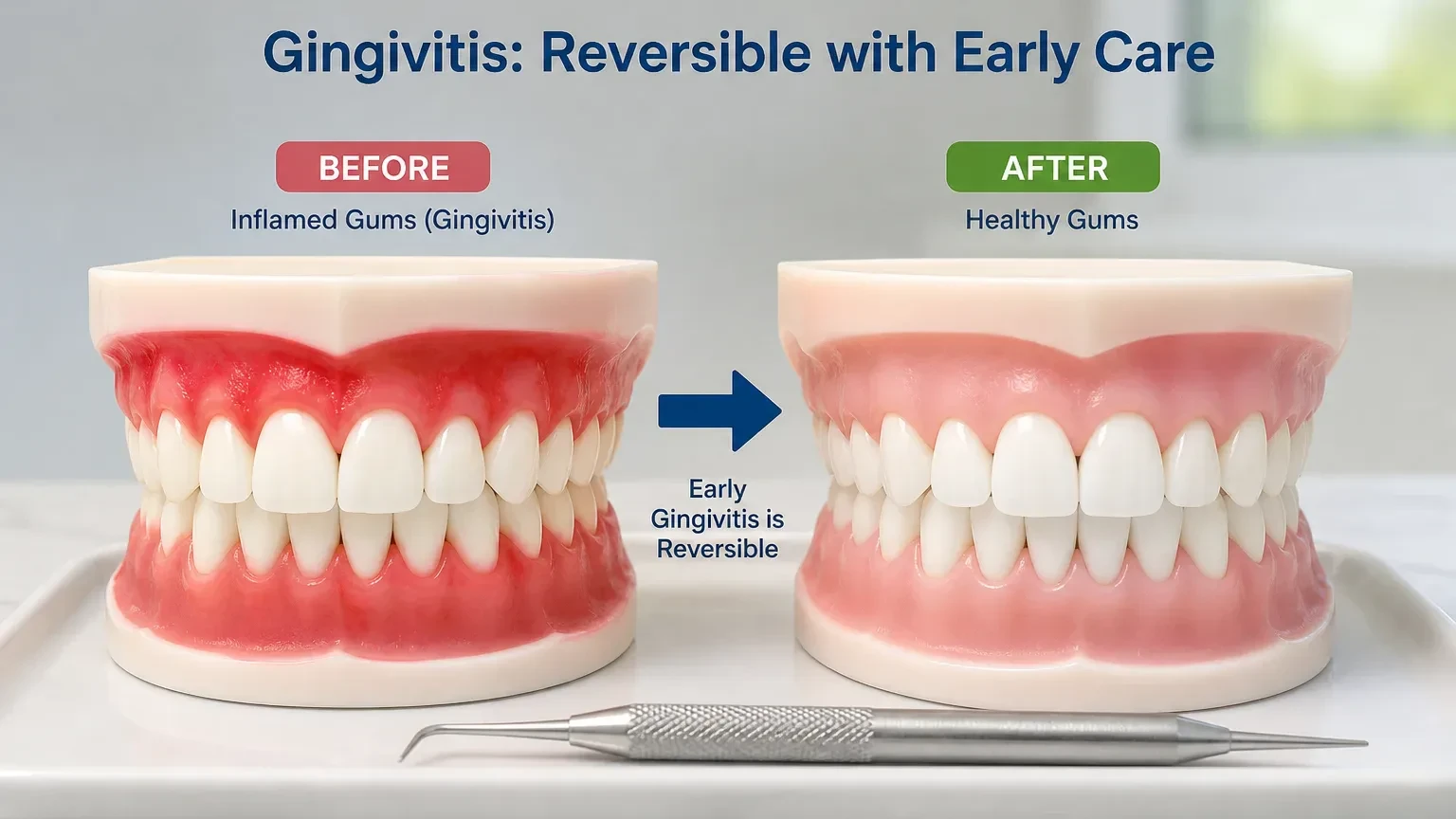
Is Gum Disease Reversible?
Gum disease reversibility depends on the stage. Inflamed gums can recover; lost bone support usually needs control, not a quick reset.
Read article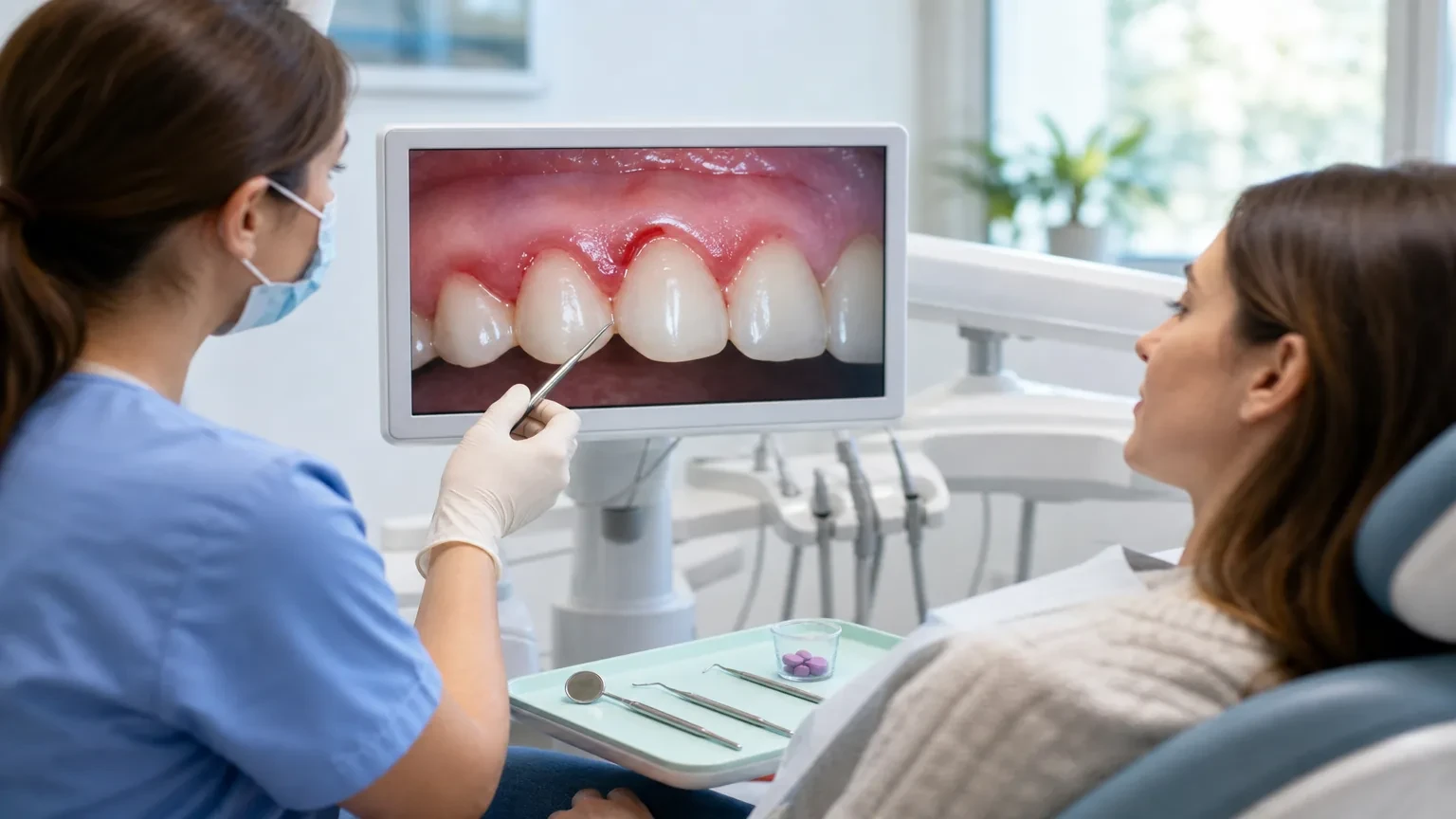
What Are Early Signs Of Gum Disease?
Early gum disease rarely announces itself with dramatic pain. Small bleeding, puffiness, and bad breath patterns are the clues to notice.
Read article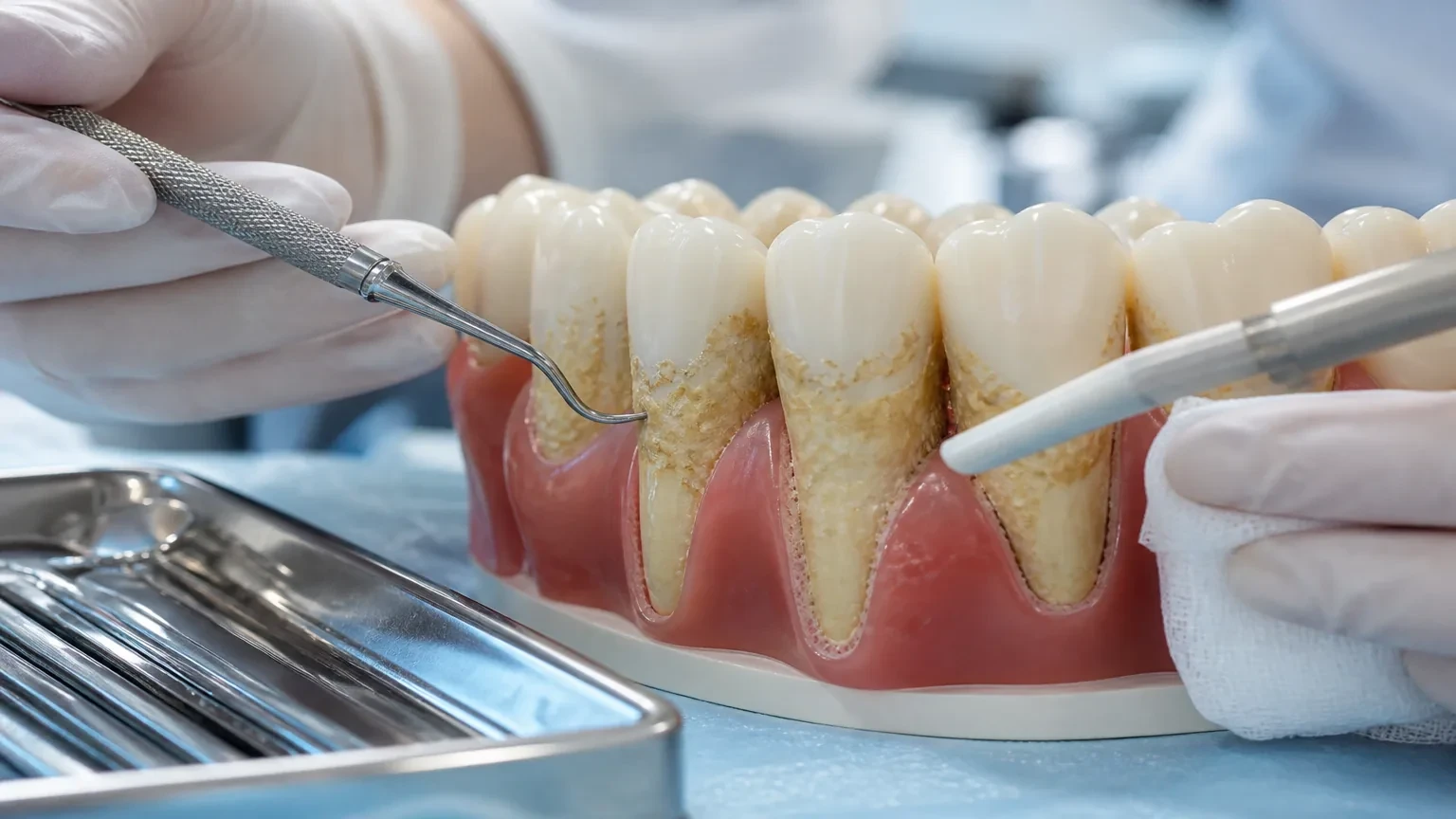
What Is Scaling And Root Planing?
Scaling and root planing is not a bigger version of polishing. It targets bacteria and tartar below the gumline where pockets stay inflamed.
Read article