
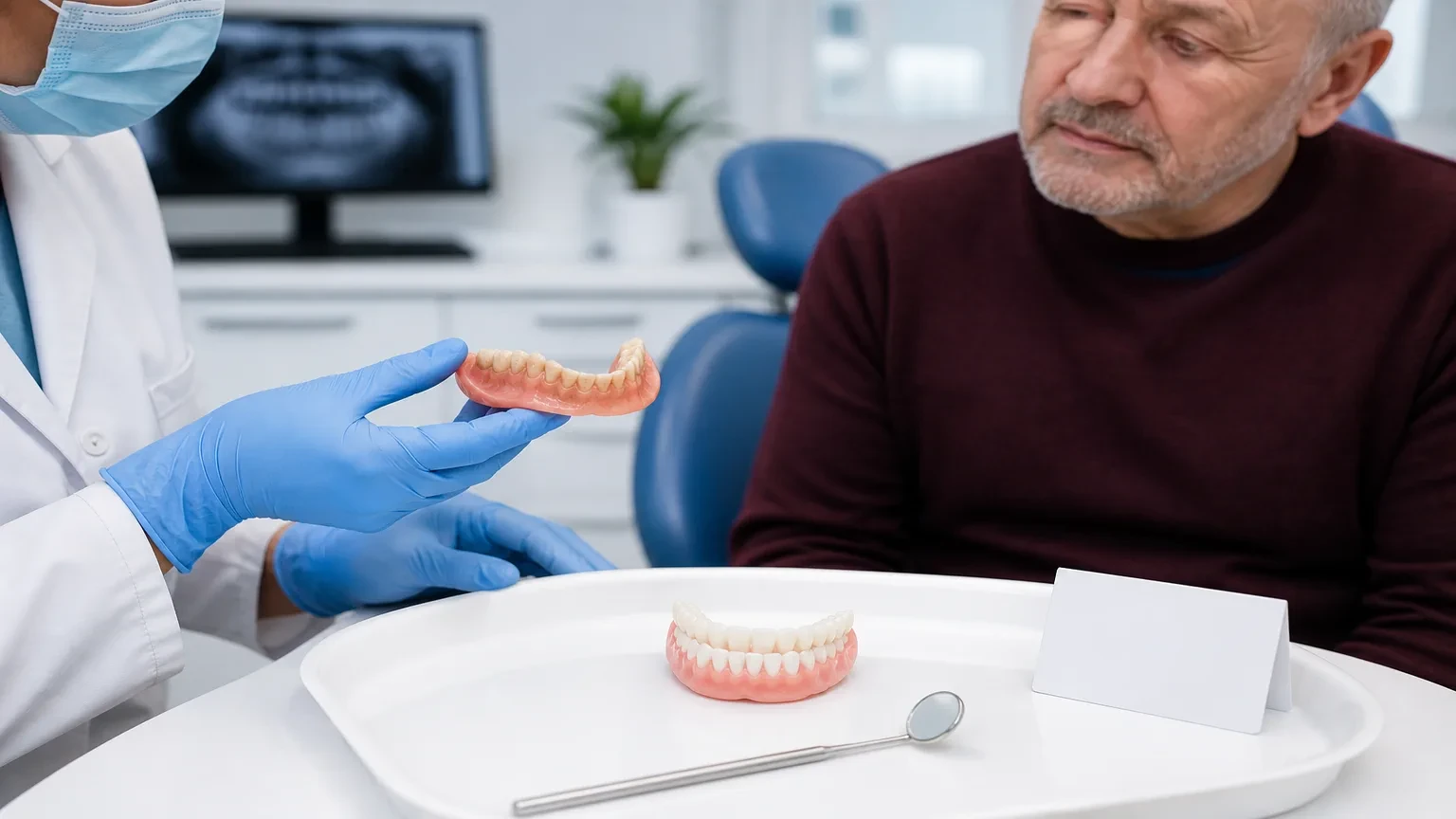
How Long Do Dentures Last?
Dentures often last about five to ten years before wear, stains, or ridge changes require remake or major rebase. Learn what shortens or extends life.

Reviewed by Dr. Sean Myran, DMDDoctor of Dental Medicine, University of Pennsylvania
Dentures often last about five to ten years before wear, stains, cracks, or ridge changes make a remake or major rebase the safer choice. Some last longer with excellent care and stable anatomy; others need earlier replacement after major weight change, bone loss, or heavy grinding. MouthHealthy explains that dentures may need to be relined, rebased, or remade as the mouth changes. Longevity is shared between the plastic teeth and the living ridge underneath.
Thinking in ranges beats chasing a single guaranteed number. Acrylic teeth polish down. Bases stain. Clasps fatigue. Meanwhile the jaw ridge slowly remodeled after tooth loss, so a plate that fit well at delivery can rock years later even if it never cracked. Checkups catch that drift while a reline is still enough.
Warning signs that lifespan is ending include teeth worn flat, a smile that looks shorter, stains that will not polish away, cracks you can feel with your tongue, and a need for more adhesive just to finish a meal. Any one sign might mean a repair; several together usually mean plan a remake before an emergency fracture ruins a trip.
Night guards are sometimes recommended when you grind and still have natural opposing teeth, or when implant attachments take heavy side forces. Ask whether protecting the prosthesis could delay a remake. Skipping that conversation is how many sets age faster than the calendar suggests.
Who Is Affected By Faster Wear
- People with rapid ridge change: after recent extractions or major bone remodeling.
- Heavy grinders: acrylic teeth flatten and the bite collapses sooner.
- Dry-mouth patients: more friction and stain can age the surface.
- Anyone skipping checkups: small cracks and soft-tissue changes go unnoticed.
- Harsh cleaners: abrasive pastes and hot water shorten the polished life of acrylic.
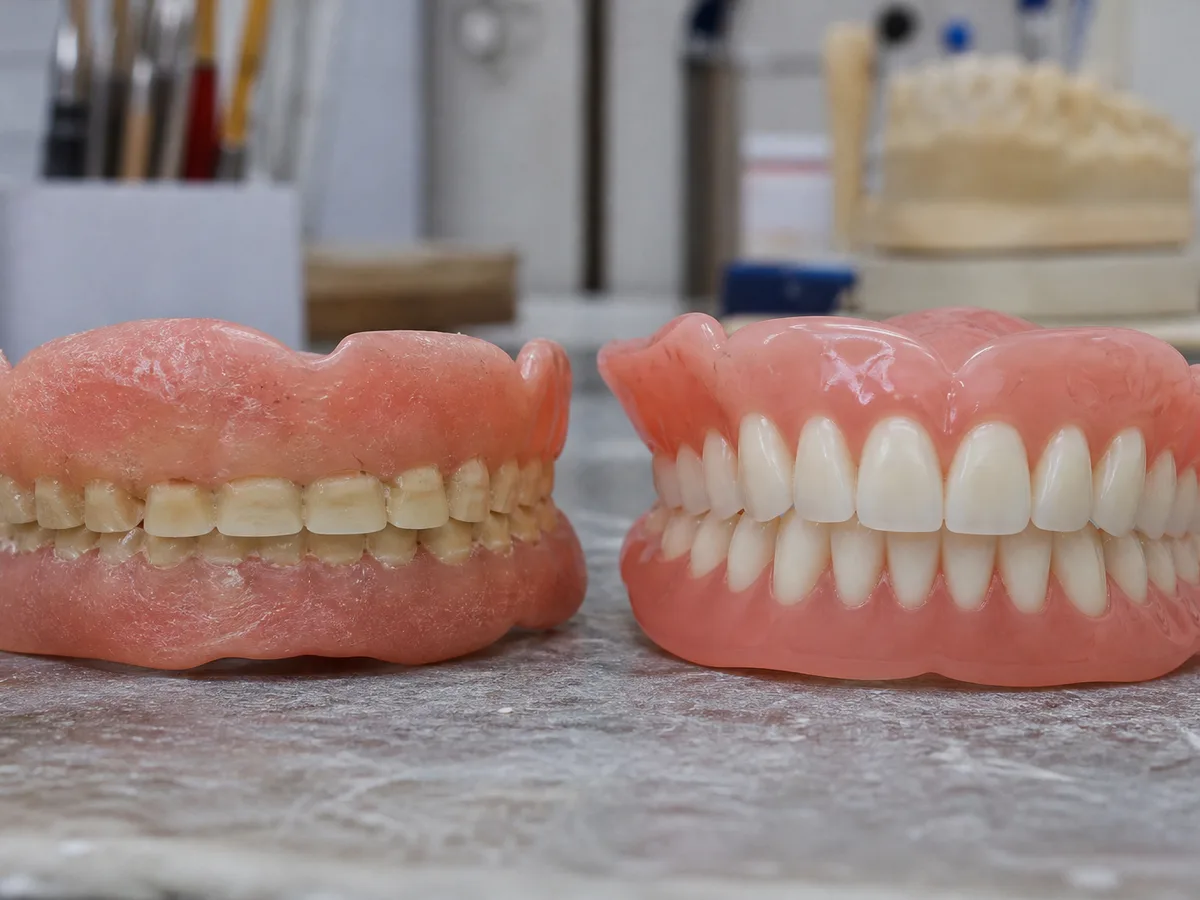 Wear is function loss, not just cosmetics.
Flat teeth change how you chew
As chewing surfaces polish down, food feels harder to manage and the jaw may overclose. That can stress joints and make the denture look shorter in the face. If friends say your smile looks “collapsed,” worn teeth or a sunk bite may be part of the story—not only aging skin.
What Changes The Replacement Plan
- Fit: looseness after healing may need a reline before a full remake.
- Damage: cracks, missing teeth, or warped bases push toward remake.
- Goals: moving to implant support can replace a loose conventional set.
- Budget timing: plan ahead using denture cost factors rather than waiting for an emergency fracture.
Daily care stretches usable life. Abrasive cleaners and hot water shorten it. Pair longevity planning with solid cleaning habits and honest checkups when speaking or chewing starts to feel different. Stains that will not lift at home are another cue to ask about polishing versus remake.
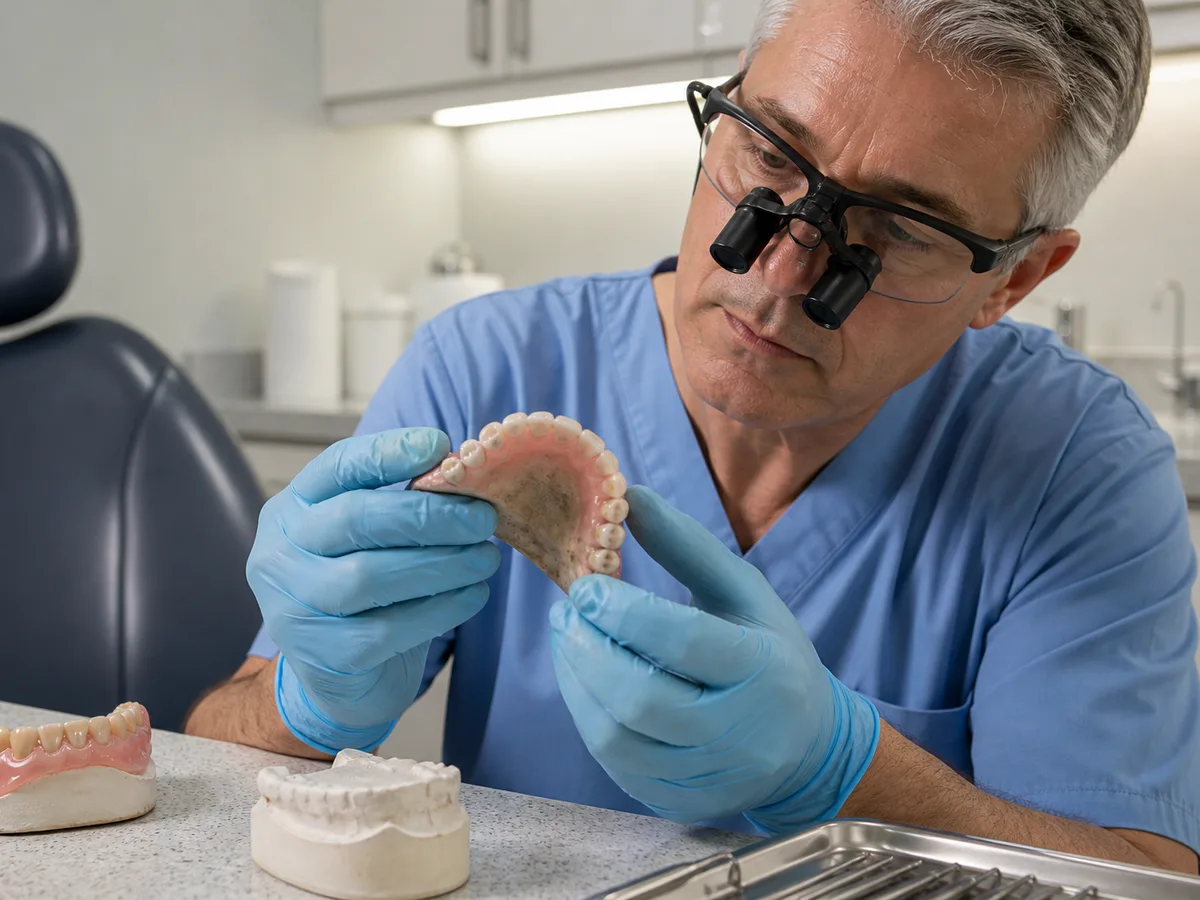 Match the fix to the failure mode.
Reline vs remake is a clinical call
If the teeth are still good but the base no longer matches the ridge, a reline or rebase may restore contact. If teeth are worn flat or the bite is wrong, a new denture is usually wiser. Bring old photos of your smile so vertical dimension and tooth display can be compared thoughtfully.
Safer Path Forward
Schedule routine denture evaluations even when nothing feels dramatic. Ask how often your dentist expects relines, what warranty covers fractures, and which warning signs mean stop waiting. Keep a spare soft case when traveling, and avoid DIY glue repairs that can trap bacteria or distort the bite. If you need a provider, start with Find a Dentist and ask whether they evaluate older dentures for reline versus remake on the first visit. Planning a remake while the old set still functions gives you time for careful try-ins instead of rushing after a sudden break. A spare temporary option, even a repaired older plate, can bridge that gap.
Related articles
Keep exploring related topics from Dental Country.
How Long Does It Take To Get Used To Dentures?
Denture adjustment is gradual: speech softens first, chewing improves next, and comfort follows as sore spots are refined at follow-up visits.
Read article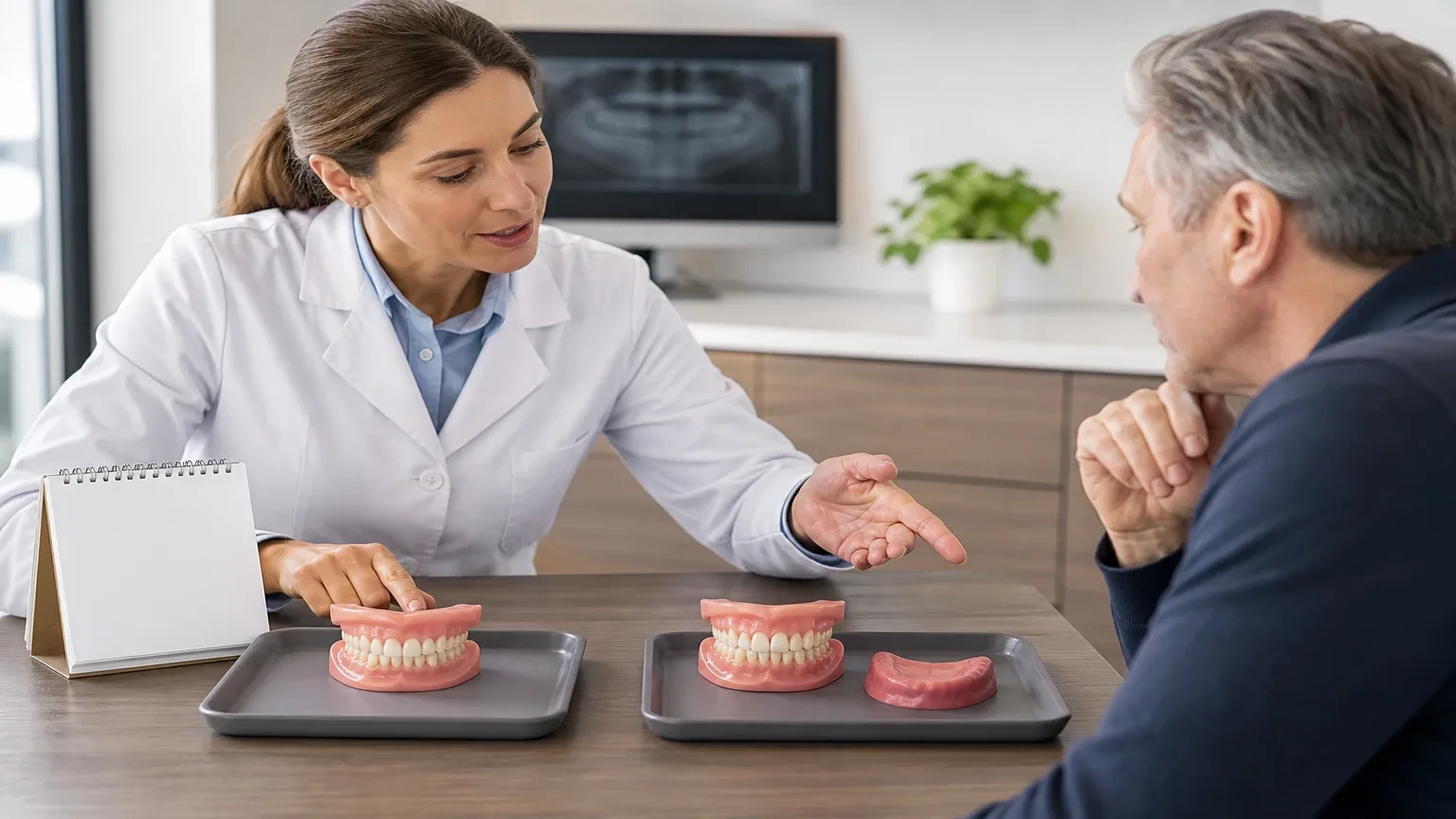
Immediate Dentures Vs Conventional Dentures: What's The Difference?
Immediate dentures protect appearance after extractions, while conventional dentures are fitted after healing for a more stable starting shape.
Read article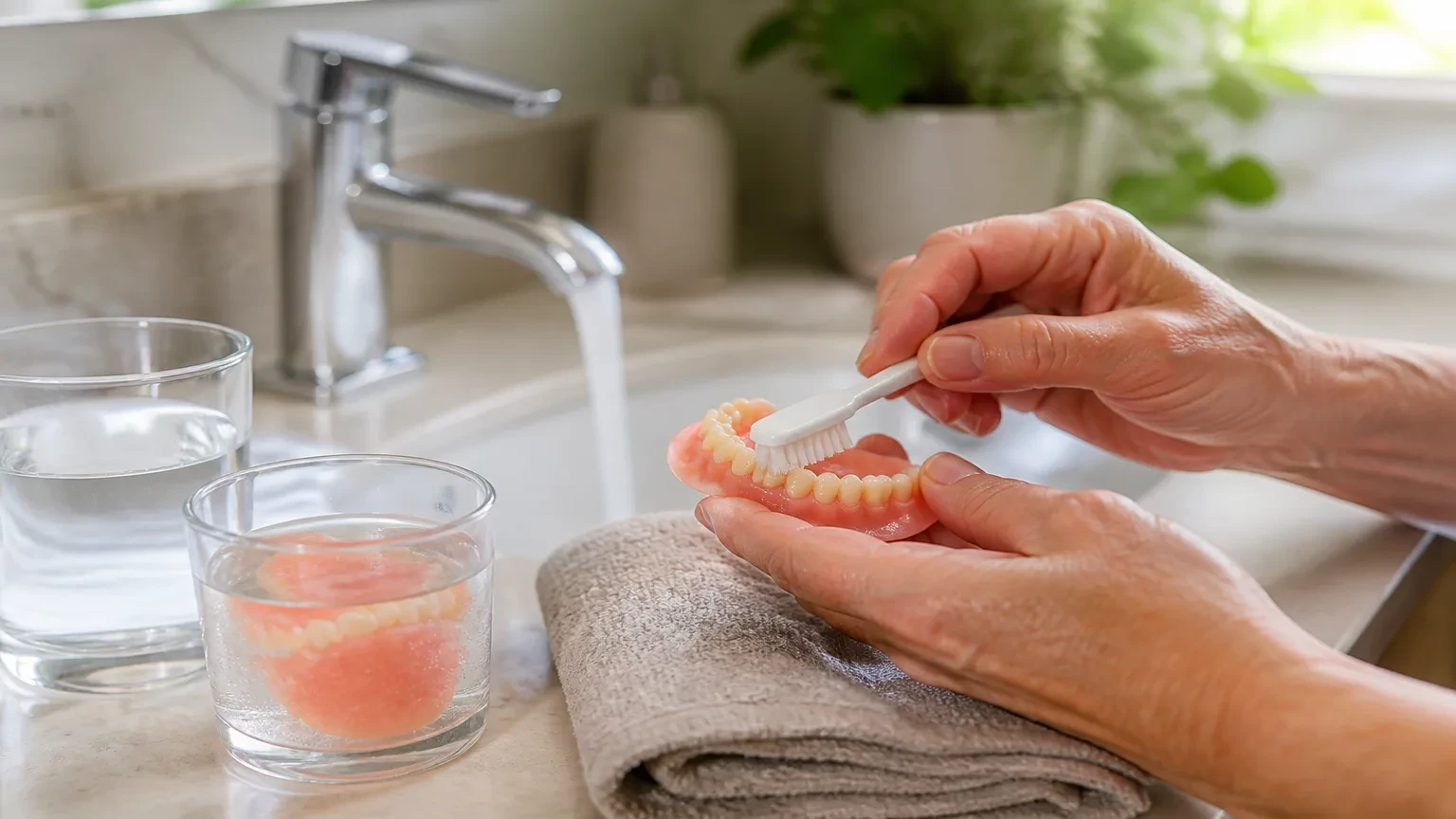
How Do You Clean Dentures?
Denture cleaning is a daily hygiene habit: brush the prosthesis, rinse thoroughly, soak as directed, and care for the gums and any remaining teeth.
Read article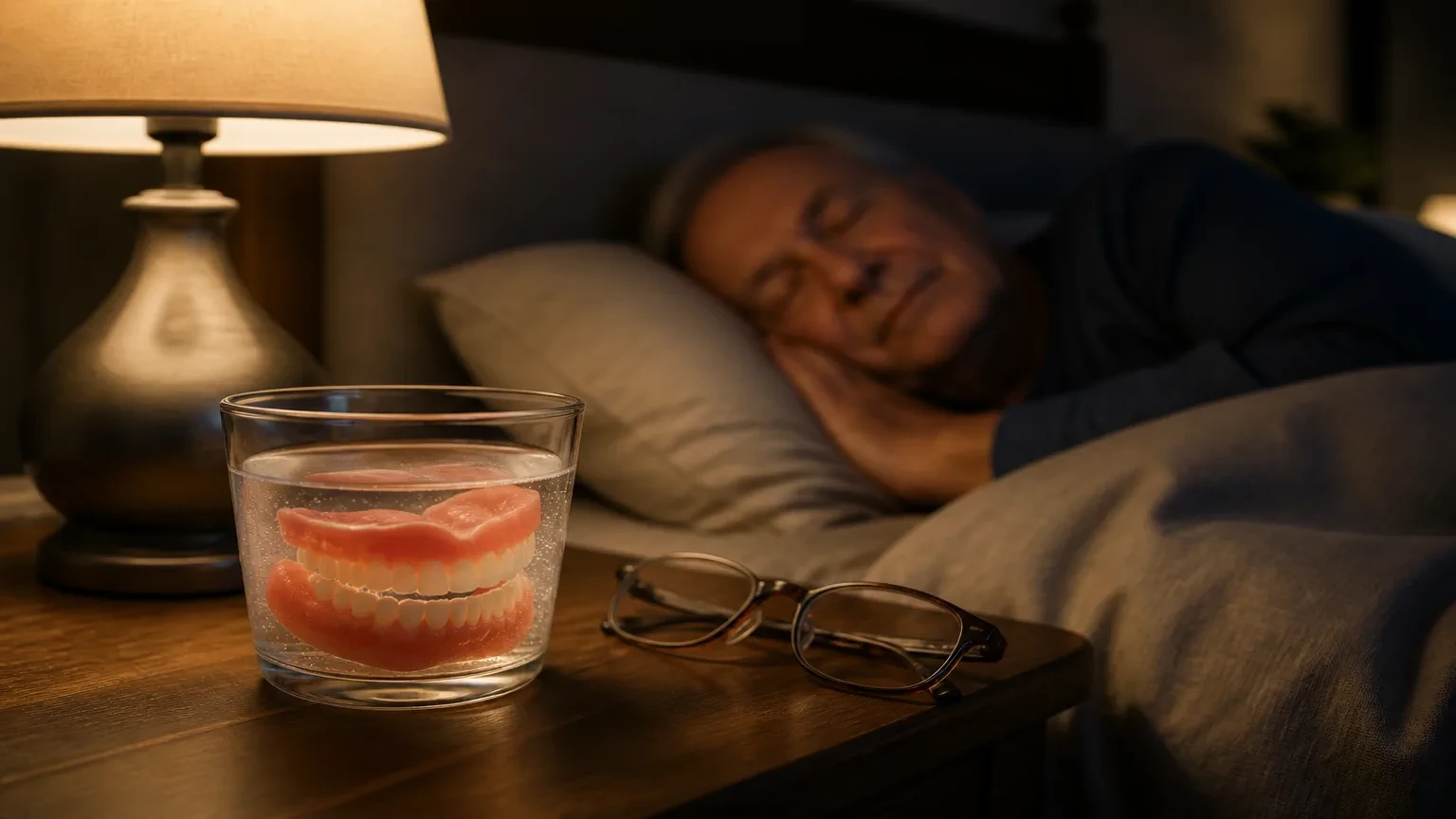
Can You Sleep With Dentures In?
Sleeping in dentures every night can stress gums and raise infection risk. Nightly removal is the usual advice unless a dentist sets a short exception.
Read article