

Do Dentures Look Natural?
Modern dentures can look natural when tooth shape, shade, gum contour, and lip support are customized. Learn what creates a believable smile result.

Reviewed by Dr. Sean Myran, DMDDoctor of Dental Medicine, University of Pennsylvania
Dentures can look natural when the teeth, gum color, midline, and lip support are chosen for your face rather than from a generic mold. Modern materials and custom setups are far more believable than older bright, perfectly even stock teeth. MouthHealthy notes that dentures are designed to look as natural as possible. Realism is a design project: shade, shape, wear pattern, and how much gum shows when you smile.
Believability also depends on motion. Teeth that look fine in a still photo can still give themselves away if the plate clicks, drops, or whistles. That is why fit appointments and try-ins matter as much as the tooth mold selected from a catalog.
Lip support is another quiet factor. Too little support can leave folds at the corners of the mouth; too much can make the upper lip look pushed out. Vertical height of the bite changes how much tooth shows at rest and in laughter. These are clinical measurements and artistic judgments at once—worth reviewing in a mirror under everyday lighting, not only operatory lamps.
If you are replacing teeth after a long gap without a prosthesis, facial muscles may have adapted to a collapsed look. Rebuilding support can feel odd for a week even when the esthetics are improved. Give yourself a short adaptation window before demanding a remake based on first-day mirror shock alone—then speak up if the look still feels wrong at try-in.
Quick Answers About Natural-Looking Dentures
Can anyone tell I am wearing dentures?
Sometimes people notice during close conversation if the teeth are too uniform, too white, or if the denture clicks from a loose fit. A customized setup and a stable base make detection much harder in daily life. Soft lighting and confident speech habits help too, but they cannot hide a midline that sits far off your face.
Do expensive dentures always look better?
Higher-end teeth and layered gum tinting can help, but craftsmanship and try-in feedback matter more than price alone. A careful conventional denture can look better than a rushed premium set. Ask what is customized at your fee level: tooth library, gum characterization, and number of esthetic try-ins.
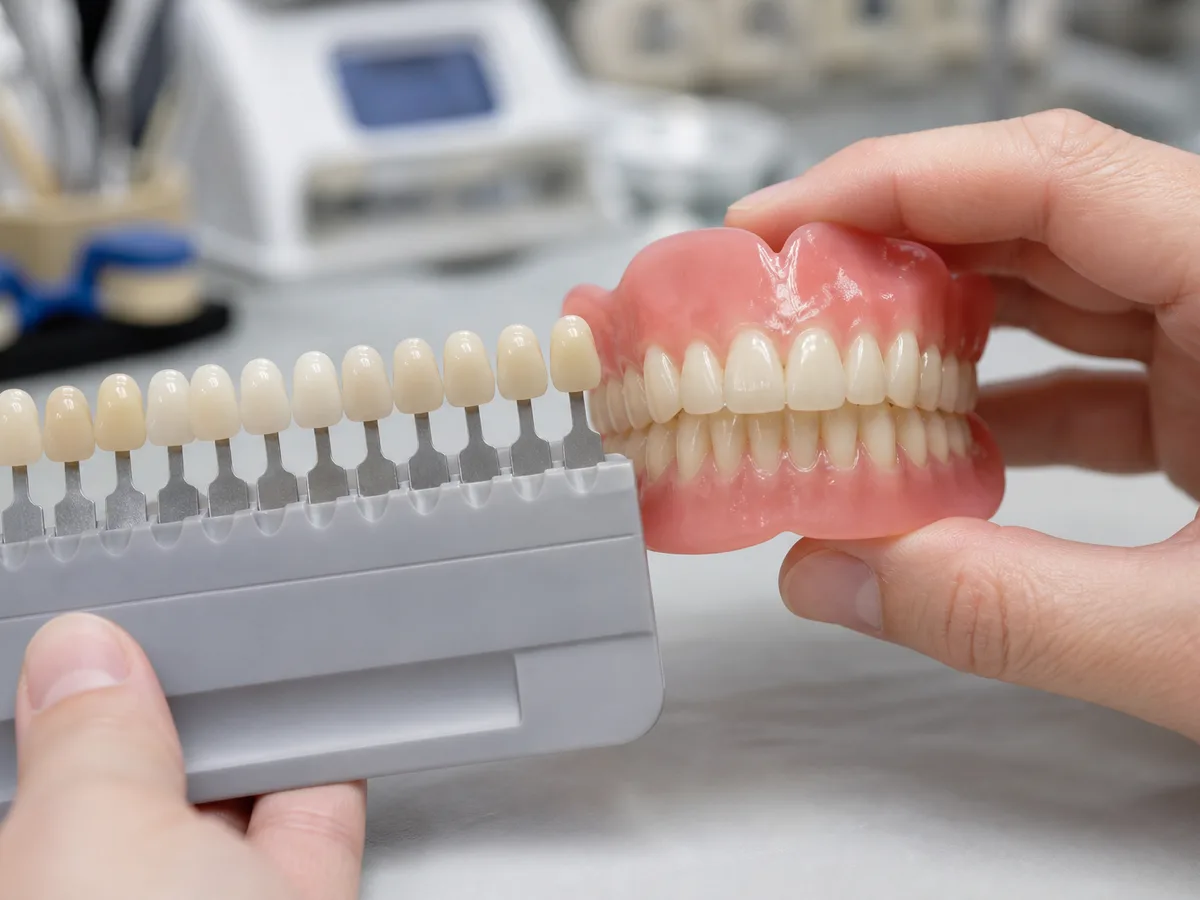 Color is personal, not universal.
Shade should suit skin and age
Ultra-white shades can look artificial on many faces. Dentists often blend shades and consider how much of the tooth shows in speech and laughter, not only in a posed smile. Bring a photo from a decade ago if you want a familiar reference without copying every chip and stain.
What details make dentures look fake?
- Teeth that are identical twins in a perfectly straight row
- Gum base that is one flat pink with no contour
- Midline off from the face
- Too much tooth show at rest
- Loose fit that makes teeth bounce when talking
- Upper teeth set too far forward, straining the lip
Fit and appearance travel together. A beautiful tooth setup still looks wrong if the denture drops while speaking. That is why adjustment visits and discussions of immediate versus conventional timing matter for the final look. Healing changes lip support after extractions, so an early smile may need refining once swelling settles.
 Approve the look before final processing.
Try-ins are where natural looks are decided
Wax try-ins let you review tooth position before final processing. Bring a trusted friend or clear photos of your older smile so feedback is specific. Speak, smile, and count aloud in the mirror—posed silence hides speech and lip problems.
Can implant dentures look more natural?
Implant-supported dentures can look more natural in motion because they move less, which keeps the smile line steadier. The teeth still need thoughtful shading and shape. Stability helps cosmetics; it does not automatically create good tooth artistry.
Ask your dentist how customized the tooth library is, whether gum characterization is included, and how many try-in visits to expect. Request to see similar before-and-after cases for faces in your age range. For a local consult, use Find a Dentist and request cosmetic denture planning experience rather than delivery-only service.
Related articles
Keep exploring related topics from Dental Country.

How Long Does It Take To Get Used To Dentures?
Denture adjustment is gradual: speech softens first, chewing improves next, and comfort follows as sore spots are refined at follow-up visits.
Read article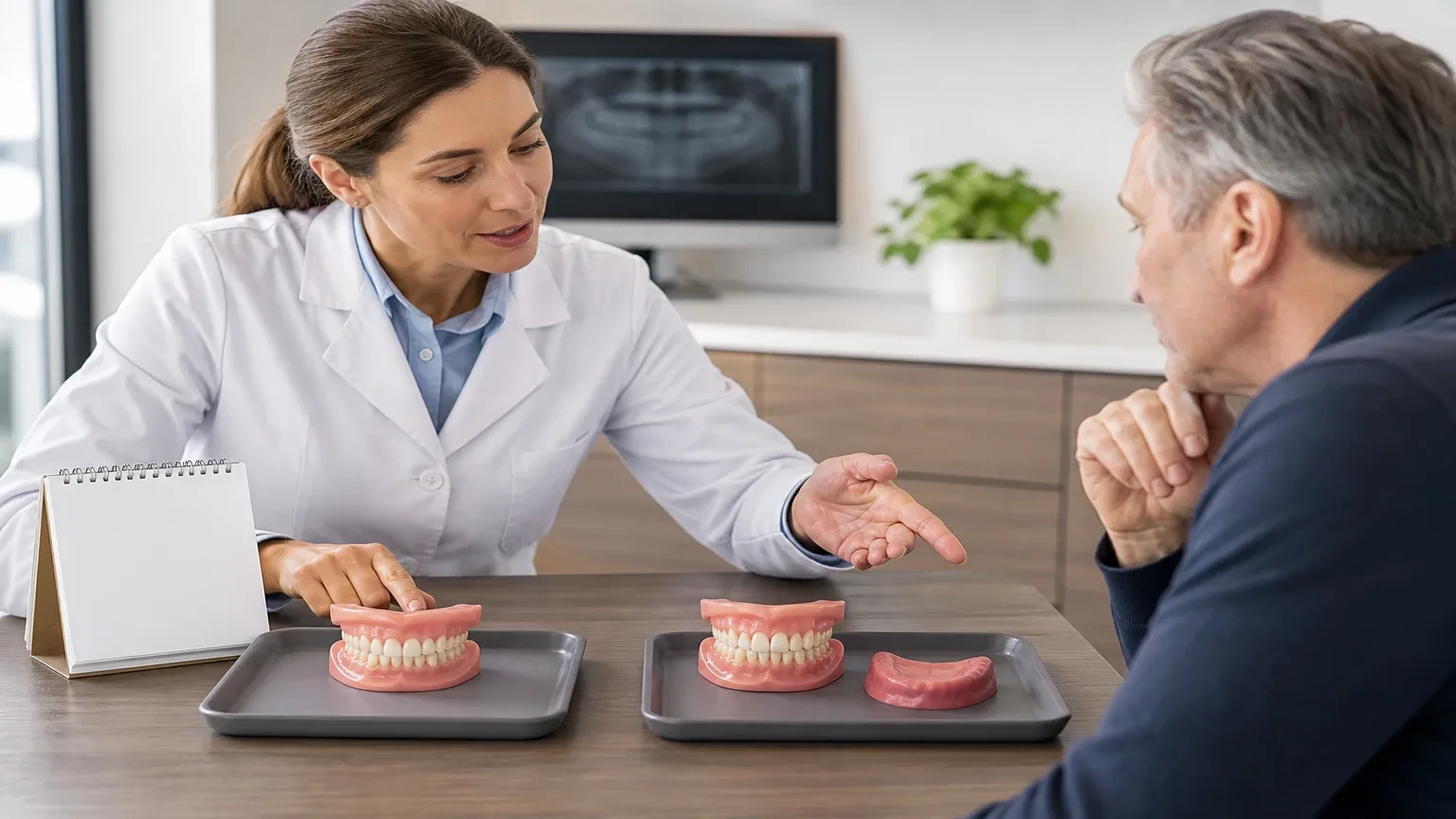
Immediate Dentures Vs Conventional Dentures: What's The Difference?
Immediate dentures protect appearance after extractions, while conventional dentures are fitted after healing for a more stable starting shape.
Read article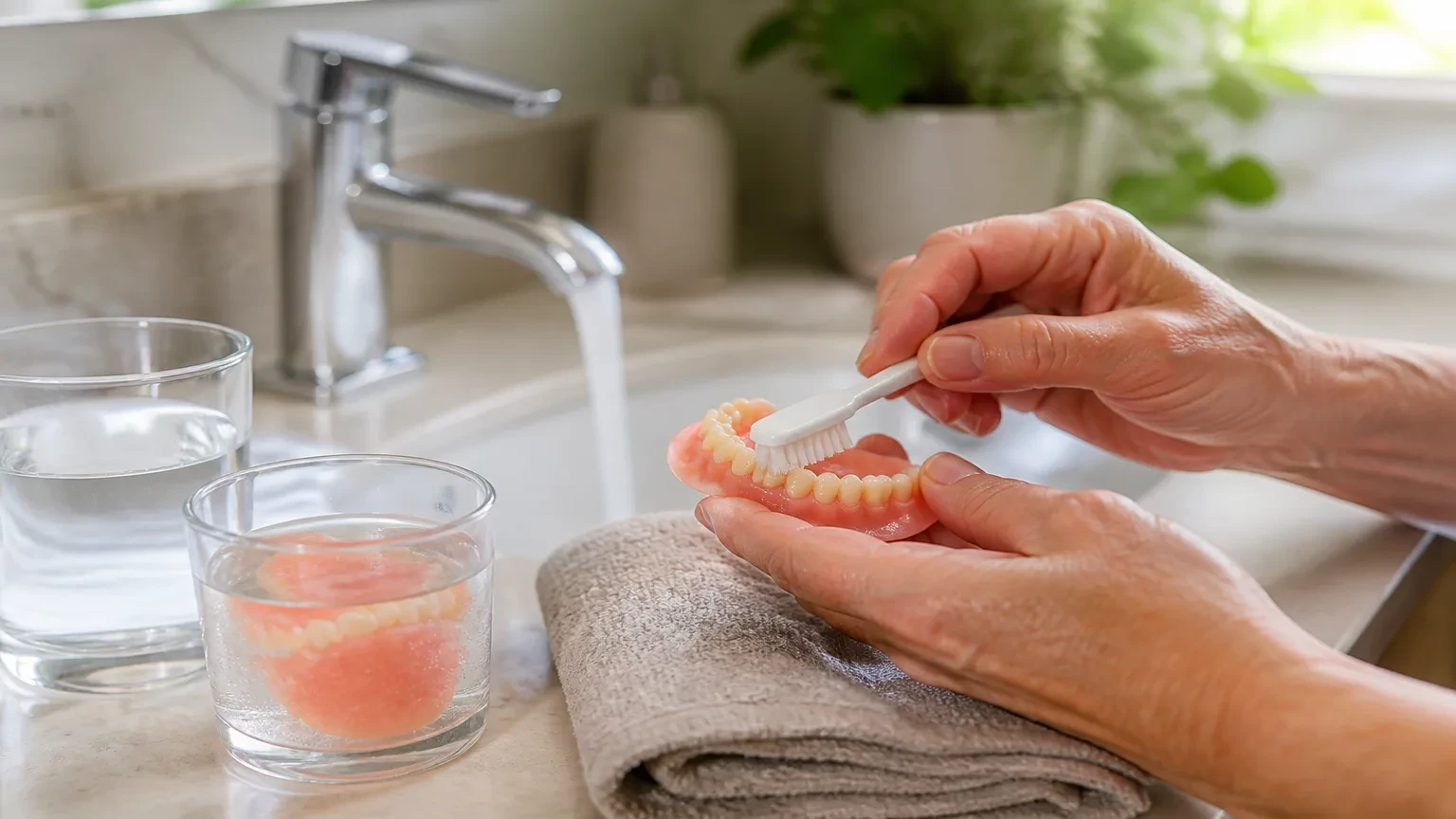
How Do You Clean Dentures?
Denture cleaning is a daily hygiene habit: brush the prosthesis, rinse thoroughly, soak as directed, and care for the gums and any remaining teeth.
Read article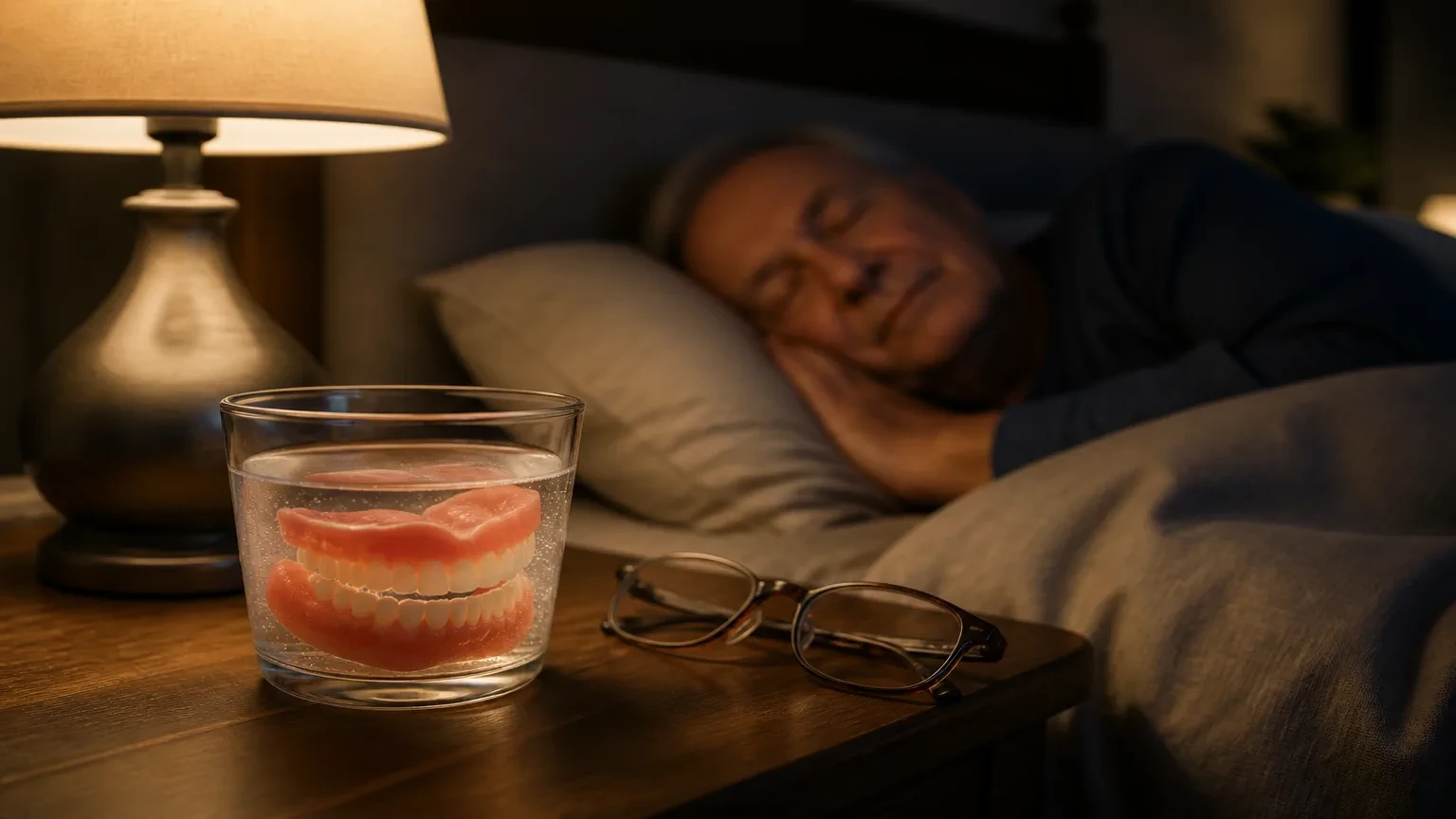
Can You Sleep With Dentures In?
Sleeping in dentures every night can stress gums and raise infection risk. Nightly removal is the usual advice unless a dentist sets a short exception.
Read article