
Can Clear Aligners Help Sleep Apnea?
Clear aligners straighten teeth; they are not a proven sleep apnea treatment. Learn why airway claims need caution and what to ask before combining care.

Reviewed by Dr. Sean Myran, DMDDoctor of Dental Medicine, University of Pennsylvania
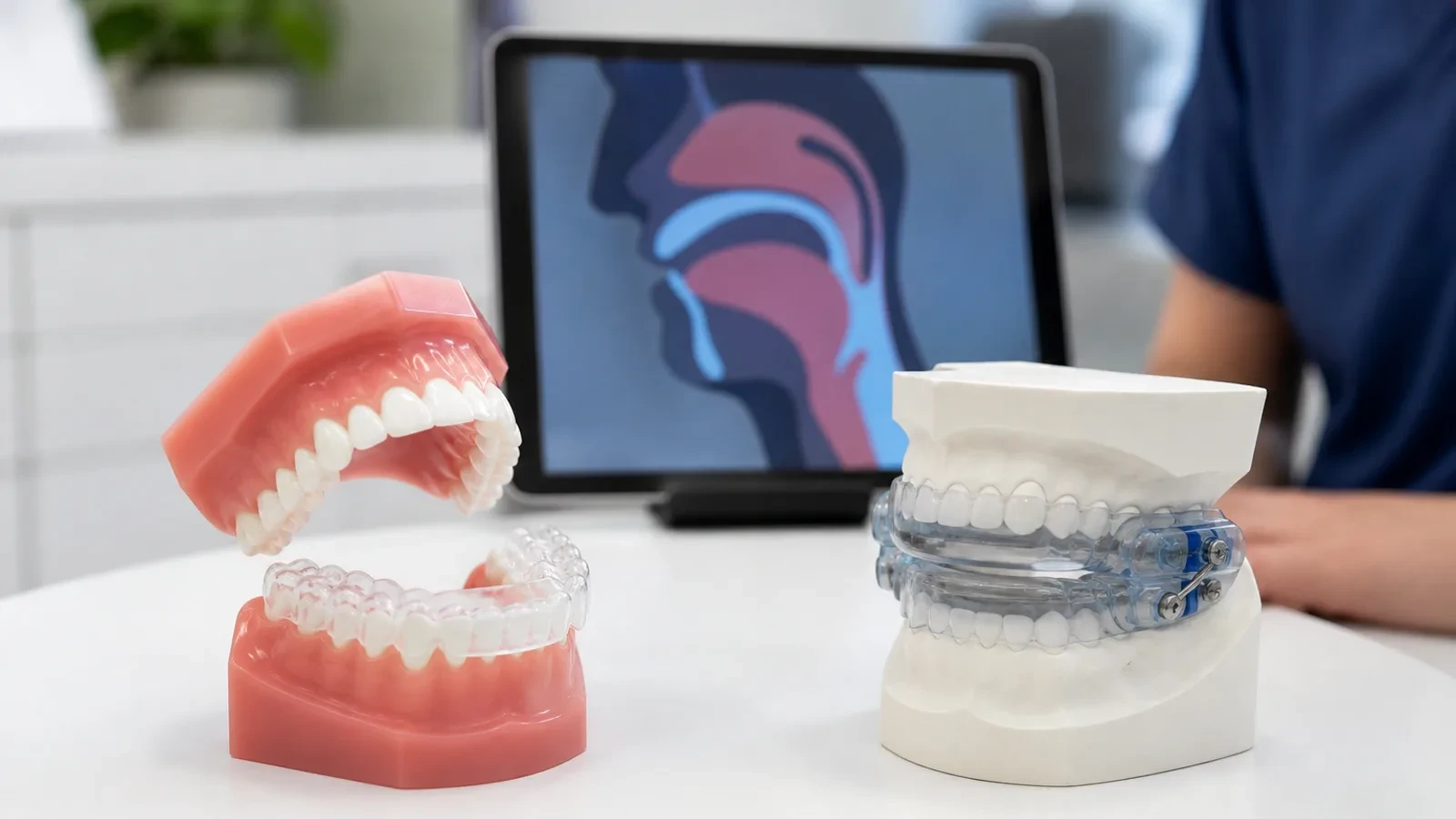
Clear aligners are unlikely to be a reliable treatment for obstructive sleep apnea. They are designed to move teeth gradually for orthodontic goals, not to hold the jaw forward all night the way a mandibular advancement device does. NHLBI lists oral devices that reposition the jaw or tongue among sleep apnea treatments—distinct from routine orthodontic aligners. Marketing that blurs straightening trays with airway therapy deserves skepticism.
Some people’s symptoms change during orthodontics because bite relationships and tongue space shift, but that is not the same as prescribing aligners to treat OSA. If you need apnea therapy, evidence-aligned options still center on medical care: PAP, custom sleep appliances when appropriate, lifestyle measures, or other physician-directed treatments. Compare real appliance therapy in mandibular advancement devices and selection in candidate criteria.
Orthodontic Myths Versus Airway Facts
- Myth: “Aligners double as a sleep apnea appliance.” Fact: sleep appliances are purpose-built and usually worn in a stable jaw position after medical prescription.
- Myth: “Expanding the smile always cures snoring.” Fact: airway response is unpredictable; snoring and OSA need their own diagnosis.
- Myth: “If aligners make my bite feel different, my apnea is fixed.” Fact: bite change is not a sleep-study result.
- Myth: “I can skip CPAP while refining trays.” Fact: do not stop prescribed OSA therapy without physician guidance.
MedlinePlus discusses CPAP, dental devices that keep the jaw forward, and other medical options for OSA—not clear-aligner therapy as a standard apnea treatment. MouthHealthy describes oral appliances that shift and support the jaw for selected sleep apnea cases. Those appliances are not synonymous with cosmetic or orthodontic aligners.
Can orthodontics and sleep care coexist? Sometimes. Your orthodontist and dental sleep clinician should talk if you already wear a MAD or if tooth movement will change retention of a future appliance. Sequencing matters: unstable tooth movement can complicate appliance fit. Severe OSA still needs effective therapy during any multi-month aligner plan.
Be cautious with social posts claiming huge airway “cures” from short aligner courses. Ask for sleep-study numbers, not only prettier overlays. If a provider refuses to coordinate with a sleep physician, pause. Your bite goals and your oxygen goals can both matter—they are still different projects.
If you already wear aligners and receive a new OSA diagnosis, tell both offices immediately. Your physician may want PAP started promptly; your orthodontist may need to pause aggressive movements that would fight a future MAD’s retention. Dual treatment is workable when sequenced, messy when each clinician assumes the other is handling the airway. Put agreements in the chart rather than in memory.
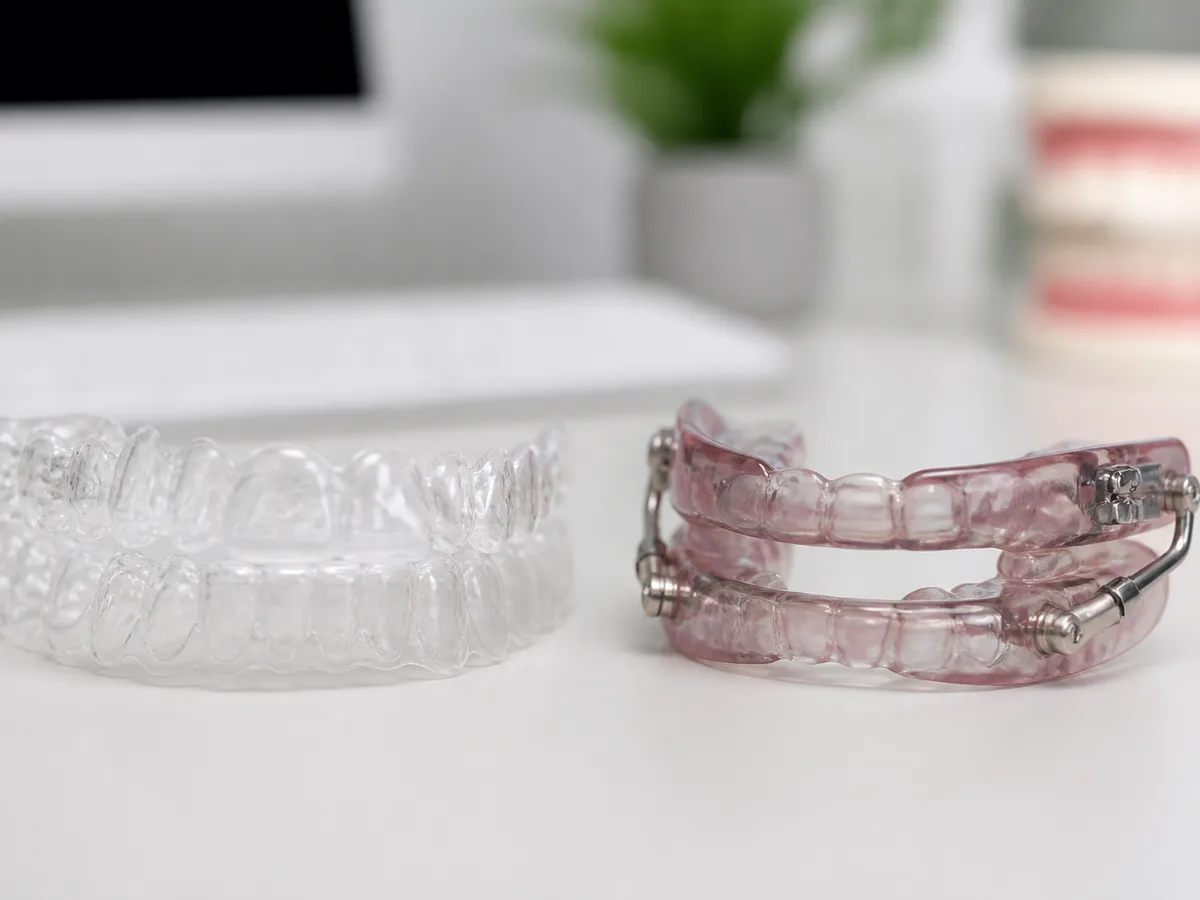 Job descriptions prevent category errors.
Similar plastic, different jobs
Aligners are thin trays meant to be removed for meals and to apply orthodontic forces. Sleep appliances are bulkier systems designed to maintain a therapeutic jaw posture for hours of sleep. Swapping one for the other because both are “clear plastic” misunderstands the engineering. If you are mid-aligner treatment and snoring worsens, call both your orthodontist and physician rather than advancing trays faster. Keep prescribed PAP or a true sleep appliance in play when those are your medical therapies.
Questions Before Combining Orthodontics And Sleep Care
- Has OSA been diagnosed, and what therapy does my physician want active right now?
- Will tooth movement interfere with a current or future MAD?
- Who monitors sleep symptoms during orthodontics?
- Are any airway claims part of my consent—or only alignment goals?
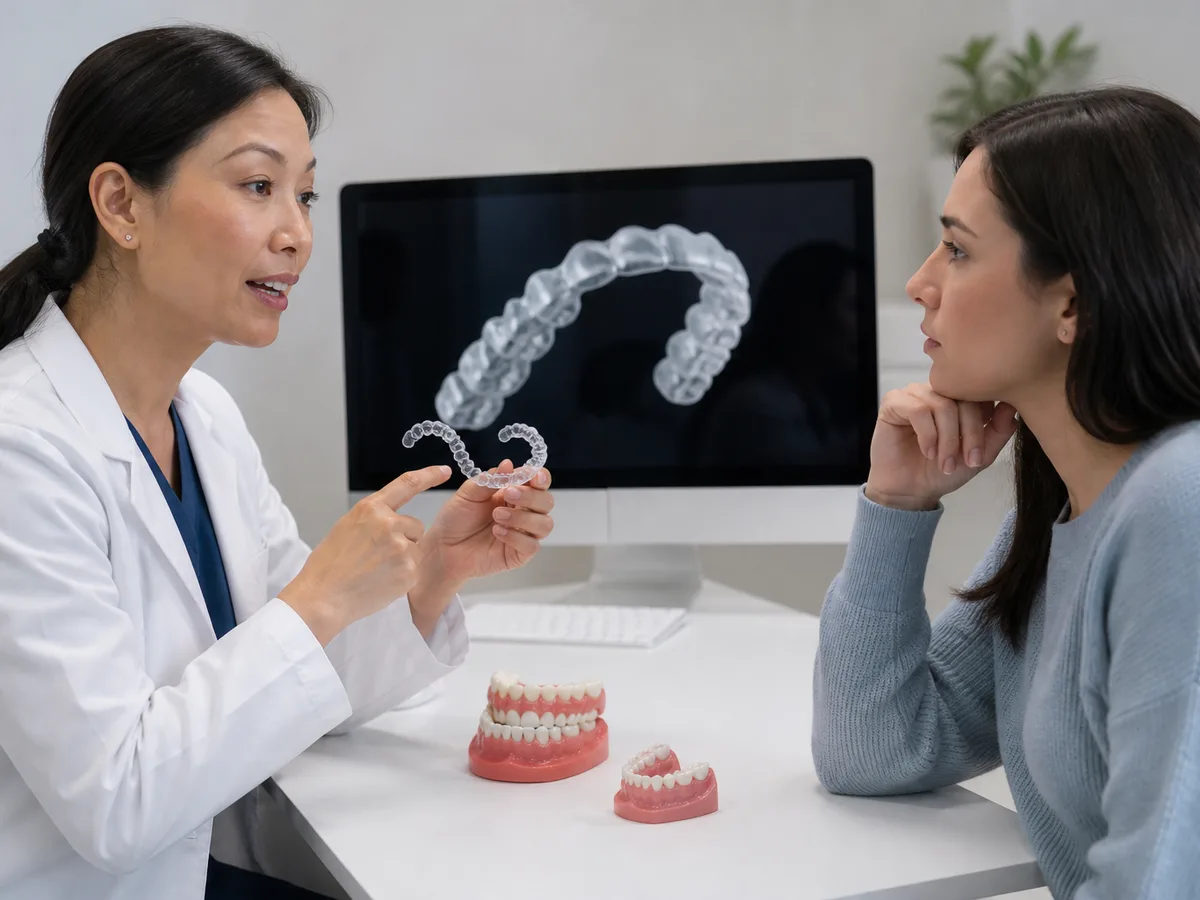 Separate goals, safer decisions.
Straight teeth are not an apnea endpoint
Write two goal lists: orthodontic outcomes and sleep outcomes. If sleep goals include fewer apneas, insist on therapies designed for that endpoint—see CPAP and appliance comparisons. For a dentist who will not blur those lists, use Find a Dentist and mention both aligner interest and OSA diagnosis when you schedule. Clear aligners can transform a smile; sleep apnea still needs sleep medicine logic.
Clear aligners do not replace proven OSA treatments. Use them for appropriate orthodontic reasons, keep apnea therapy under medical guidance, and treat jaw-forwarding sleep appliances as a different device class entirely.
Related articles
Keep exploring related topics from Dental Country.
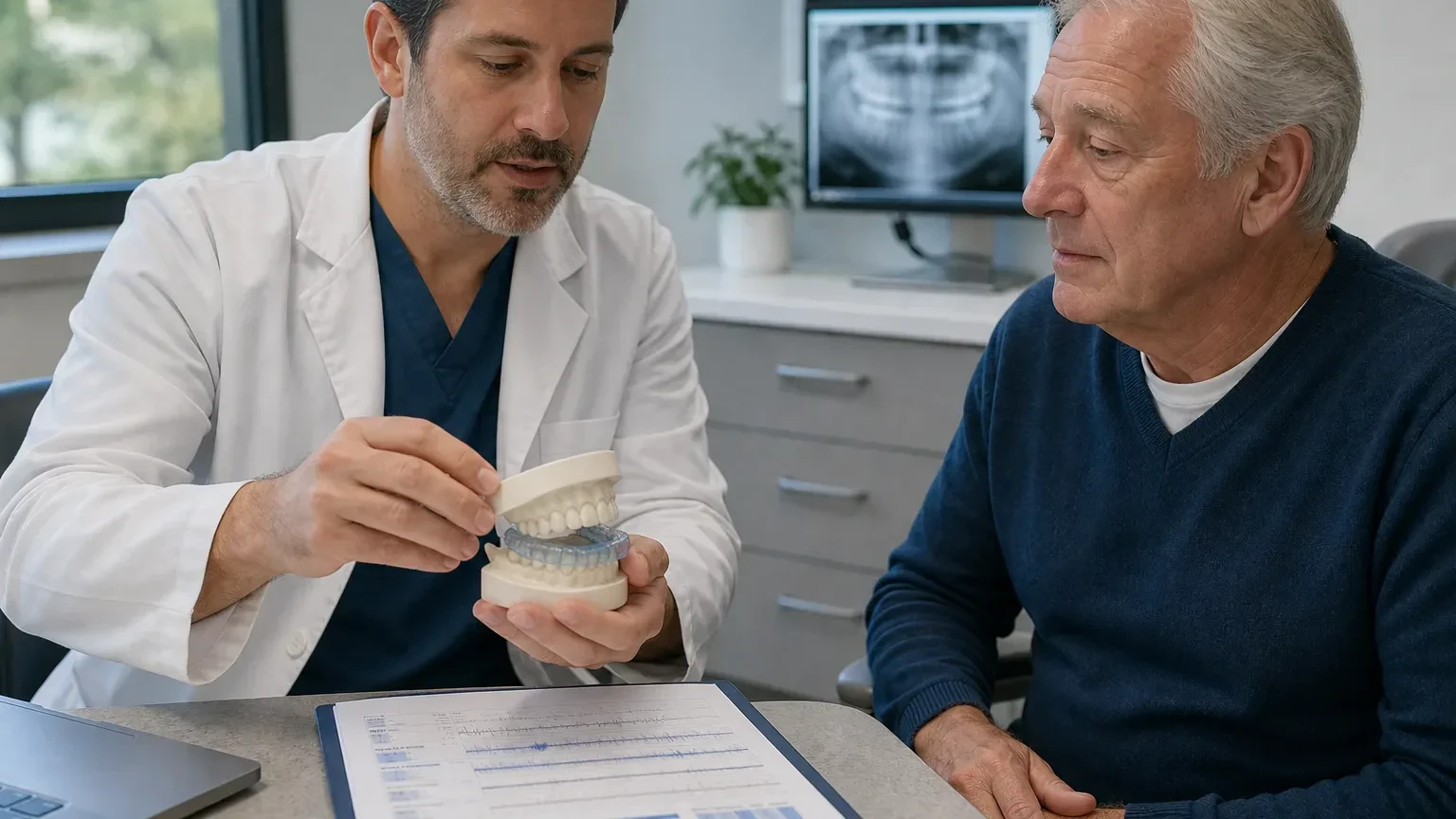
Can A Dentist Treat Sleep Apnea?
A dentist can often deliver a custom oral appliance for obstructive sleep apnea once a physician confirms the diagnosis—but dentists do not replace sleep-medicine evaluation or claim CPAP is unnecessary for every patient.
Read article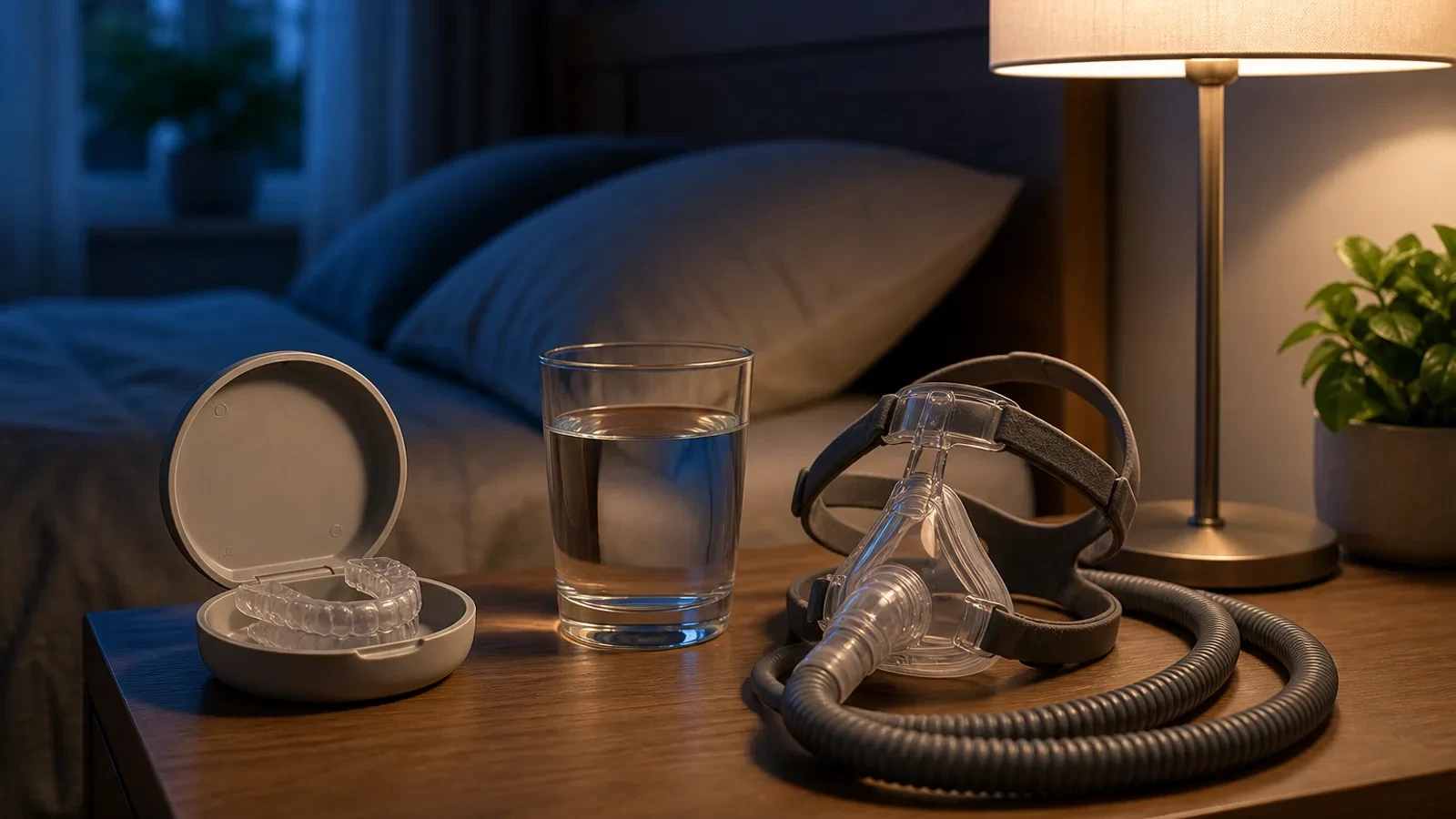
Oral Appliance Vs CPAP: Which Is Better?
CPAP usually opens the airway more reliably, while custom oral appliances can be simpler to travel with and tolerate—so “better” depends on severity, preference, and medical guidance rather than a single winner.
Read article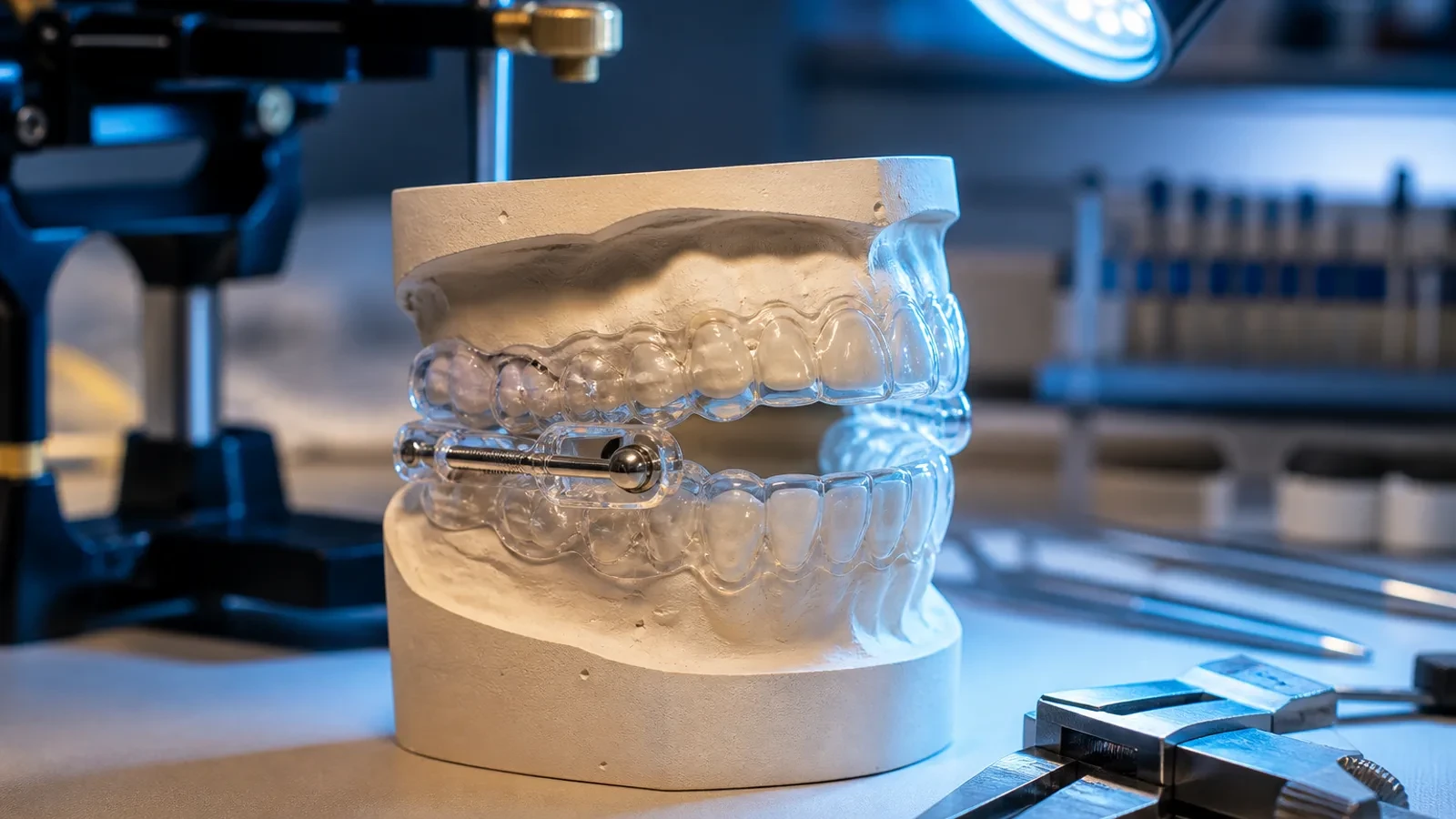
What Is A Mandibular Advancement Device?
A mandibular advancement device is a custom oral appliance that holds the lower jaw slightly forward during sleep to reduce airway collapse in selected people with snoring or obstructive sleep apnea.
Read article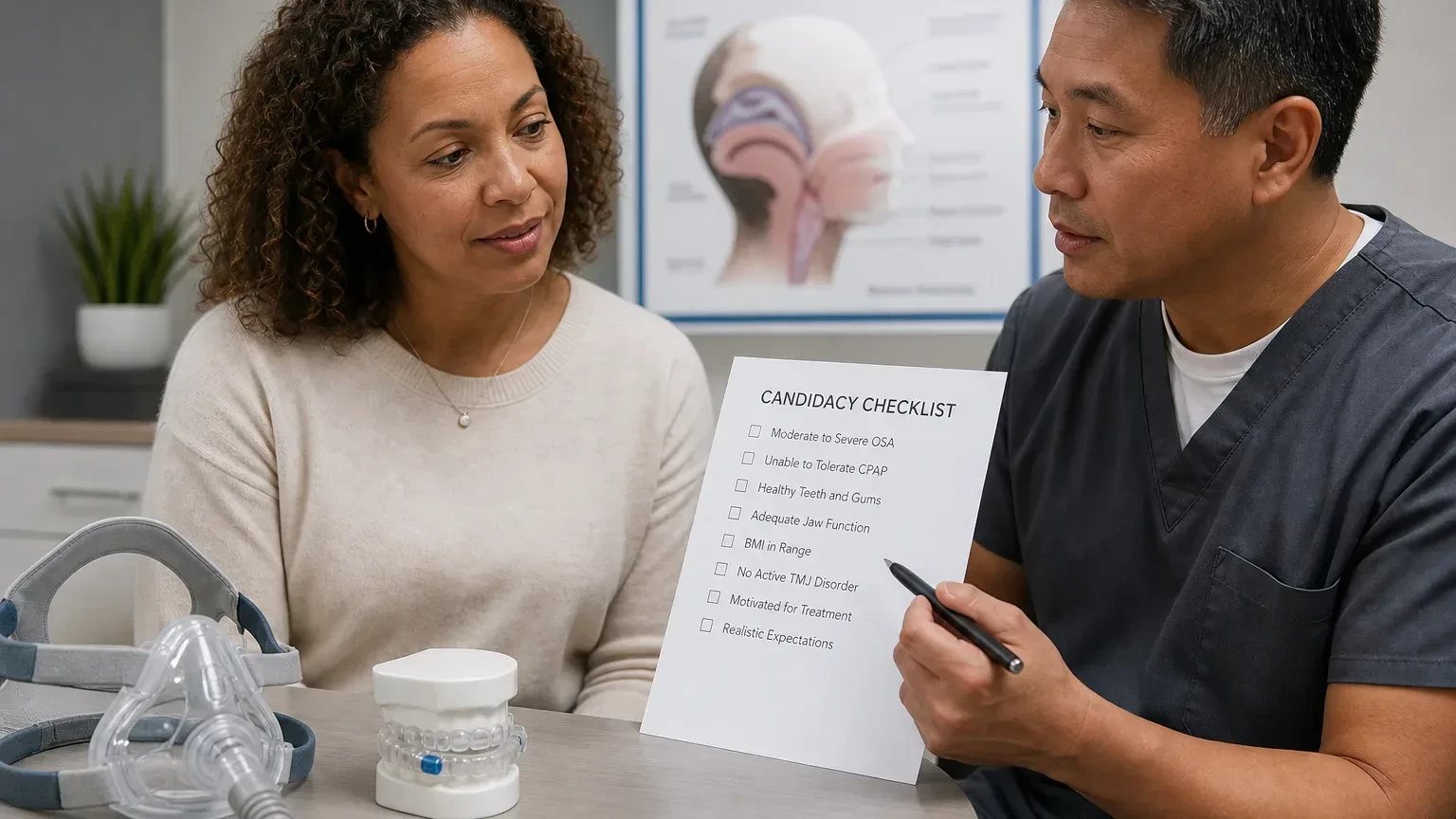
Who Is A Candidate For A Sleep Apnea Oral Appliance?
Strong oral-appliance candidates usually have a confirmed OSA or snoring diagnosis, enough healthy teeth, manageable jaw joints, and a physician plan that supports appliance therapy—especially when CPAP is poorly tolerated.
Read article