
How Do You Handle Bleeding After Dental Work?
Bleeding after dental work often slows with steady pressure. Learn a practical timeline, what is normal, and when to call urgently for care.

Reviewed by Dr. Sean Myran, DMDDoctor of Dental Medicine, University of Pennsylvania
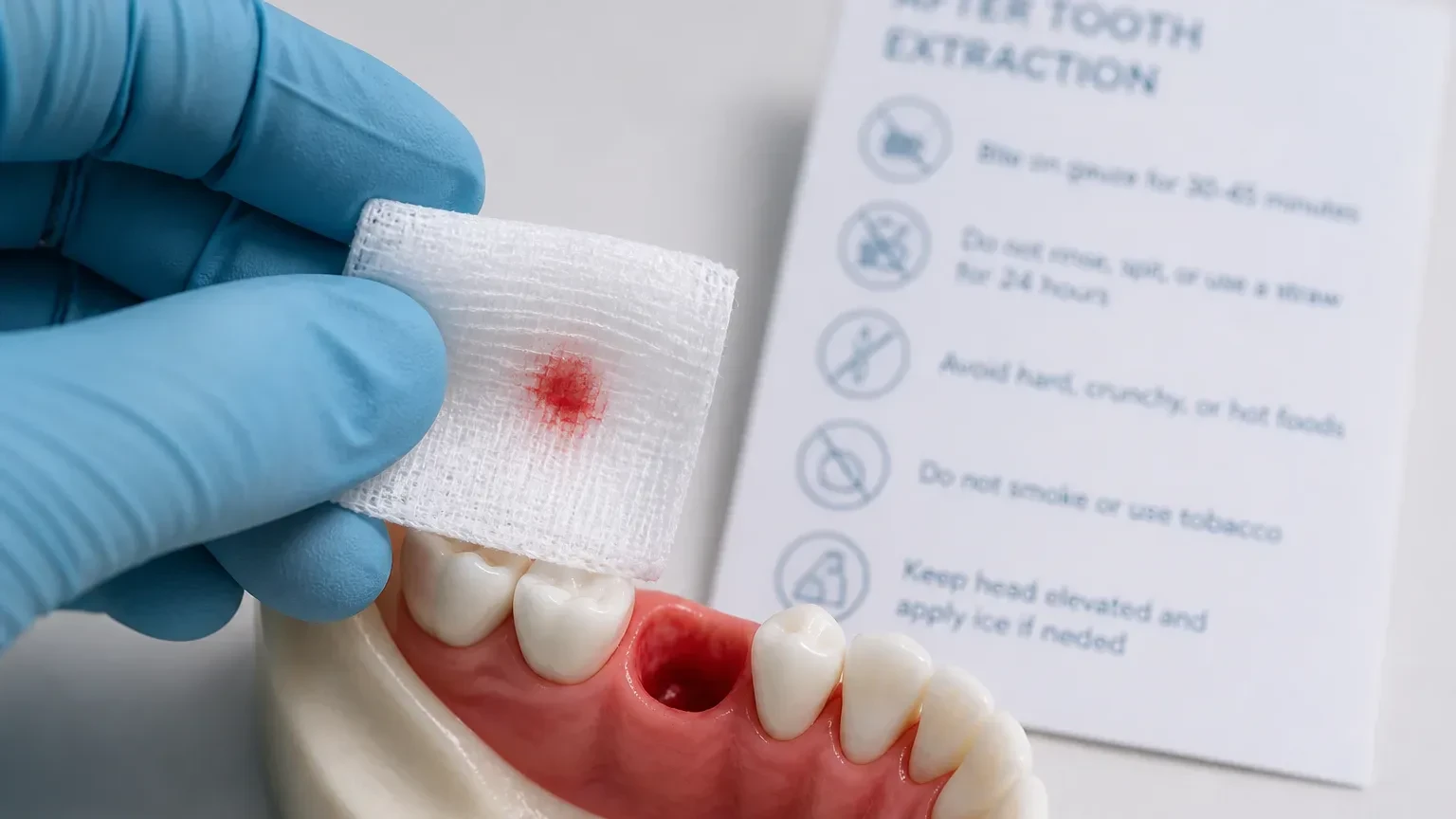
Light bleeding or pink saliva can be normal after extractions, gum procedures, or some oral surgery. The first step is firm, uninterrupted pressure with clean gauze for the time your dentist or surgeon recommends, often 20 to 30 minutes. Keep your head elevated and avoid spitting, vigorous rinsing, straws, smoking, and alcohol early on. AAOMS patient information on extractions and dentoalveolar surgery reinforces the importance of following surgical aftercare instructions.
Bleeding Timeline
- First hour: Bite on folded gauze with steady pressure. Replace only when instructed, not every few minutes.
- Same day: Pink saliva or slow oozing can occur. Rest, keep the head elevated, and avoid disturbing the clot.
- Day 1: Oozing should trend down. Gentle rinsing may start only if your instructions allow it.
- Days 2-3: New heavy bleeding is not expected and deserves a call.
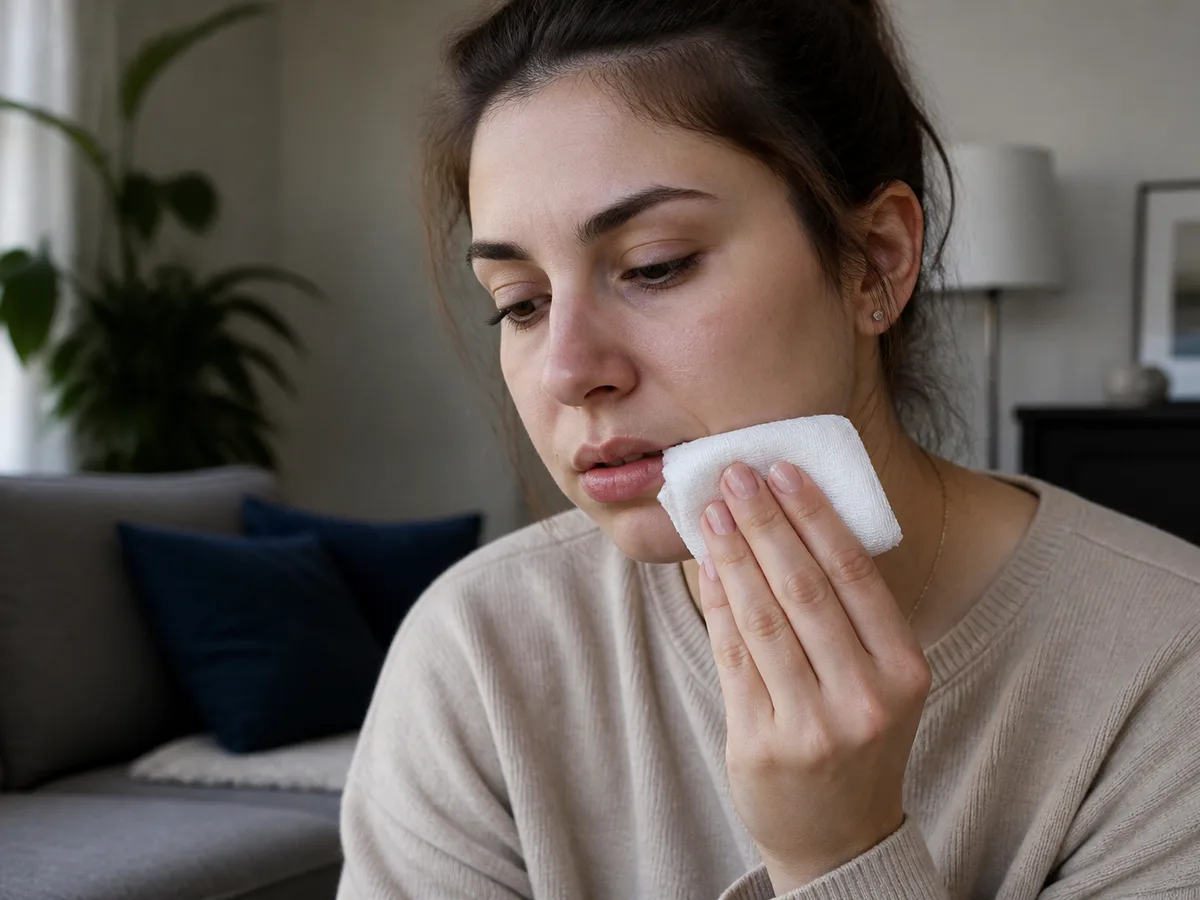 The clot needs quiet time to organize.
Pressure works when it is steady
Fold gauze thick enough to place direct pressure over the site, then bite gently but firmly. Talking, checking, and changing gauze too often can pull away the forming clot. If your dentist suggested a moistened black tea bag for minor oozing, use it as directed; tannins may help with clotting. It is a backup for mild oozing, not a substitute for urgent care when bleeding is heavy.
When To Call Or Seek Help
Call the treating office if gauze fills rapidly, bleeding remains heavy after repeated pressure, you feel weak or dizzy, bleeding restarts forcefully, or you take blood thinners and were given special instructions. Do not stop prescribed blood thinners unless the prescribing clinician tells you to. Seek emergency medical care for fainting, trouble breathing, blood pooling despite pressure, or bleeding after major facial injury.
A common mistake is treating every red tint as active bleeding. Saliva spreads a small amount of blood and can look more dramatic than it is. Check the gauze, not only the sink. If the pad has a small spot after steady pressure, that is different from soaking through repeatedly. If you feel anxious, sit upright, keep pressure in place, and call the office before starting a cycle of rinsing and checking that keeps disturbing the clot.
If bleeding followed trauma with a knocked-out tooth, see What Should You Do If You Knock Out A Tooth?. For broader triage, What Counts As A Dental Emergency? can help. Jaw trauma with bite changes belongs with When Is Jaw Pain A Dental Emergency?. If you cannot reach the treating office and need local help, find a dentist and explain the procedure and timing.
Food and activity choices matter for the next day. Choose cool, soft foods if your instructions allow eating, and keep utensils away from the site. Skip heavy lifting, bending, and hot drinks until your team says they are safe. If you were given sutures, do not pull at them with your tongue. The aim is boring healing: less suction, less heat, less pressure change, and fewer reasons for the clot to restart. Set up your sleeping area so your head stays elevated comfortably overnight through morning.

Instructions beat internet averages
Different procedures bleed differently. A simple filling should not cause the same oozing as an extraction. Gum surgery, implants, extractions, and biopsies each come with specific instructions. Keep the aftercare sheet nearby and use the phone number printed on it. The team that treated you knows whether sutures, graft material, or medications change the usual advice.
The Practical Pattern
Bleeding should slow, not accelerate. Firm pressure, clot protection, and clear communication solve most post-op oozing; heavy or returning bleeding deserves direct guidance.
Related articles
Keep exploring related topics from Dental Country.
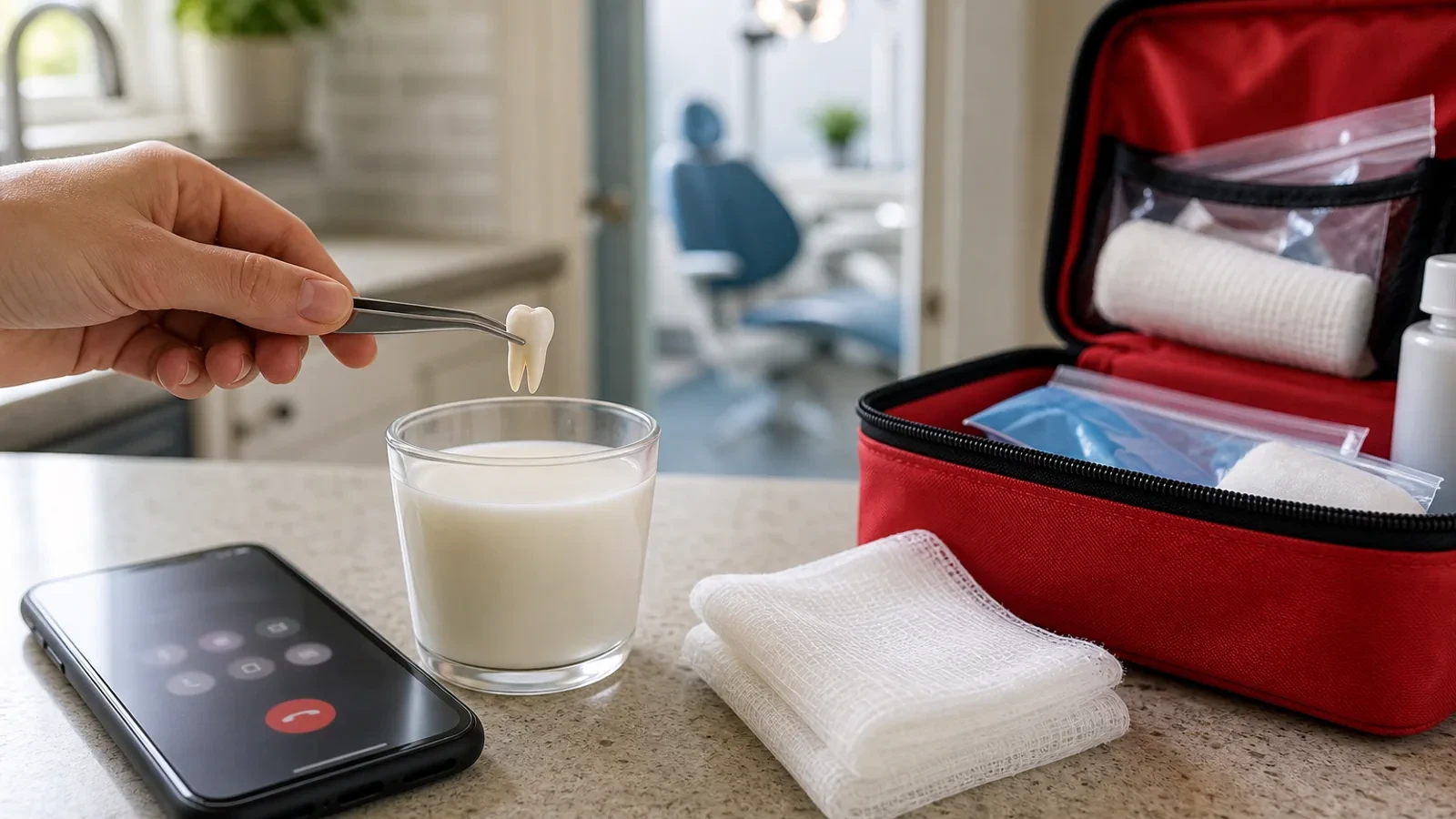
What Should You Do If You Knock Out A Tooth?
A knocked-out permanent tooth is one of the few dental emergencies where minutes change the odds. Handle the root gently and keep the tooth moist.
Read article
What Counts As A Dental Emergency?
Not every dental problem needs the ER, but some should not wait for a routine appointment. Use symptoms, speed, and risk to triage the next step.
Read article
How Do You Stop A Toothache Until The Dentist?
Toothache first aid is about reducing irritation without masking danger. The goal is a calmer wait, not a home cure for decay or infection.
Read article
What Should You Do For A Cracked Tooth?
A cracked tooth often hurts in flashes, not constantly. Stop flexing it, protect the edge, and let a dentist identify how deep the crack runs.
Read article