
At-Home Aligners Vs Invisalign: Is The Cheaper Option Safe?
At-home aligners often skip the in-office exams that Invisalign care usually includes. Weigh safety tradeoffs before picking a cheaper path.

Reviewed by Dr. Sean Myran, DMDDoctor of Dental Medicine, University of Pennsylvania
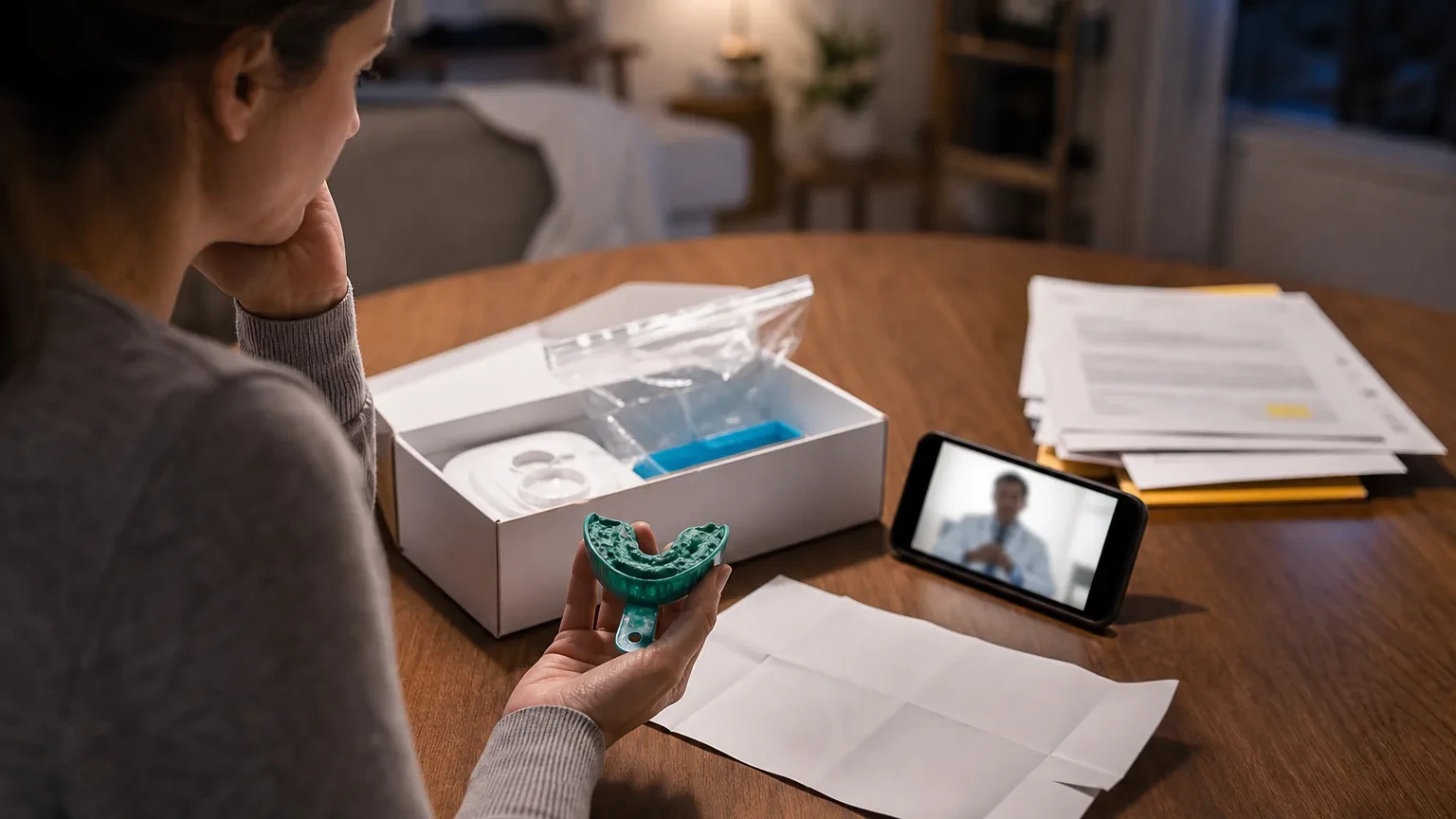
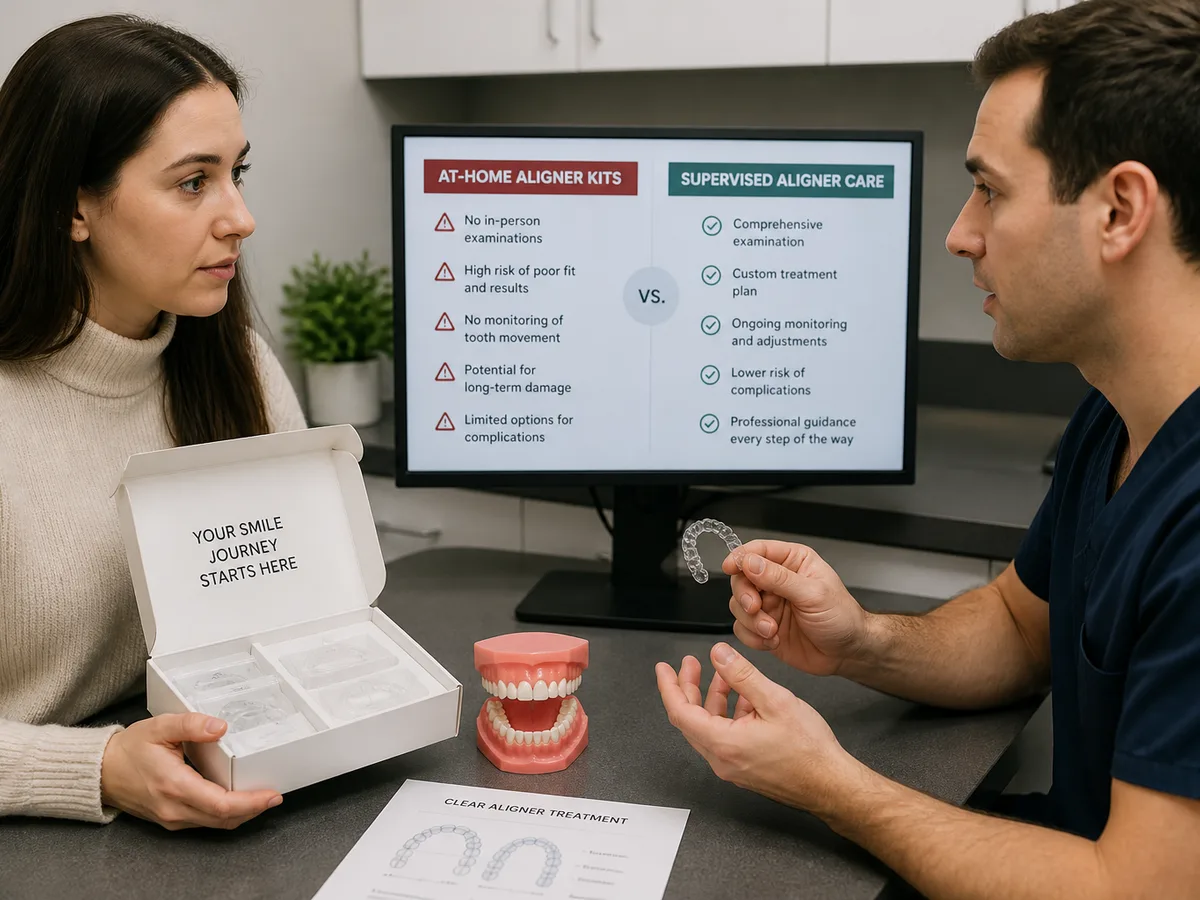
Cheaper is not the same as equivalent. Invisalign brand treatment is typically delivered with in-person records and ongoing clinical judgment. At-home or direct-to-consumer aligners often rely on mail-order impressions or limited scans with remote review. Some people finish limited cosmetic goals without drama; others discover that skipped exams hid decay, bone loss, or a bite that should not have been moved with trays alone.
AAO consumer guidance emphasizes professional evaluation for clear aligner therapy because tooth movement is biologically complex. Use that caution when a price comparison ignores diagnostics.
Myths Vs Facts
- Myth: All clear trays are medically identical.
Fact: Brands, plastics, software, and clinician protocols differ; Invisalign is one brand, not a synonym for every aligner. - Myth: If trays fit the mold, the bite is fine.
Fact: Fit on crowns does not prove roots, joints, and gums are ready for force. - Myth: Skipping visits only saves money.
Fact: Missed monitoring can miss non-tracking teeth, root issues, or hygiene damage under plastic. - Myth: Cheaper kits always include unlimited fixes.
Fact: Refinement and refund policies vary—and companies can change or close.
Another myth is that “dentist-directed” always means the same level of care. Some paths include regular in-person checks; others lean on photo uploads with infrequent exams. Ask how often someone who can change your plan will see you. A supervised Invisalign schedule is not magical because of the logo—it is safer when monitoring is real, records are complete, and backup options exist if trays stall.
Red flags include pressure to skip X-rays, refusal to share who is responsible for diagnosis, and promises that any bite can be fixed for a flat online price. Healthy skepticism is appropriate when the sales flow spends more time on financing than on periodontal health. Your teeth are not a subscription box.
 Exam before any kit.
Safety starts under the gums
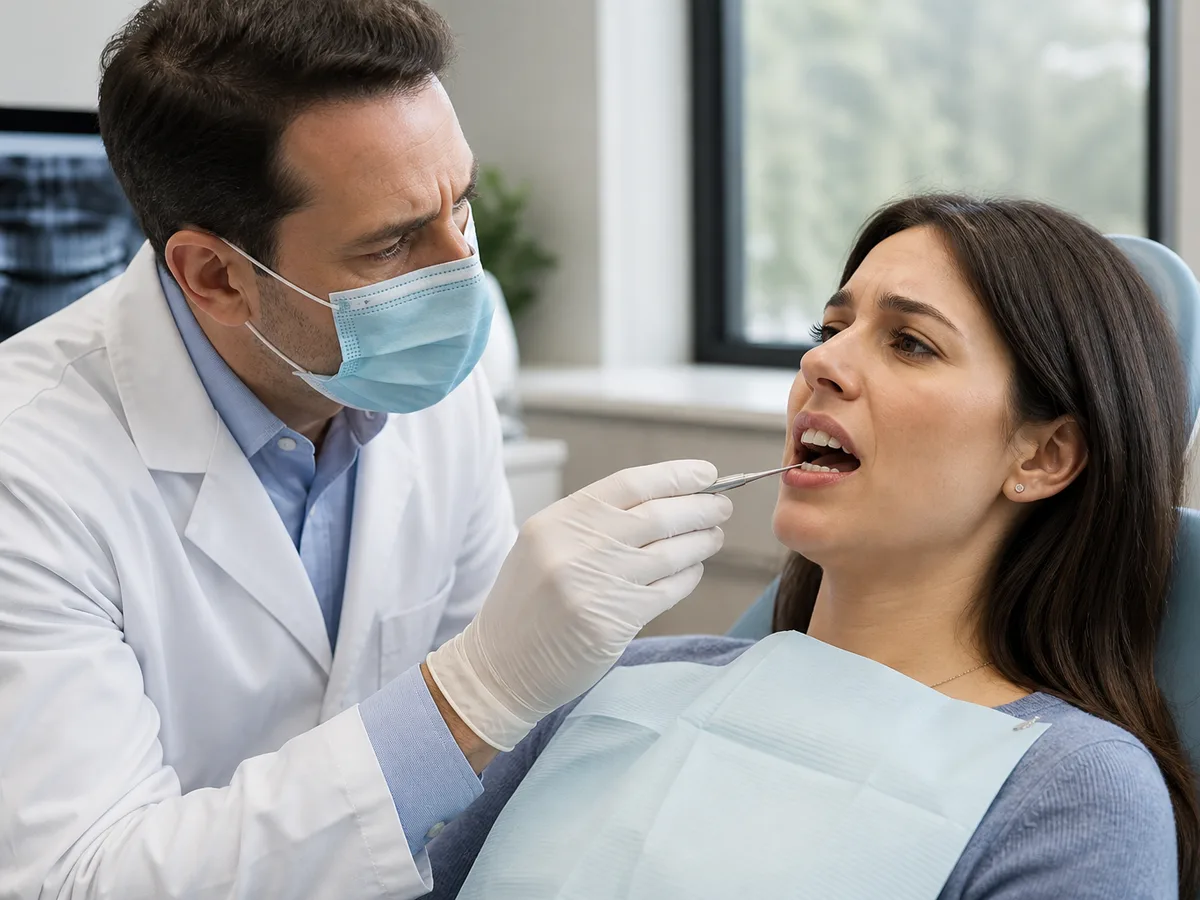
Orthodontic force on inflamed gums or untreated cavities can worsen problems while trays look “on schedule.” A supervised Invisalign consult usually screens for those issues first. At-home funnels may ask health questions online, yet they cannot replace periodontal probing or decay detection. If your last full dental exam was years ago, pause mail-order shopping until that visit is done. Bleeding gums, loose teeth, or known bone loss deserve a periodontal plan before any aligner brand enters the chat.
Compare oversight models in Invisalign versus SmileDirectClub-style care and brand-to-brand clinical options in Invisalign versus ClearCorrect. Alternatives vary; a local limited Invisalign or braces plan may cost more than a kit yet reduce redo risk.
When A Lower Price May Still Be Reasonable
- A dentist already cleared your mouth and is supervising the aligner system.
- Your goals are modest and the clinician agrees trays are appropriate.
- You understand the refinement, refund, and emergency-visit rules in writing.
 Compare total risk, not tray stickers.
Price the full pathway
Add exam fees, fillings, possible braces conversion, and retainers into any comparison. A cheap kit that leaves a midline off or opens a bite can become the expensive path. For supervised options near you, use Find a Dentist and ask how their aligner monitoring works. Candidacy still depends on your records—not on a checkout discount timer. If a deal expires tonight, that urgency is marketing, not clinical necessity.
At-home aligners can look like a bargain until diagnosis is missing. Prefer a path that names a responsible clinician, documents oral health first, and explains what happens if trays fail to track. Safety is a process, not a coupon code. If you already purchased a kit, keep every message and scan file; transferring into supervised care is easier when the new dentist can see what was attempted and why it stalled.
Parents shopping for teens should be especially cautious: growth, wisdom teeth, and compliance change mid-treatment more often than flat online prices admit. A supervised plan can adjust; a sealed box of trays cannot. Invisalign brand care is one supervised route among several—not a guarantee—and candidacy still depends on the exam in the chair.
Related articles
Keep exploring related topics from Dental Country.
Invisalign Vs Braces: Which Is Right For Me?
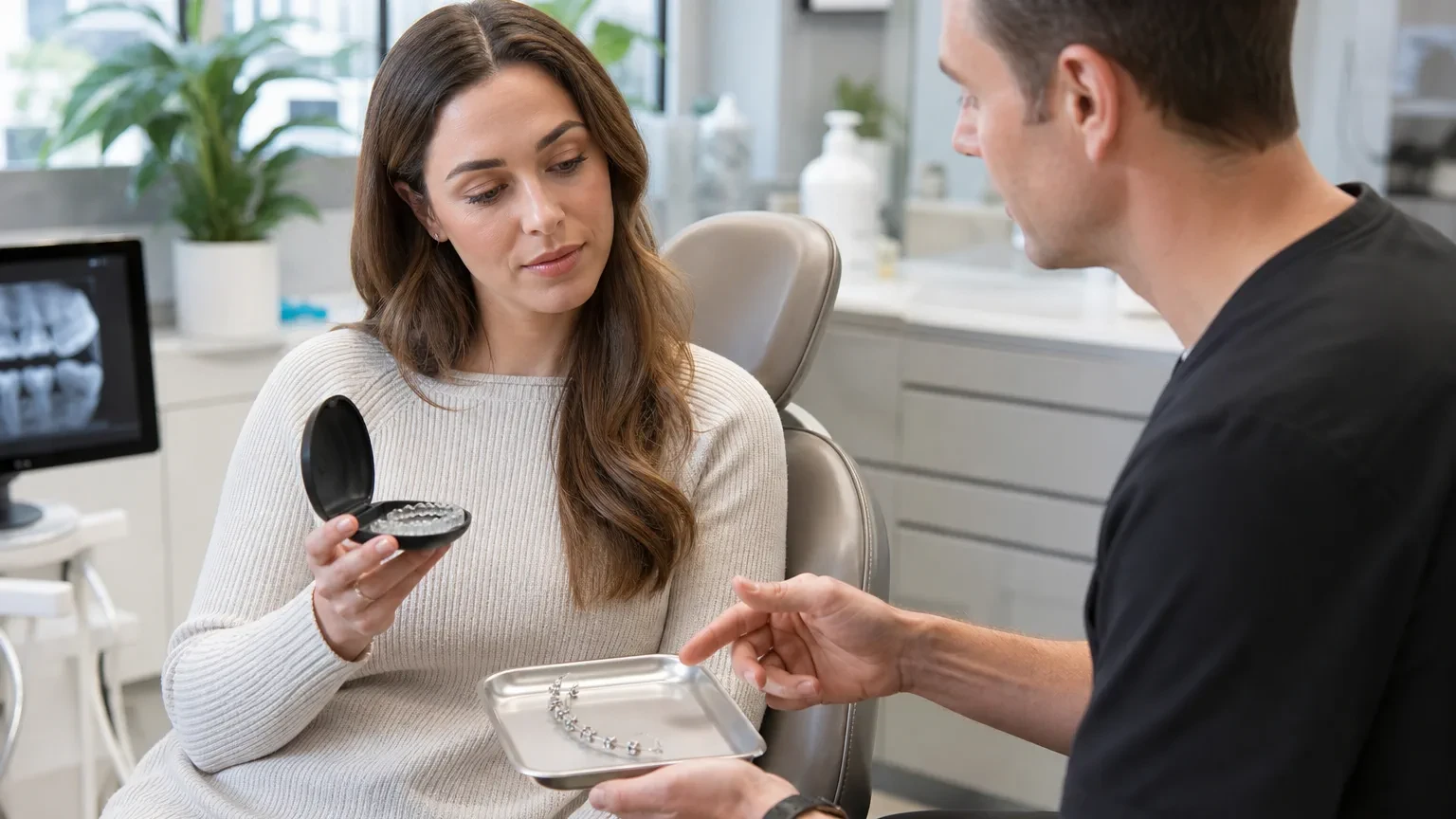
Invisalign is one clear-aligner brand; braces are fixed appliances. The better option depends on your bite, compliance, hygiene habits, and what your orthodontist can predictably move—not on which ad looks cleaner.
Read article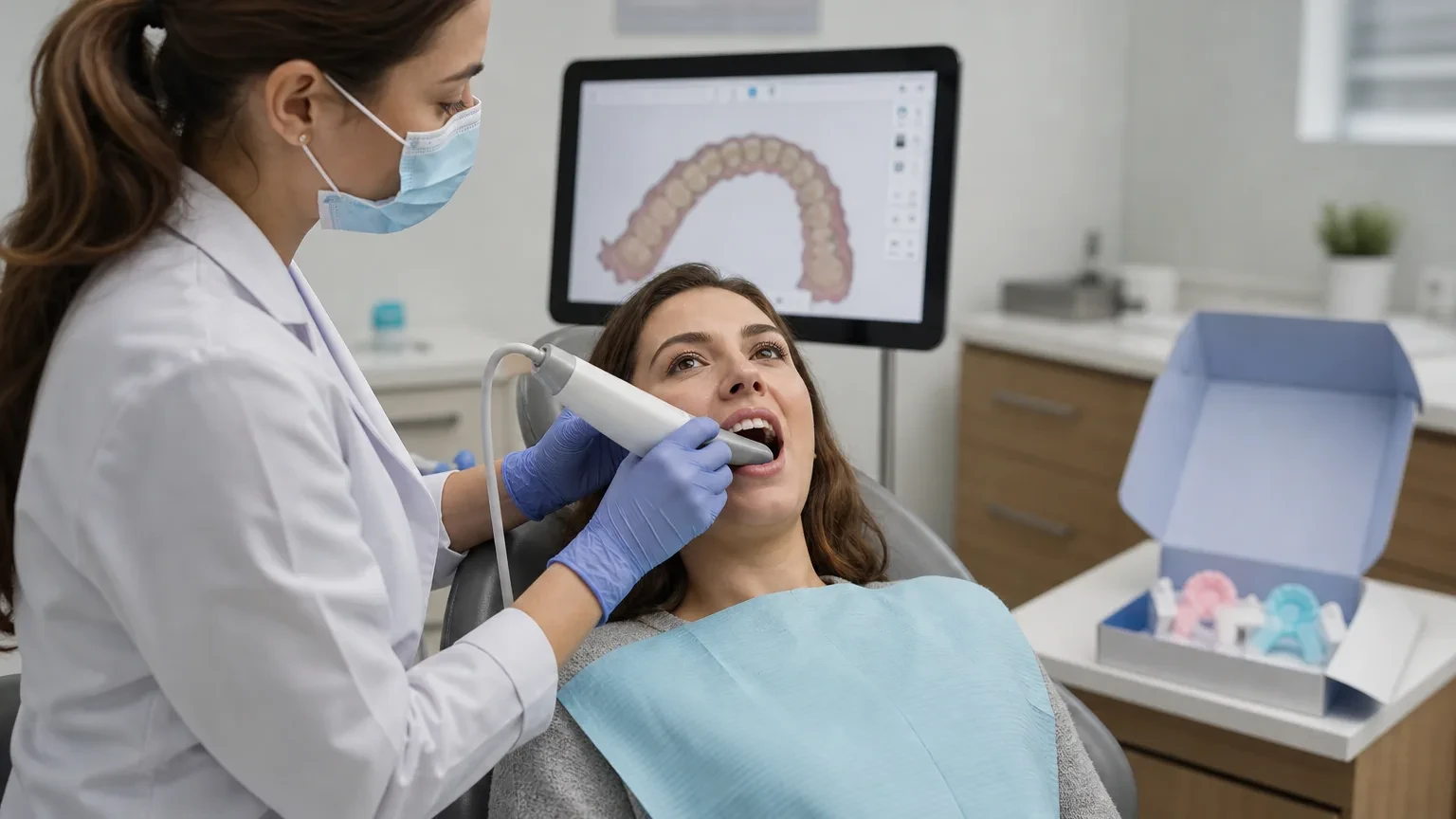
Invisalign Vs SmileDirectClub: What's The Difference?
Invisalign care is typically planned and monitored in a dental or orthodontic office; SmileDirectClub was a direct-to-consumer aligner model with remote oversight. The difference that matters most is clinical examination and ongoing in-person judgment—not tray clarity.
Read article
Invisalign Vs Ceramic Braces: Which Looks Better?
“Looks better” depends on distance, lighting, attachments, and how your case moves. Invisalign trays and ceramic braces both aim for discretion, yet they hide hardware in different ways—and neither is purely cosmetic.
Read article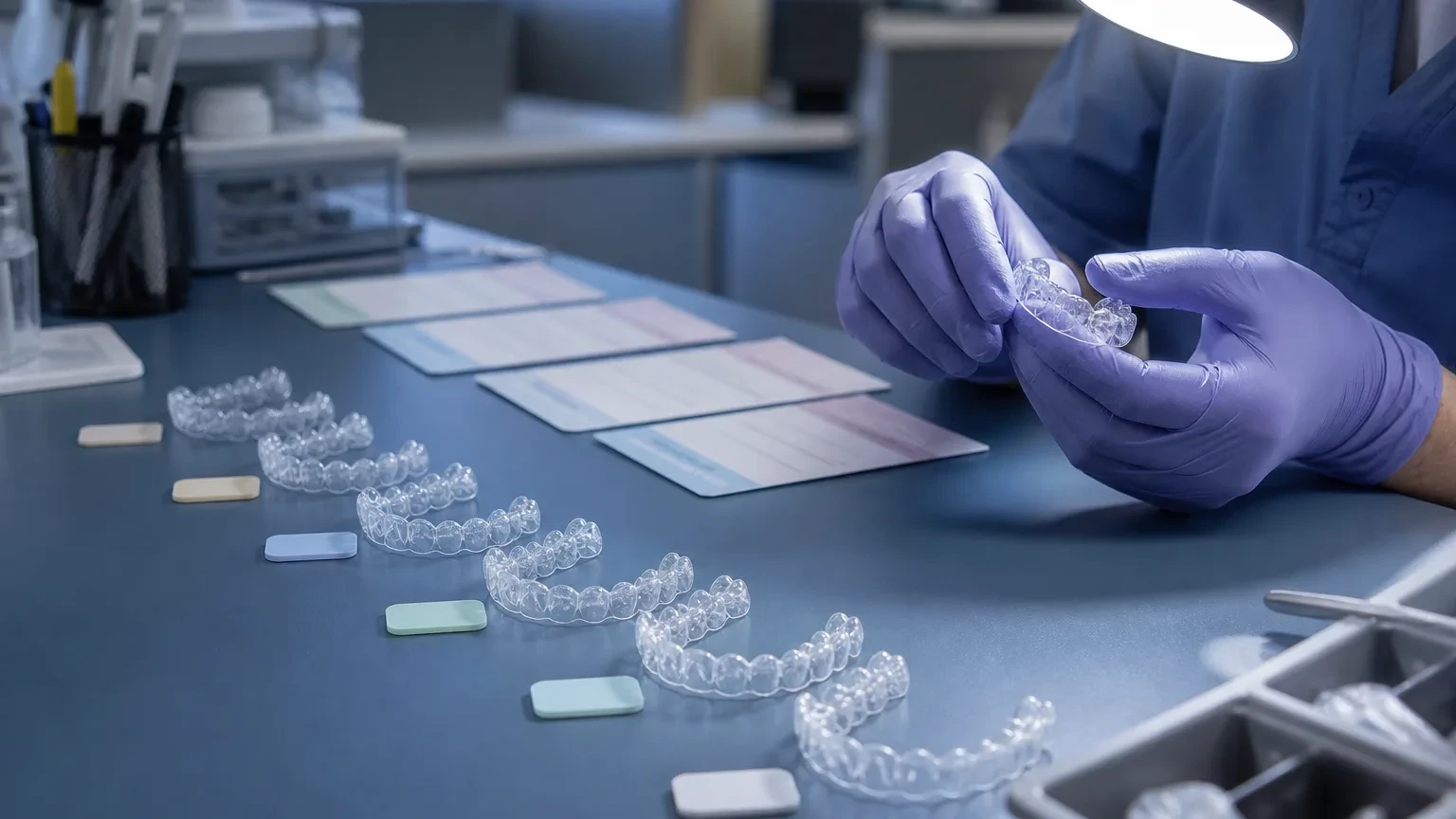
What Are Invisalign Refinements?
Invisalign refinements are additional trays ordered after a progress check when teeth have not fully reached the planned positions. They are common in supervised care and do not automatically mean treatment failed.
Read article