
What Are Dental Crowns Made Of?
Dental crowns can be made of zirconia, porcelain, ceramic, porcelain-fused-to-metal, gold alloys, or resin. Learn how dentists choose materials.

Reviewed by Dr. Sean Myran, DMDDoctor of Dental Medicine, University of Pennsylvania
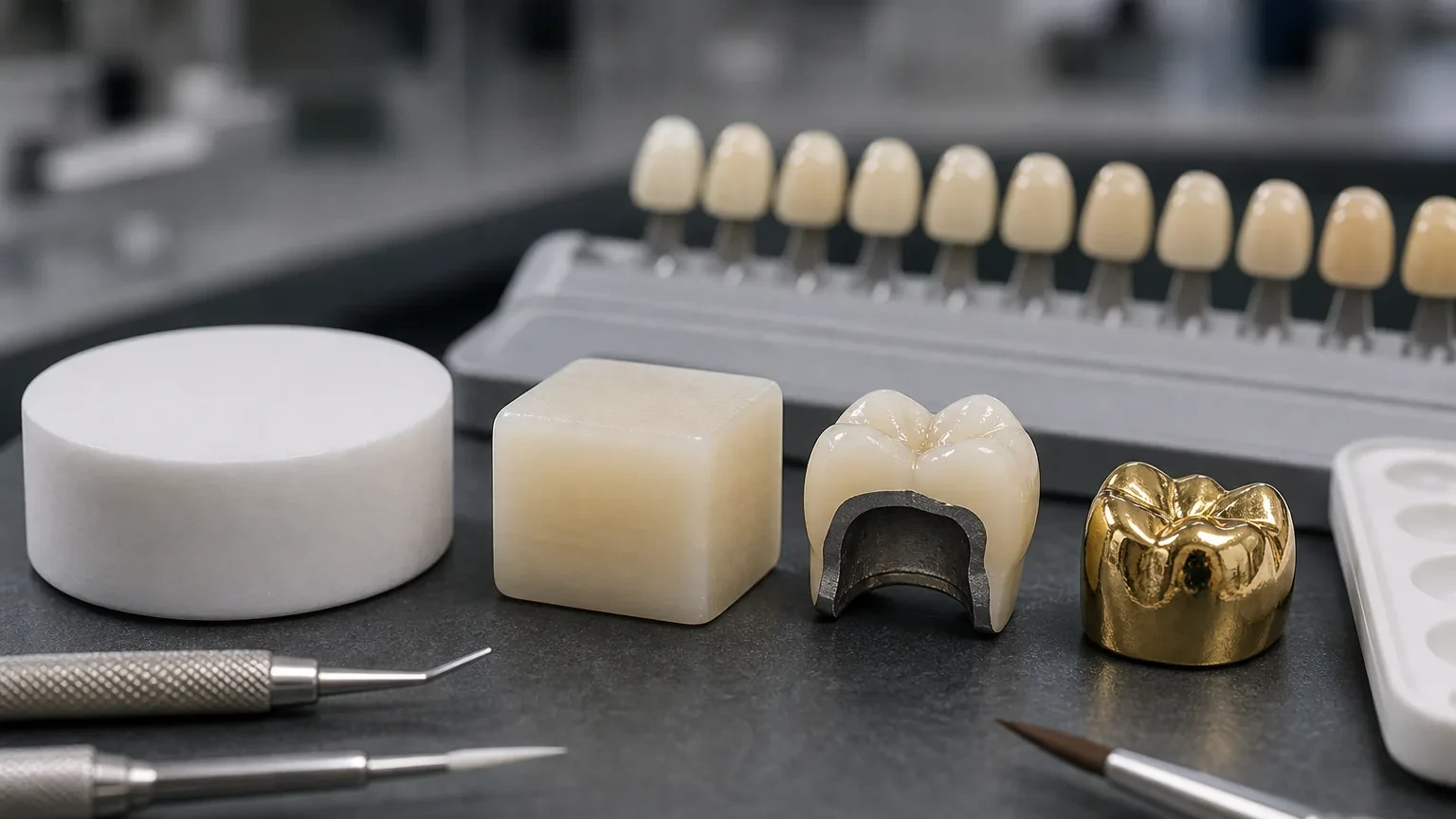
Dental crowns can be made of zirconia, porcelain, other ceramics, porcelain-fused-to-metal, gold or high noble metal alloys, stainless steel in selected temporary or pediatric situations, and resin for some provisional restorations. MouthHealthy lists several crown materials, including metal, porcelain-fused-to-metal, resin, and ceramic. The material is chosen by balancing strength, appearance, tooth reduction, bite forces, gumline position, allergies, and budget.
Common Crown Materials
- Zirconia
- Strong ceramic often used for back teeth or heavy bites, with improving appearance.
- Layered porcelain or ceramic
- Highly esthetic for visible teeth, but design and bite control matter.
- Porcelain-fused-to-metal
- Metal support under porcelain, useful in some strength-and-appearance cases.
- Gold or metal alloy
- Durable and conservative in thickness, though color limits use in visible areas.
- Resin provisional
- Used for temporary crowns or selected short-term plans.
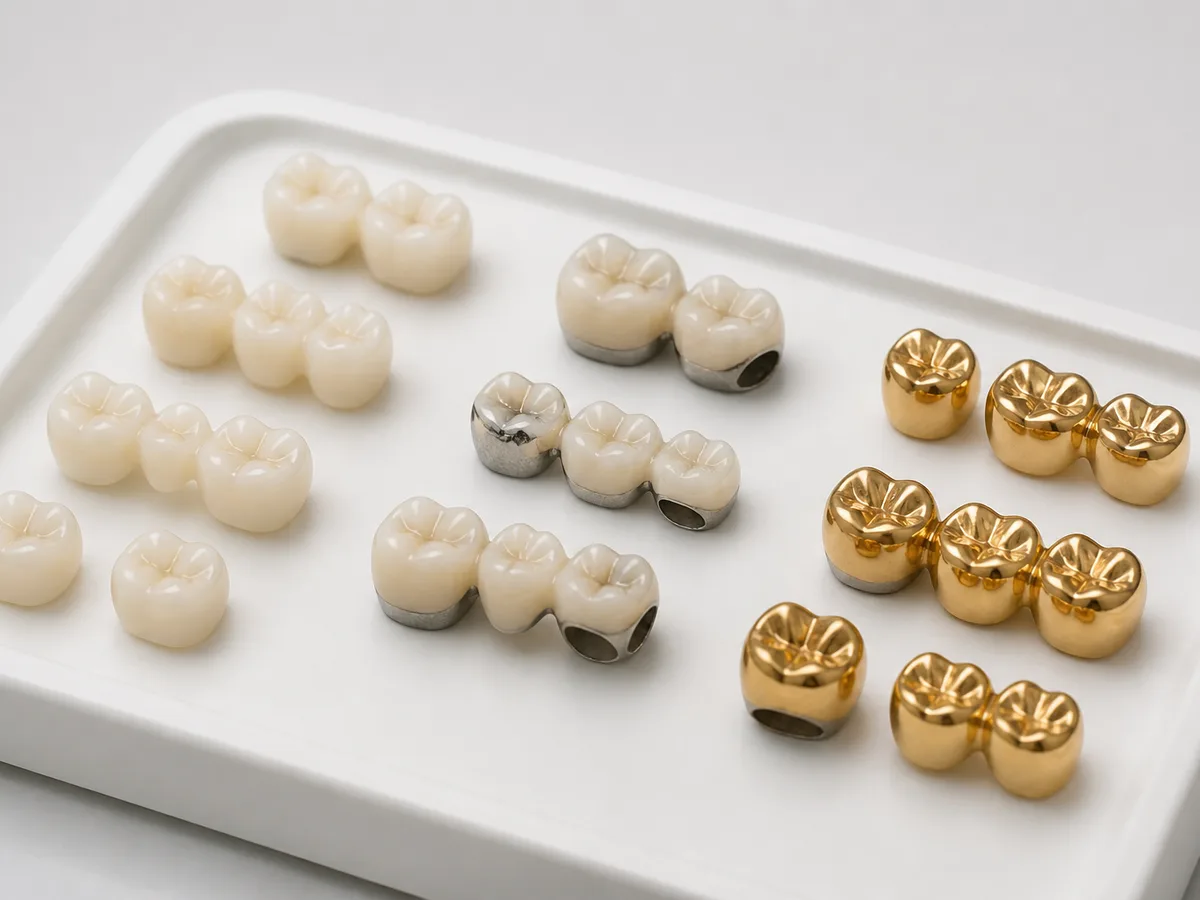 The crown has to fit its workload.
Material choice follows the job
A molar that absorbs heavy chewing may need a different material than a front tooth in the smile line. Strength, shade, space, and the opposing tooth all influence the recommendation.
How Dentists Choose
For front teeth, color, translucency, and surface texture often matter most. Ceramic options can be layered and shaded to blend with neighboring teeth. For back teeth, fracture resistance and thickness may take priority. A patient who grinds heavily may need a stronger monolithic design or a nightguard after delivery. If lifespan is your main concern, read How Long Do Dental Crowns Last?.
Tooth color underneath can also affect the plan. A dark root canal tooth, metal post, or old filling may need a material that masks discoloration. Gum recession risk matters because a crown edge that looks natural today may become visible later. Some materials are kinder to opposing enamel than others, and some are easier to adjust or polish after bite changes.
Cost varies by office, lab, material, and complexity, but the most expensive material is not always the best material for a specific tooth. A beautiful ceramic crown in the wrong bite can chip. A very strong crown with poor margins can still fail from decay. Fit, design, cementation, and maintenance are just as important as the name of the material.
The opposing tooth also deserves attention. Some materials can be polished very smooth; others may be layered for beauty but more vulnerable at thin edges. If you already have crowns, veneers, implants, or heavy wear, the new crown must work with that existing dentistry. For patients with metal sensitivities or strong cosmetic preferences, the conversation should happen before the tooth is prepared so the dentist can choose enough reduction, opacity, and margin design for the intended material.
Ask whether your crown will be monolithic, layered, or bonded in a way that affects repair. Those design details are more useful than simply asking for the strongest or prettiest material, especially when the crown will show in your smile or oppose another restoration under daily chewing forces for many meals and snacks.
 The best material solves several constraints.
Ask about strength and shade together
Ask why the recommended material suits the tooth, not just what it is called. To compare options locally, use find a dentist and ask whether the office uses digital scans, outside labs, or same-day milling.
What To Ask Before You Choose
Ask how much tooth must be removed, whether the crown may affect the opposing tooth, how repairs work if porcelain chips, and whether the material is appropriate for bridges. If the crown is part of a missing-tooth plan, compare material questions with What Is A Dental Bridge?. For fee planning, see How Much Does A Dental Crown Cost?.
Related articles
Keep exploring related topics from Dental Country.
When Do You Need A Dental Crown?
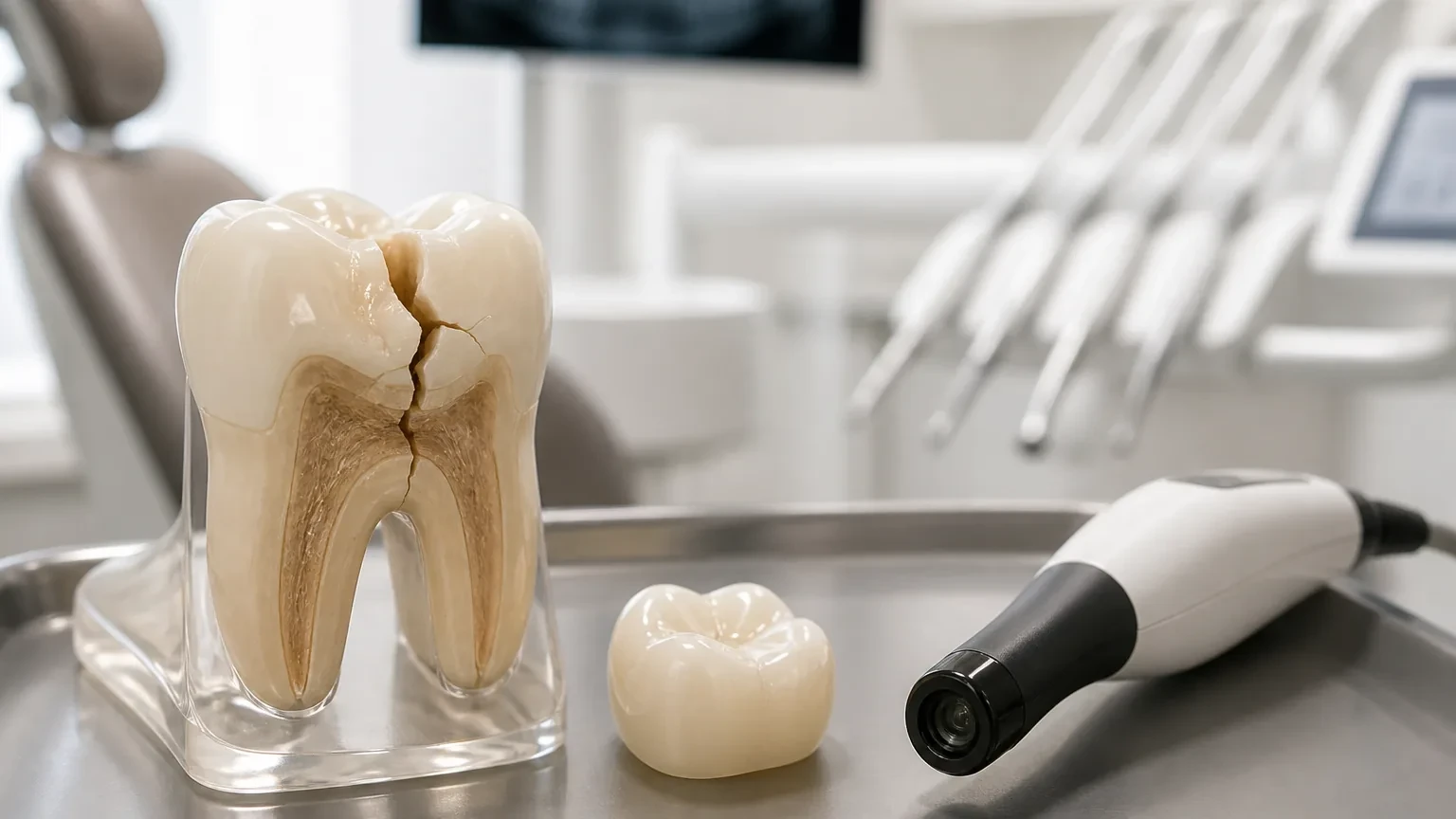
A crown recommendation usually means the tooth needs reinforcement, not just a patch. The deciding clues are cracks, walls, bite, and remaining enamel.
Read article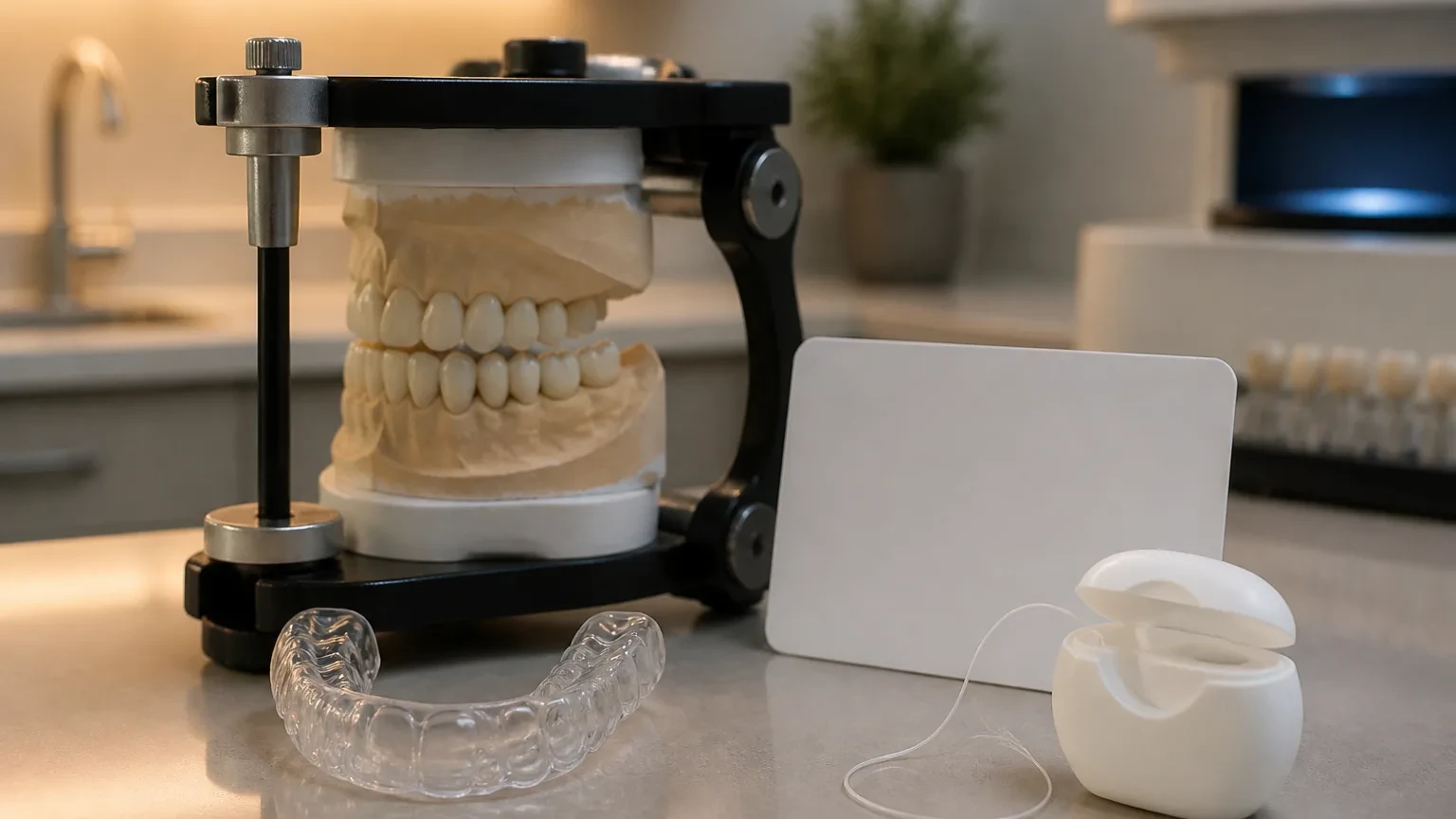
How Long Do Dental Crowns Last?
Crown lifespan is not a fixed warranty. The tooth underneath, the bite around it, and the edge where plaque collects decide much of the outcome.
Read article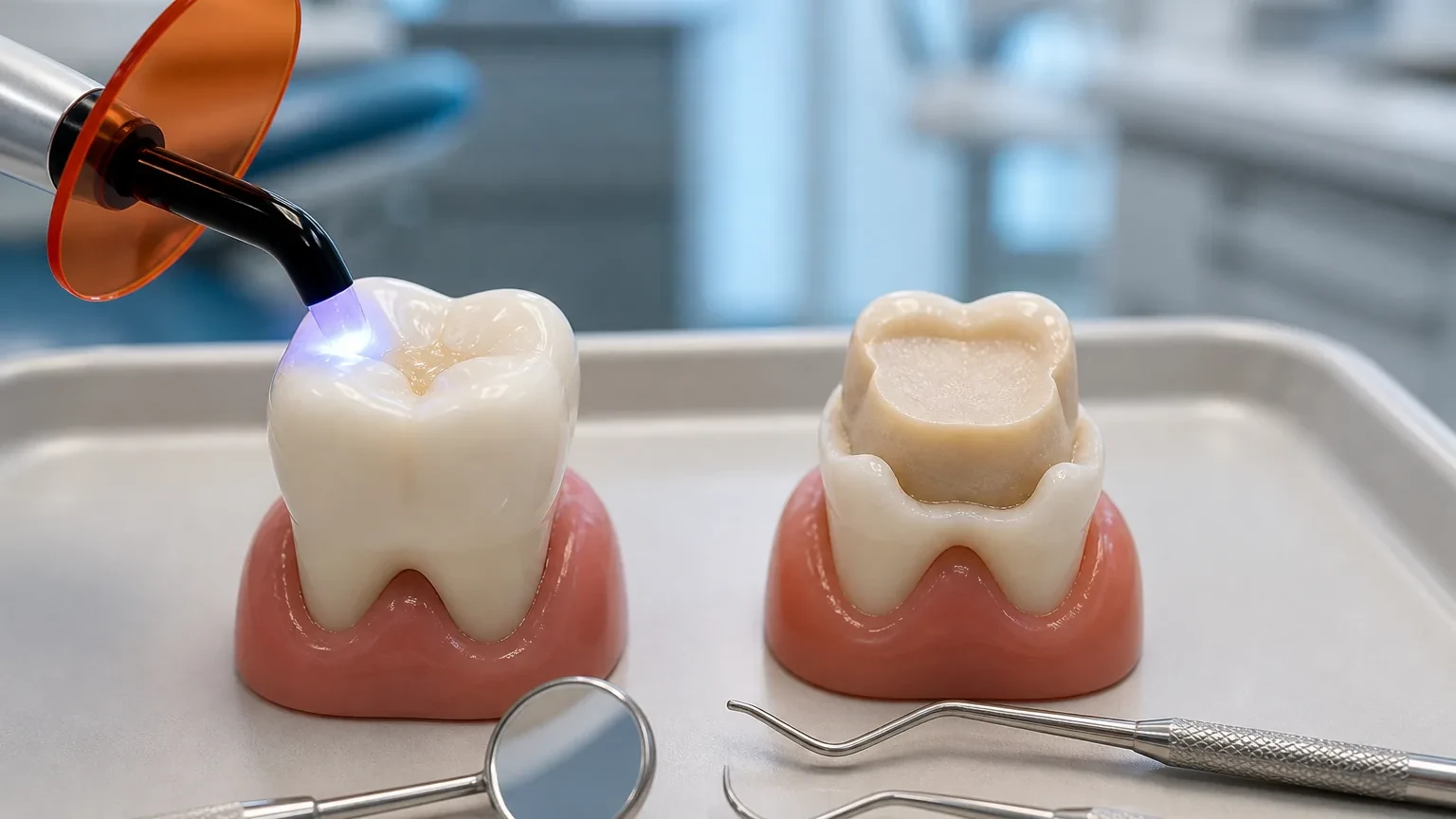
Crown Vs Filling: How Do Dentists Decide?
A filling replaces missing tooth. A crown protects what is left. The right choice depends on structure, cracks, bite, and how much tooth remains.
Read article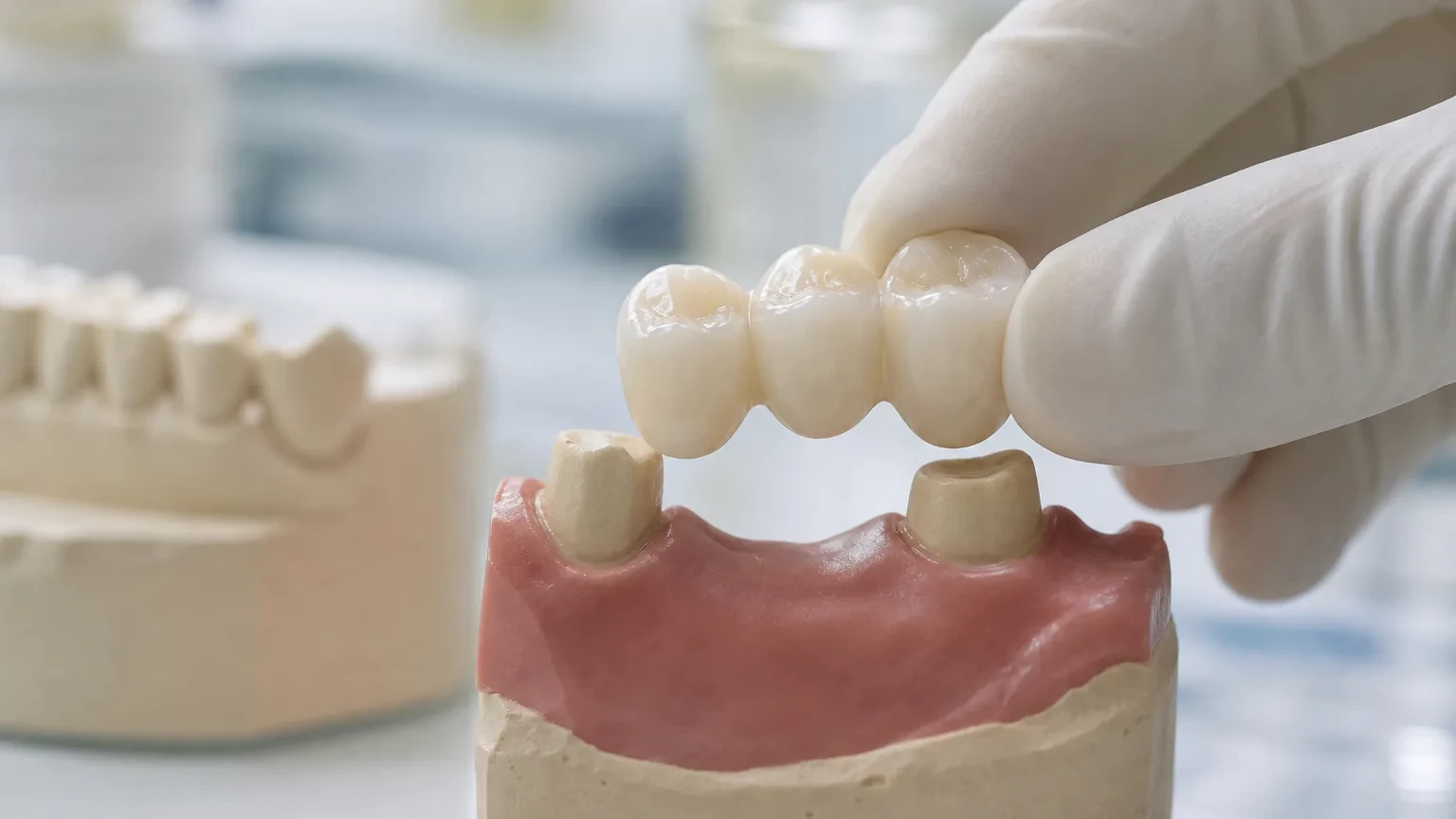
What Is A Dental Bridge?
A dental bridge fills a tooth gap with an artificial tooth supported by neighboring teeth or implants, but the anchors and cleaning plan matter.
Read article