

Is It Normal To Cry At The Dentist?
Yes—crying at the dentist is a common stress response. Learn why it happens, what helps in the moment, and how caring teams can respond well.

Reviewed by Dr. Sean Myran, DMDDoctor of Dental Medicine, University of Pennsylvania
Yes—it is normal to cry at the dentist. Tears can show up from fear, relief, pain memories, embarrassment, or simply from a nervous system on high alert while you are reclined and trying to hold still. Crying does not mean you are childish or ungrateful for care. MouthHealthy reminds patients that anxiety is common and that telling the team helps them support both dental and emotional needs. A good office responds with tissues, time, and adjusted pacing—not jokes that minimize what you feel.
If tears are frequent, pair chairside support with calming routines and finding a fear-aware dentist.
Why do tears start in the chair?
The dental setting stacks triggers: bright lights, instruments near the face, difficulty talking, and uncertainty about what comes next. Adrenaline can spill into tears even when you intellectually trust the dentist. Past criticism about teeth or time away from care can also surface as soon as you sit down. Naming the feeling—“I’m anxious, not upset with you”—helps the team interpret tears correctly.
Will the dentist think less of me?
Teams who regularly care for anxious patients expect strong emotions. Your worth as a patient is not measured by dry eyes. If someone responds with impatience or shame, that is information about fit. You can ask to pause, sit up, and continue when ready. Consent includes emotional pacing.
What helps in the moment?
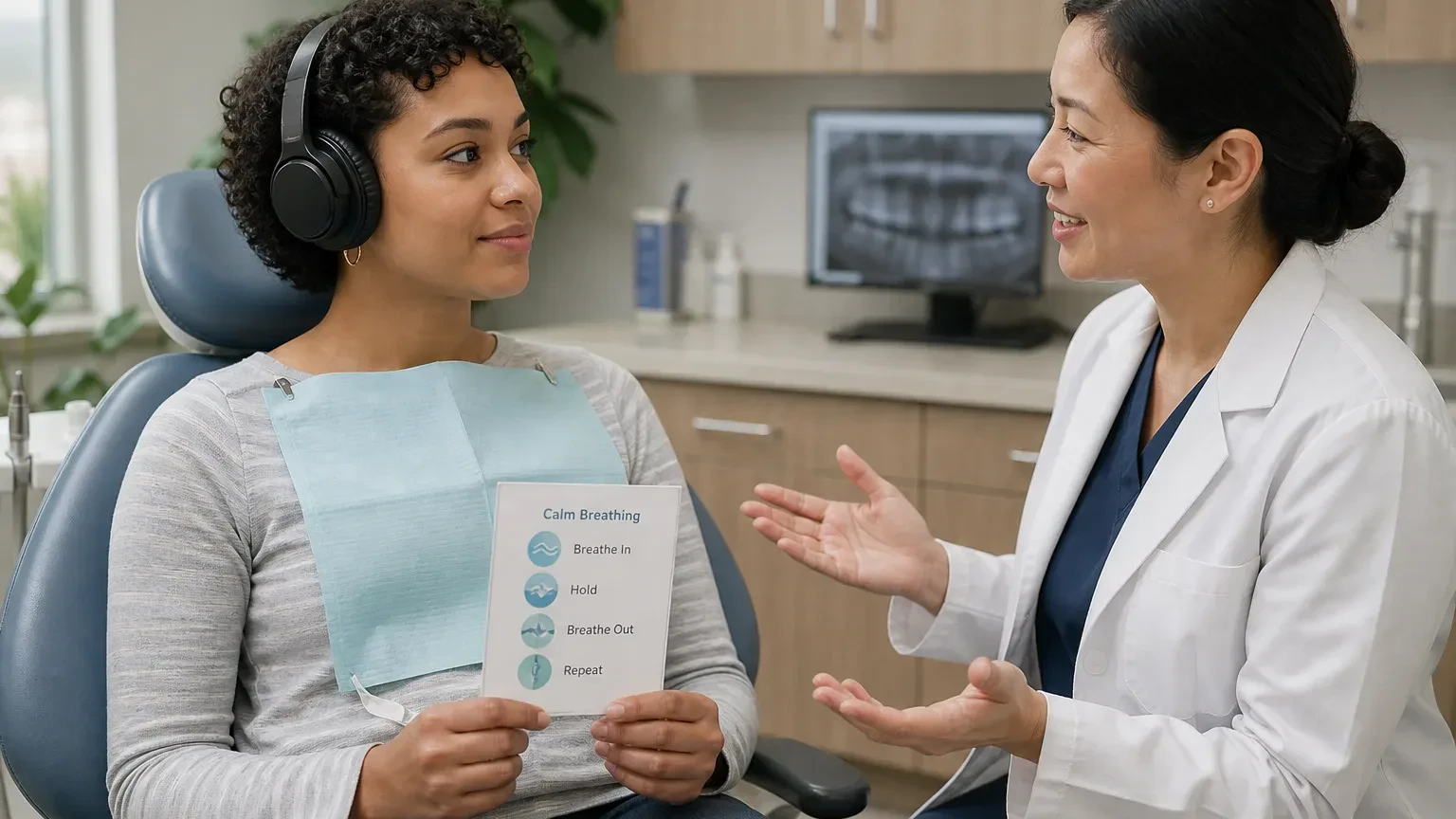
Raise your stop hand, sit up if needed, sip water when allowed, and breathe out longer than you breathe in. Ask the clinician to describe only the next thirty seconds. Headphones or a stress object can help once you resume. MedlinePlus notes that breathing strategies and support people can reduce medical-setting anxiety for many people.
Should I reschedule if I cry?
Not automatically. Many visits continue successfully after a short break. Reschedule if panic escalates, numbness cannot be achieved comfortably, or you and the dentist agree today’s goal should shrink. A shorter completed step often builds more confidence than forcing a full plan through tears. For ongoing intensity, ask about comfort medicines after screening.
Afterward, write what preceded the tears—waiting time, a particular instrument, a cost discussion—so the next visit can adjust. If crying pairs with avoidance that is taking over your health decisions, mental-health support can work alongside dentistry. Tears are data, not a verdict.
Some people cry from relief when a long-avoided visit finally begins, or when a dentist responds with unexpected kindness. That still counts as normal. Others tear up when discussing cost or hearing a longer treatment list; ask to pause the clinical work and handle the emotional wave before instruments return. You can also ask the team to save non-urgent financial details for a follow-up call when you are upright and clothed, which helps many people think more clearly.
 Stop, reset, continue.
Pauses protect dignity
Ask for a pause before you hit overwhelm if you can feel it rising. Sitting up, removing the napkin briefly, and resetting your breath are ordinary accommodations. You do not need to perform composure to deserve careful dentistry. If tears come from relief after finally being heard, that is allowed too—healing emotions and clinical care often arrive in the same appointment.
 Compassion over awkward jokes.
Kindness is part of skill
Notice whether staff offer water, a moment, and a plan to continue gently. That response is a professional standard worth seeking. For a practice known for patient, nonjudgmental care when emotions run high, use Find a Dentist and mention dental anxiety when you book. Crying at the dentist is human; the right team makes space for it without turning it into a story you have to apologize for.
Crying at the dentist is a normal stress response. Pause, breathe, communicate, and choose teams that treat tears as information—then continue care at a pace your nervous system can trust.
Related articles
Keep exploring related topics from Dental Country.
How Do You Calm Dental Anxiety?
You calm dental anxiety by naming triggers, telling the dental team early, pacing the visit with a stop signal, and pairing breathing or distraction with honest pain-control questions—progress counts more than feeling perfectly calm.
Read article
What Happens At A First Dental Visit?
Most first dental visits move from paperwork and conversation to an exam, possible imaging, and a written plan—treatment can often wait until you understand options and feel ready.
Read article
Can You Ask For Sedation If You Are Afraid Of The Dentist?
Asking for sedation when you fear the dentist is appropriate; offices may offer nitrous, oral medicine, or IV options after screening—sedation is a tool, not a character judgment.
Read article
How Do You Find A Dentist For Anxious Patients?
Finding a dentist for anxious patients means prioritizing how the office listens and paces care—comfort options matter, but respectful communication is the first filter.
Read article