

What Age Should Kids Get Braces?
Many children first see an orthodontist around age 7, but braces often wait until more permanent teeth erupt. Learn what early visits decide.

Reviewed by Dr. Sean Myran, DMDDoctor of Dental Medicine, University of Pennsylvania
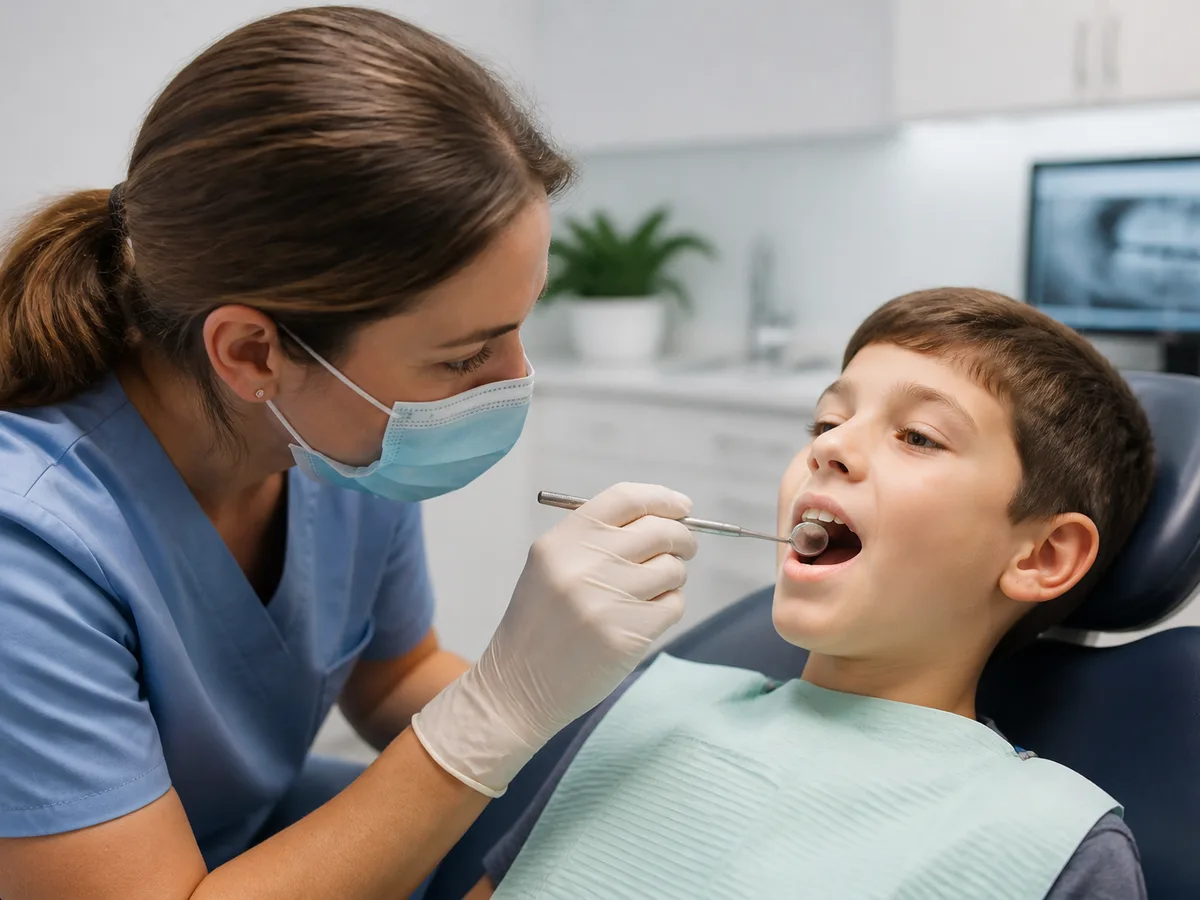
Many children should have an orthodontic evaluation around age 7, but that does not mean every 7-year-old needs braces. Early visits look for bite problems, jaw growth concerns, crowding, crossbites, habits, and eruption patterns while some baby teeth are still present. MouthHealthy explains that dentists may refer children to an orthodontist for braces evaluation. The goal is to decide whether to watch, guide growth, or start treatment.
What The Early Visit Decides
- Watch: mild crowding or spacing may simply need periodic checks as teeth erupt.
- Intercept: crossbites, severe crowding, harmful habits, or jaw growth issues may benefit from earlier care.
- Wait for full braces: many children start comprehensive braces closer to ages 11 to 14, once more permanent teeth are in.
 Timing is based on growth and eruption.
An early visit is a planning visit
Parents sometimes expect a yes-or-no braces answer. A better early evaluation explains what is developing normally, what needs monitoring, and what could become harder if ignored until all permanent teeth erupt.
Why Some Kids Start Early
Phase one treatment may be recommended when waiting could make correction more difficult or risky. Examples include a narrow upper jaw causing crossbite, front teeth at higher trauma risk, severe crowding blocking eruption, or habits affecting the bite. Early treatment is usually limited and followed by observation. It does not always eliminate the need for full braces later.
Readiness matters too. A child who cannot tolerate brushing, food limits, or appliance instructions may struggle with braces even if the teeth are ready. Parents should understand the daily role they will play. What Can You Eat With Braces? and How Do You Clean Teeth With Braces? are useful previews before brackets go on.
Cost and schedule also belong in the timing conversation. Early appliances, full braces, retainers, and repair visits can span years. How Much Do Braces Cost? gives questions to ask so families know what is included and whether a phase one fee is separate from later comprehensive treatment.
A second opinion can be useful when one office recommends immediate treatment and another recommends observation. Bring the same records if possible and ask each clinician to name the risk of waiting. If the answer is "crowding may get worse," that is different from "a crossbite is shifting the jaw" or "a permanent tooth may not erupt without help." Specific risk makes timing easier to judge.
Children also need to be emotionally ready for repeated visits and home care. A child who panics during simple dental cleanings may need a slower introduction, while a motivated child with a clear bite problem may handle early care well. Parents set the routine, but the child still has to live with the appliance every day.
Ask whether baby teeth should be removed, left alone, or monitored. Eruption timing can change the plan, and a child who looks too young for full braces may still need space guidance or habit counseling. The answer should be explained in plain language. Parents should leave knowing the next checkpoint.
Ask what happens if you wait
The most helpful question is not only "Does my child need braces?" Ask what changes if you wait six months, a year, or until more permanent teeth erupt. To schedule a local evaluation, use find a dentist and ask whether the office sees children for early orthodontic checks.
A Parent-Friendly Frame
Kids usually get braces when the problem, growth stage, permanent teeth, and cooperation all line up. An early orthodontic visit gives you a map. Sometimes the map says start now. Often it says watch carefully and be ready at the right moment.
Related articles
Keep exploring related topics from Dental Country.
How Long Do Braces Take?
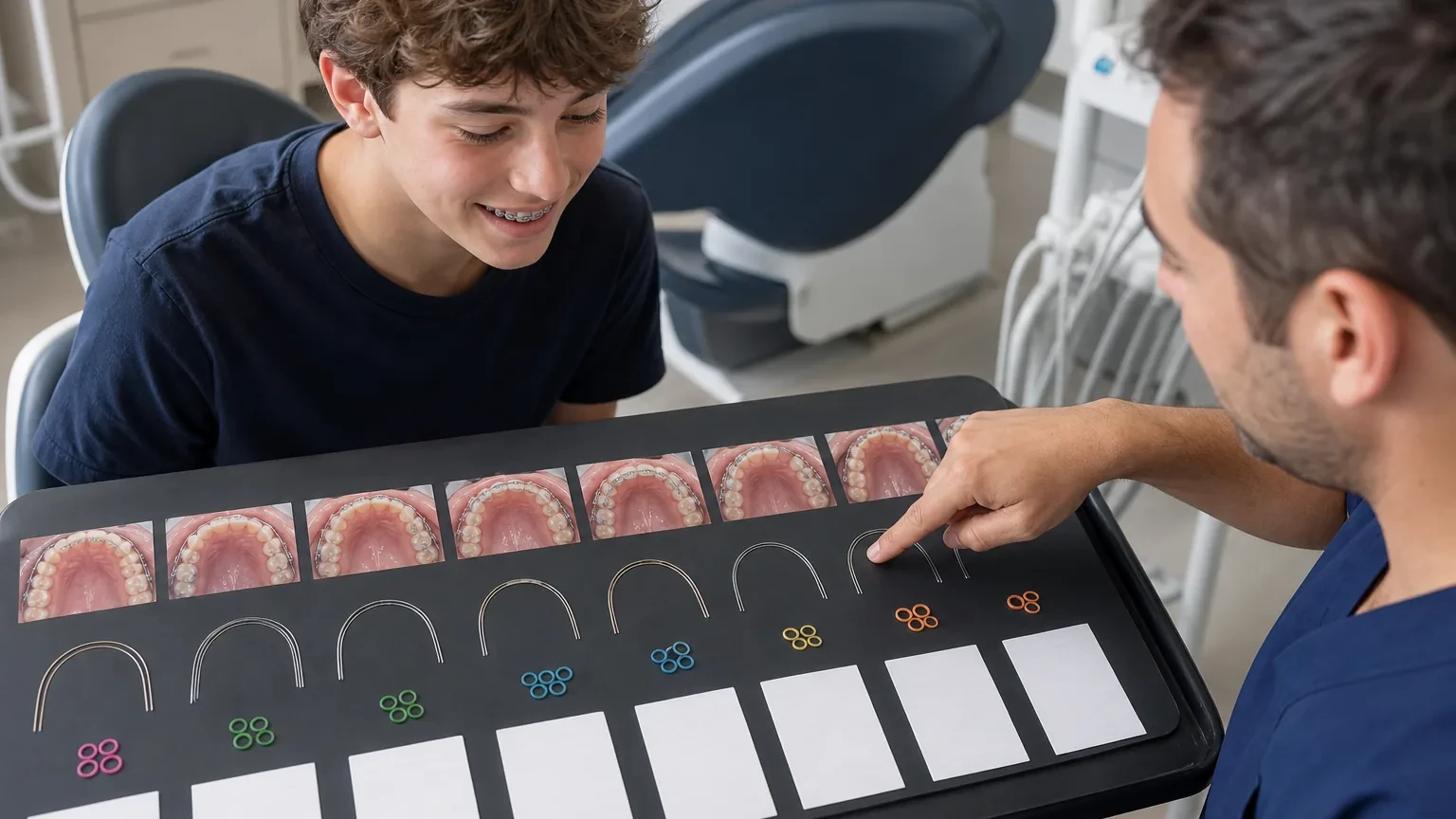
Braces timing is a range, not a promise. The tooth movement that looks small in the mirror may not be the movement controlling the calendar.
Read article
Do Braces Hurt?
Braces soreness has a pattern: pressure first, chewing tenderness next, then gradual settling. Pain that breaks that pattern deserves attention.
Read article
What Can You Eat With Braces?
Eating with braces is less about giving up normal meals and more about changing texture, bite size, and habits that bend wires or pop brackets.
Read article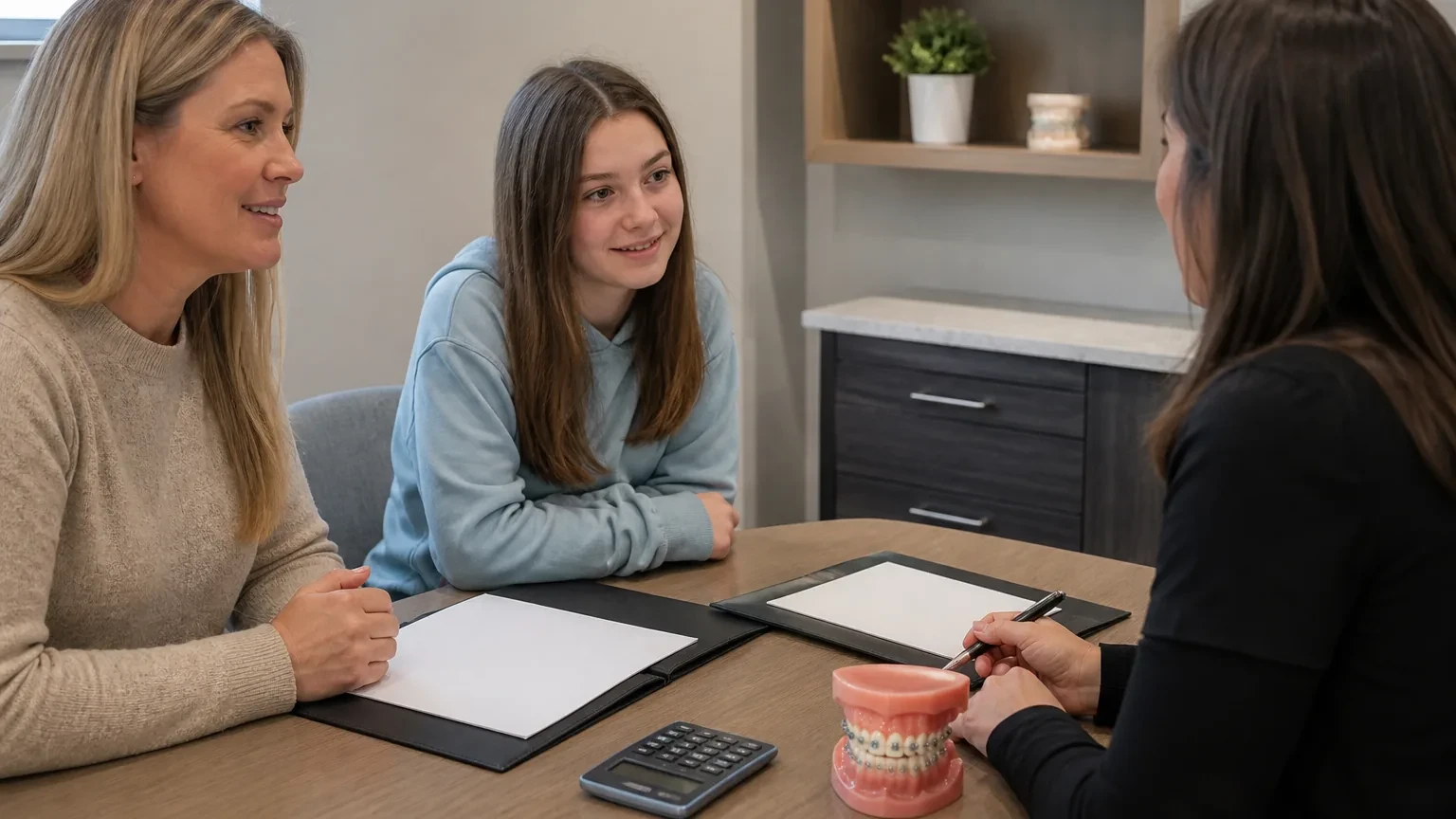
How Much Do Braces Cost?
A braces fee is not only the brackets. Records, visits, appliance choices, retainers, and repair policies all shape the number you compare.
Read article