
How Do You Clean Teeth With Braces?
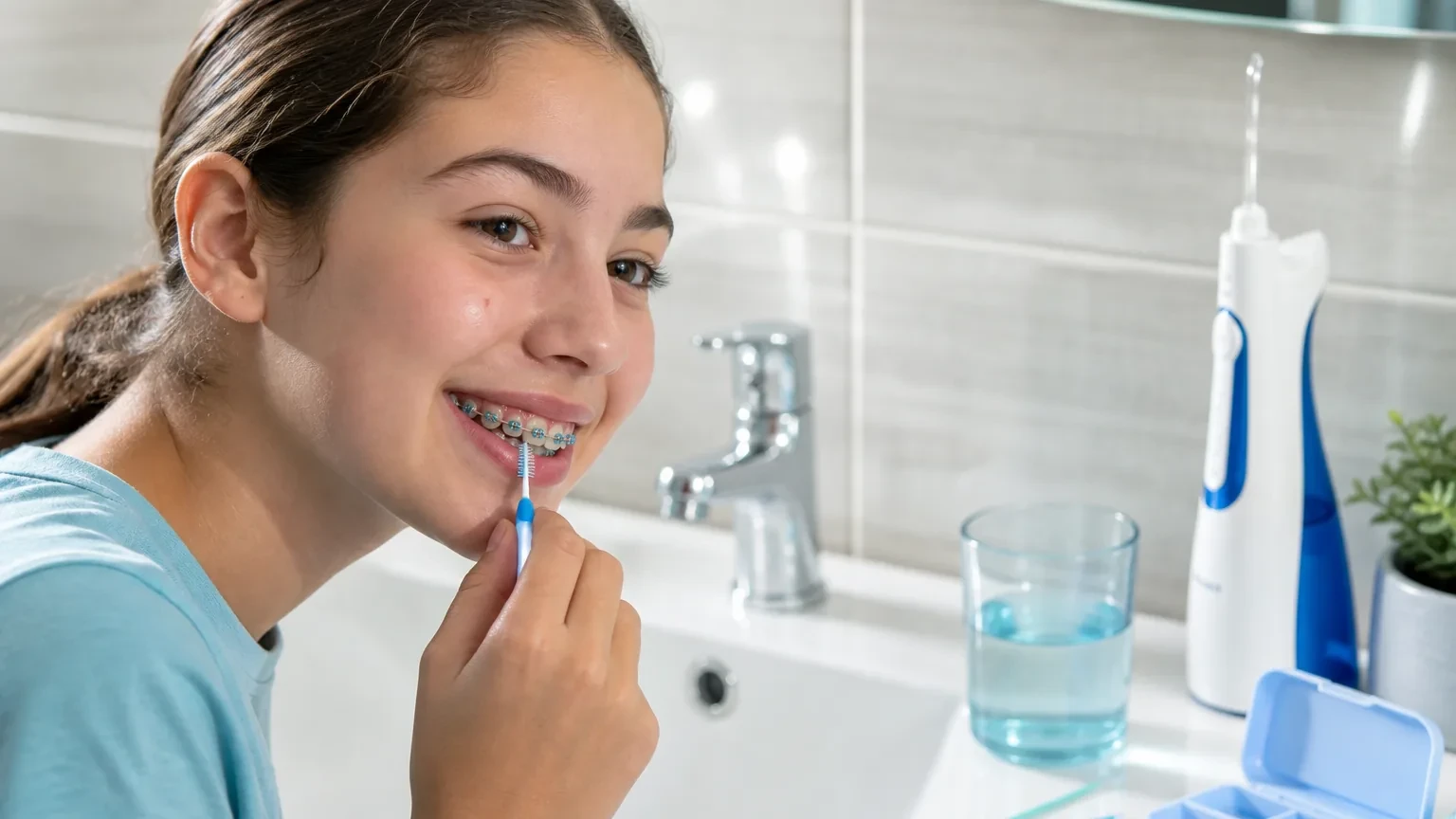
Cleaning teeth with braces takes brushing above and below brackets, flossing under wires, and watching plaque-prone spots around the gums daily.

Reviewed by Dr. Sean Myran, DMDDoctor of Dental Medicine, University of Pennsylvania
Cleaning teeth with braces takes more detail than brushing without brackets. Plaque gathers around bracket edges, under wires, and along the gumline. If it stays there, enamel can develop white spots, gums can swell, and cavities can start during treatment. MouthHealthy stresses brushing and flossing carefully around braces, which is the daily work that protects both your teeth and your treatment schedule.
A Braces Cleaning Routine
- Rinse first. Swish water to loosen food after meals.
- Brush the gumline. Angle bristles where teeth meet gums before focusing on brackets.
- Brush above and below brackets. Clean the top edge, bottom edge, and chewing surfaces.
- Clean under the wire. Use an interdental brush where your orthodontist says it fits safely.
- Floss daily. Threaders, orthodontic flossers, or water flossers can help, but technique matters.
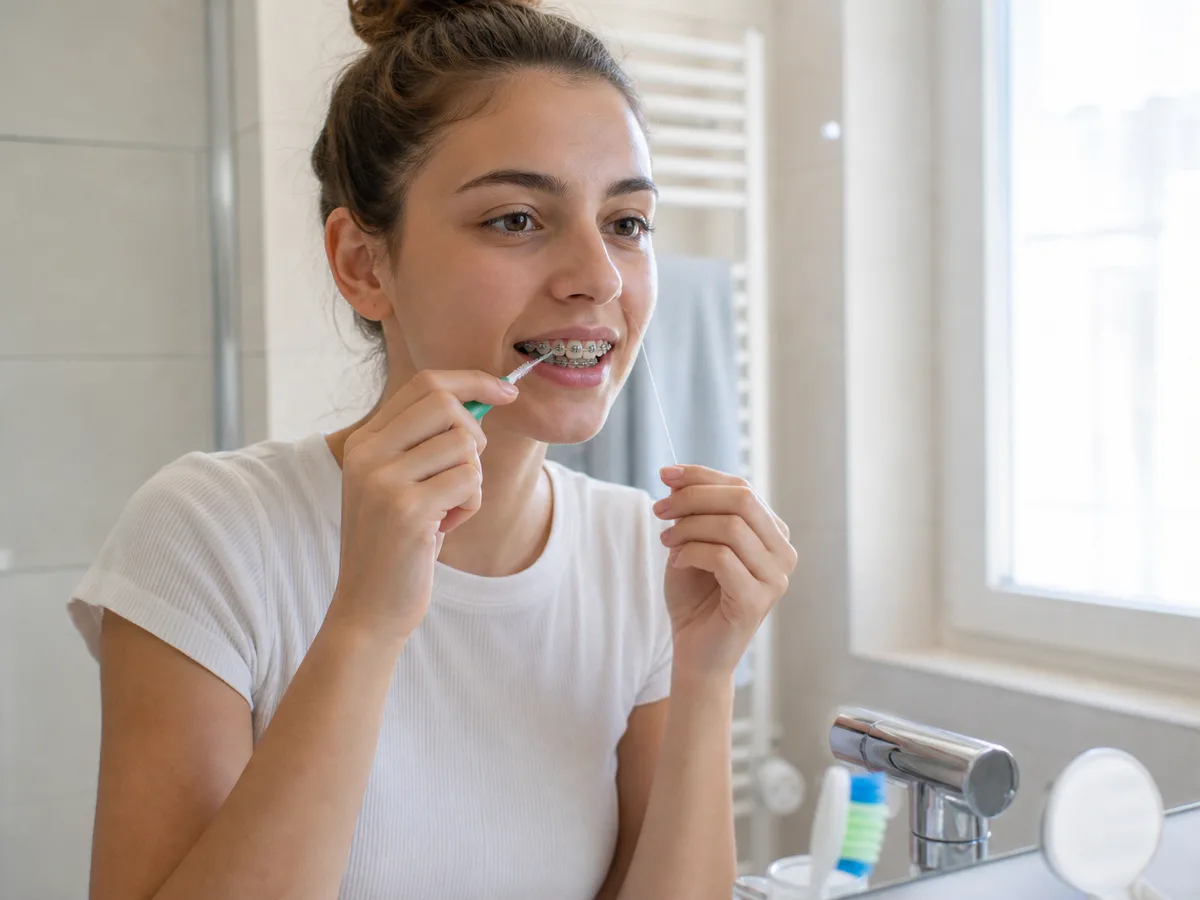 The missed spots are usually predictable.
Aim for the bracket edges
Many patients brush the middle of the bracket and miss the border where plaque sits. Slow down at the gumline, then sweep around each bracket. Bleeding gums are often a sign to improve cleaning and call if swelling or pain persists.
Tools That Can Help
A soft-bristled toothbrush or electric brush, fluoride toothpaste, floss threaders, orthodontic floss picks, interdental brushes, and a water flosser can all have a place. None of them replaces careful attention. A water flosser can remove debris, but many patients still need string floss or a specific tool to clean contact points. Ask your hygienist to watch your technique, not just hand you supplies.
Food choices affect cleaning. Sticky, starchy, and sugary foods can cling around brackets long after a meal. If you are building school or work routines, What Can You Eat With Braces? helps match meals to easier cleanup. If a bracket comes loose during brushing or eating, use What Happens If A Bracket Comes Off? rather than ignoring it.
Watch for chalky white marks near brackets, puffy gums, bad taste, bleeding that does not improve, or food always stuck in the same place. Those are signs to ask for coaching. Cleaning problems can delay wire changes if gums are too inflamed or cavities need treatment. That delay can affect the timeline described in How Long Do Braces Take?.
Fluoride may be part of the plan, especially for patients who snack often, have dry mouth, or already show early white spots. Your dentist may recommend a fluoride toothpaste, rinse, gel, or in-office varnish depending on age and risk. Do not add strong products for a child without instructions. The safest approach is a routine that your dental team has actually watched you perform.
Timing helps. Brush before school or work, rinse after lunch if brushing is unrealistic, and do the most careful cleaning before bed. Parents may need to inspect a child's brackets at night with good lighting. Adults with rushed mornings can keep a second brush at work. The point is to remove plaque daily, not to create a routine so complicated that nobody follows it. Consistency beats a perfect routine attempted twice a week. Plaque does not wait for convenient evenings. Neither should your best daily brushing effort.
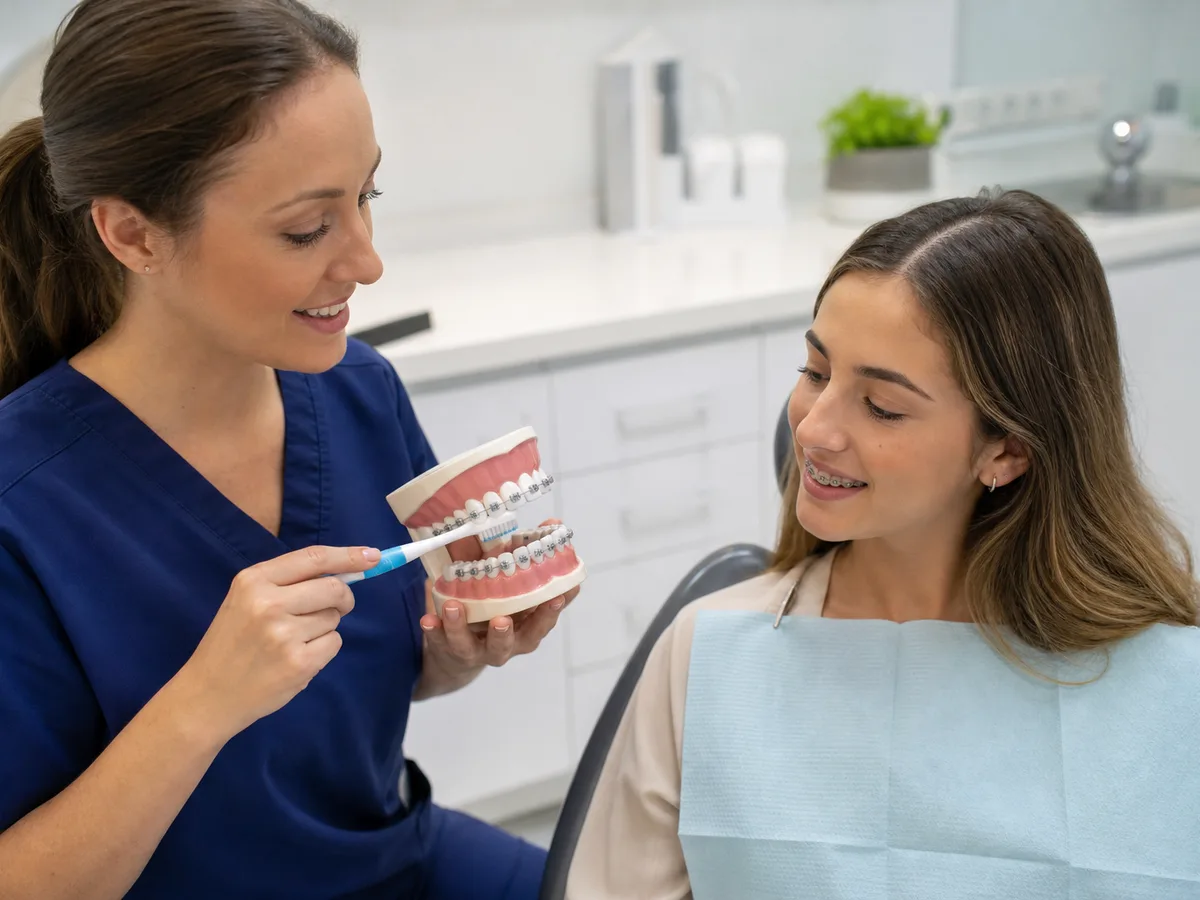
Get your technique checked
The best demonstration happens in your mouth, with your brackets and your problem areas. Use find a dentist if you need a cleaning, fluoride advice, or an orthodontic hygiene check during treatment.
The Habit That Wins
Clean after meals when you can, and make the night routine the non-negotiable one. Braces add minutes, not mystery. The patients who do best are not perfect brushers; they are consistent enough that plaque never gets weeks to harden around brackets.
Related articles
Keep exploring related topics from Dental Country.
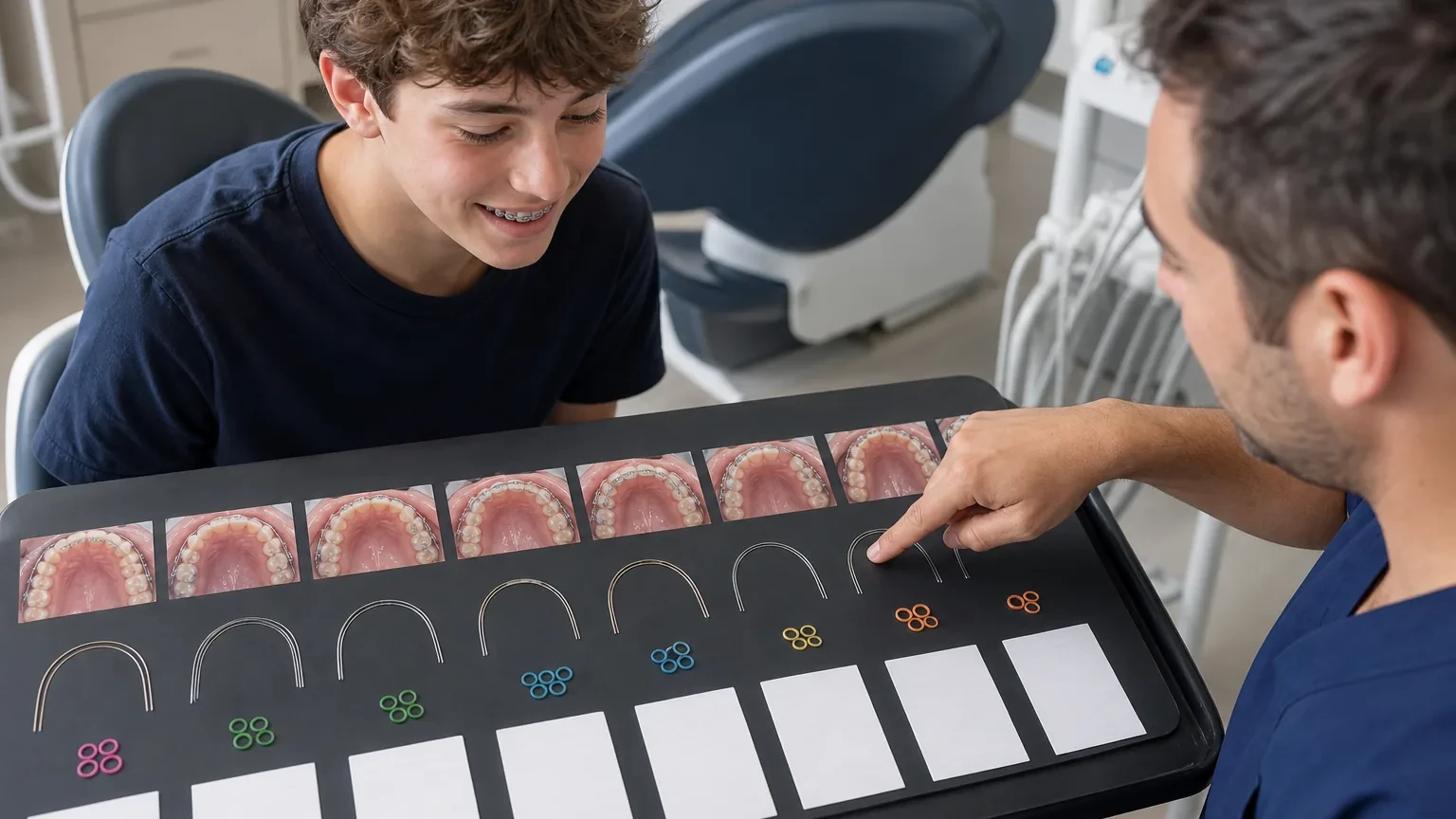
How Long Do Braces Take?
Braces timing is a range, not a promise. The tooth movement that looks small in the mirror may not be the movement controlling the calendar.
Read article
Do Braces Hurt?
Braces soreness has a pattern: pressure first, chewing tenderness next, then gradual settling. Pain that breaks that pattern deserves attention.
Read article
What Can You Eat With Braces?
Eating with braces is less about giving up normal meals and more about changing texture, bite size, and habits that bend wires or pop brackets.
Read article
How Much Do Braces Cost?
A braces fee is not only the brackets. Records, visits, appliance choices, retainers, and repair policies all shape the number you compare.
Read article