
How Long Do Braces Take?
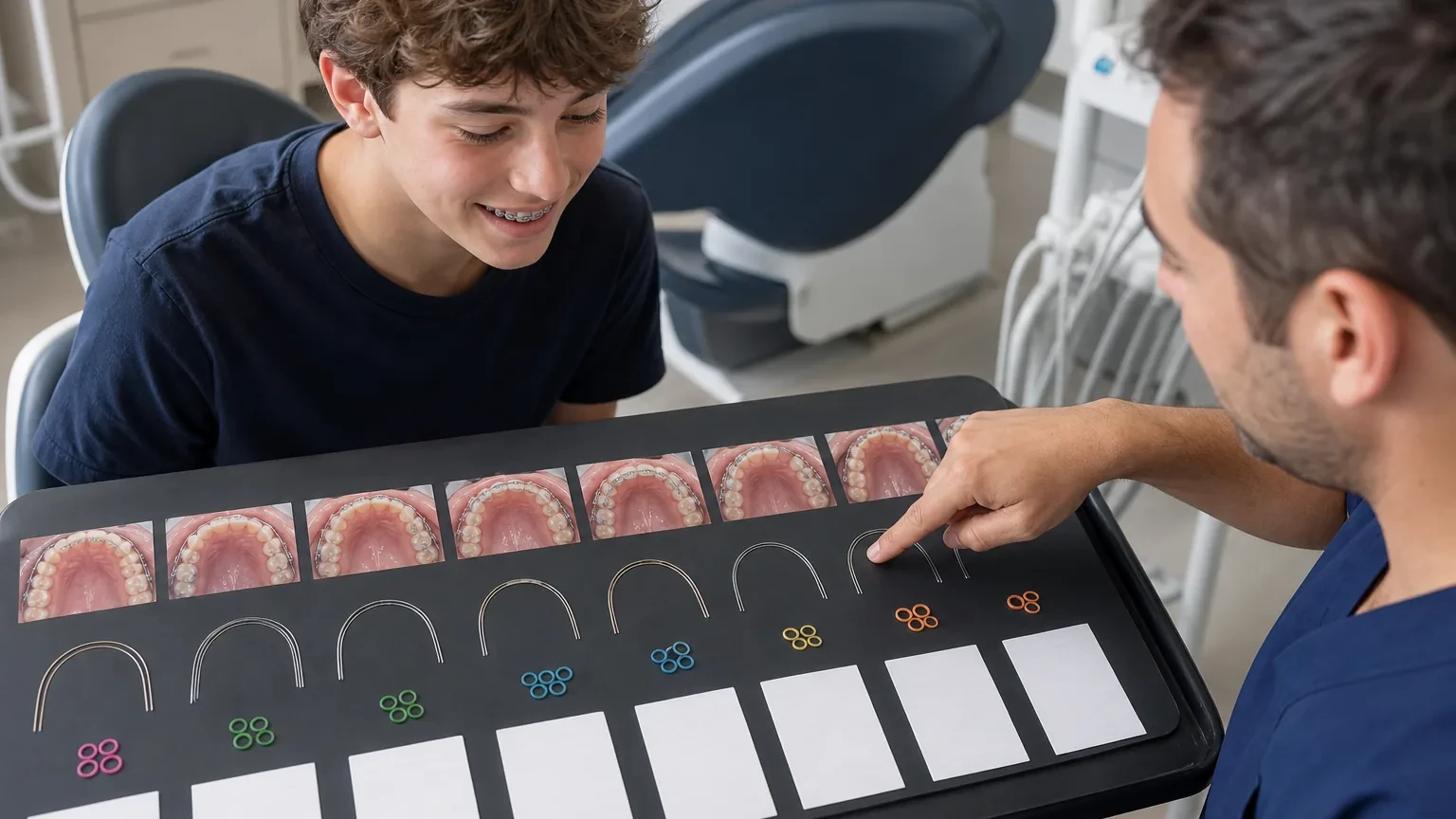
Braces often take 12 to 24 months, but tooth movement, bite correction, repairs, elastic wear, growth, and hygiene can change the finish date.

Reviewed by Dr. Sean Myran, DMDDoctor of Dental Medicine, University of Pennsylvania
Most full braces treatment takes about 12 to 24 months, but that range only makes sense after an orthodontist looks at the teeth, bite, roots, gums, and growth pattern. Mild spacing can move faster. Deep bites, crossbites, impacted teeth, missing teeth, or jaw growth concerns can take longer. Mayo Clinic notes that braces move teeth by applying steady pressure, so the timeline depends on biology as much as bracket style.
The Timeline Drivers
- Alignment: crowded or rotated teeth usually need early wire changes before bite details can be refined.
- Bite correction: overbite, underbite, crossbite, or open bite often controls the longer part of treatment.
- Anchorage and elastics: rubber bands work only when worn as directed, and inconsistent wear can add months.
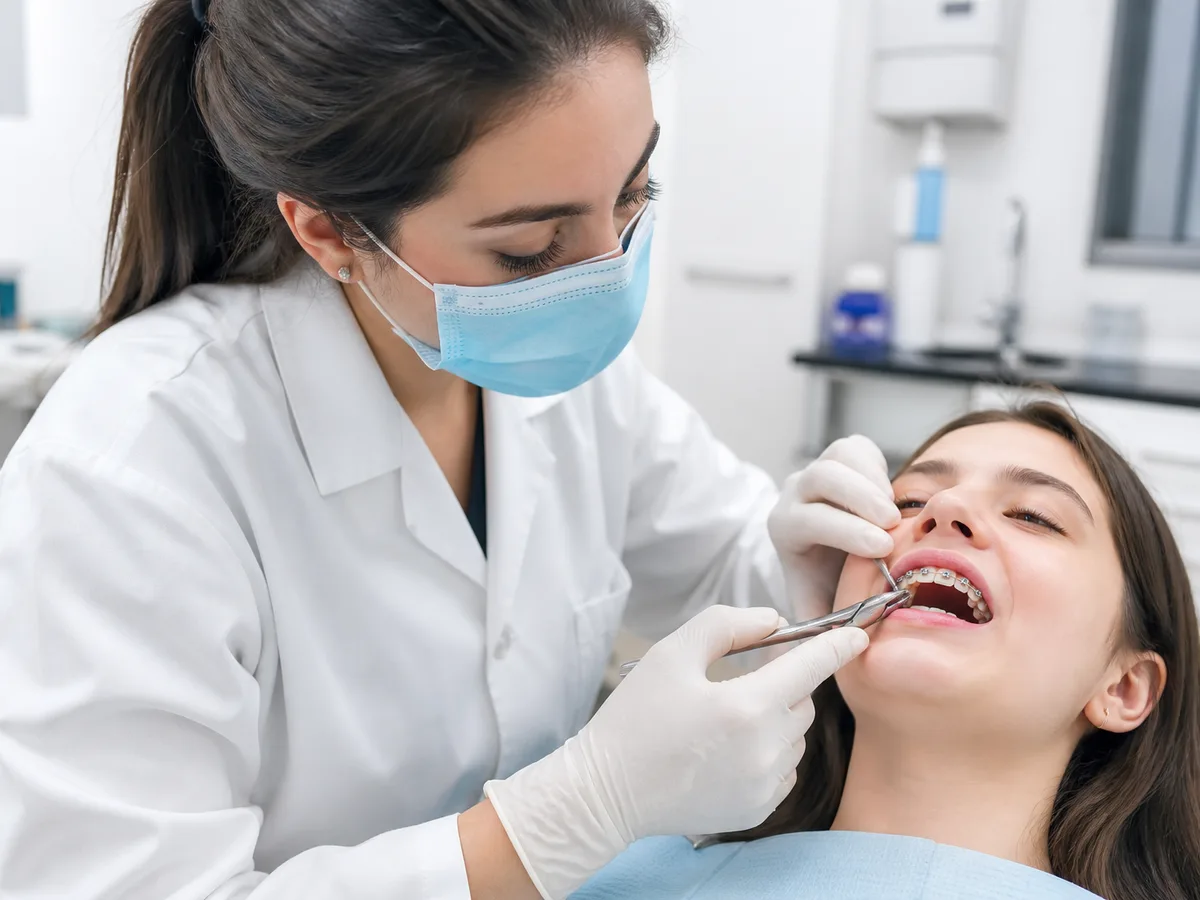
- Repair visits: loose brackets and bent wires slow movement until the appliance is back in control.
- Finishing: the last bends may be about root position and bite contact, not just straight front teeth.
 Visible straightening is only one milestone.
The longest step may be hidden
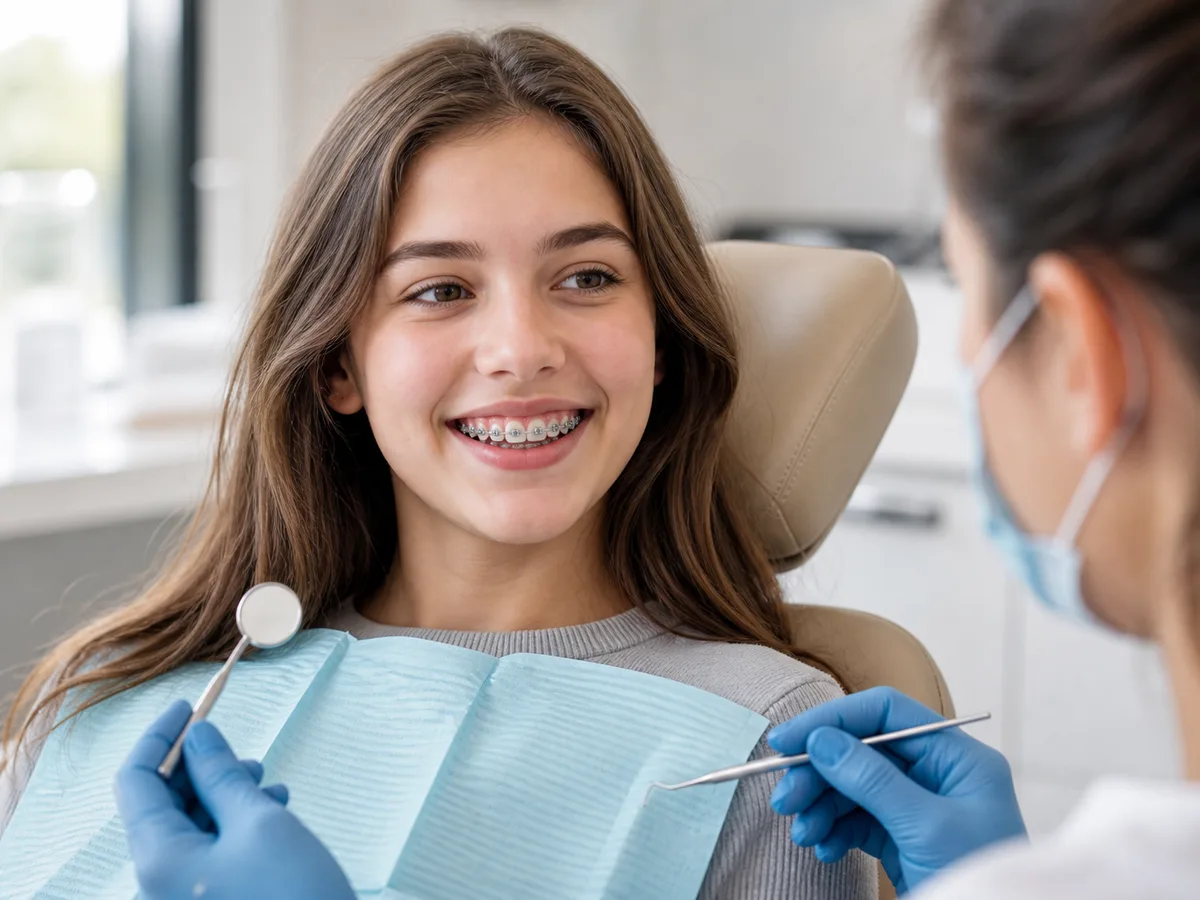
Patients often judge progress by the front teeth because that is what they see first. Orthodontists also watch molars, root angles, midlines, and how upper and lower teeth fit. A smile can look straighter long before the bite is stable enough to remove brackets.
What Can Shorten Or Stretch The Estimate
Age can matter, but it is not the whole story. Teens may benefit from growth during some corrections, while adults can still move teeth predictably when gums and bone are healthy. The bigger issue is whether treatment starts with untreated cavities, gum inflammation, short roots, or dental work that changes the plan. If you are also comparing appliance choices, Metal Vs Ceramic Braces: Which Is Better? explains why bracket material is only one part of the timing conversation.
Your schedule matters too. Missed visits, long gaps for travel, broken brackets, and skipped elastics can turn a realistic estimate into a moving target. Ask which movement controls your projected finish date. A careful answer might sound like, "alignment should be quick, but the bite correction is the longer phase." That is more useful than a single month count without context.
Comfort and food choices also affect timing. A wire that is bent by hard food may keep working, but not necessarily in the intended direction. If you are new to brackets, pair your timeline questions with What Can You Eat With Braces? and Do Braces Hurt? so the first month feels less improvised.
Ask for milestones, not just months
A useful consultation gives a range, the reason for that range, and signs that treatment is on track. If you need a local orthodontic opinion, use find a dentist and ask whether the office provides a written timeline after records are reviewed.
If the estimate changes, ask what new finding changed it. A delayed eruption, stubborn rotation, bite interference, poor elastic wear, or a repair pattern each points to a different solution. The most reassuring office notes the reason and explains what you can do next, whether that means better rubber-band consistency, a different wire, extra records, or simply patience while roots settle into a safer position.
Photos taken at intervals can help you see slow progress, but they should not replace the orthodontist's measurements. Ask what the next visible milestone should be.
How To Read The Finish Date
Treat the estimate as a working plan. Early visits show how your teeth respond; later visits decide whether the bite is stable and whether retainer plans are ready. Braces should come off when the correction is durable enough to protect, not simply when the calendar reaches a hoped-for date.
Related articles
Keep exploring related topics from Dental Country.

Do Braces Hurt?
Braces soreness has a pattern: pressure first, chewing tenderness next, then gradual settling. Pain that breaks that pattern deserves attention.
Read article
What Can You Eat With Braces?
Eating with braces is less about giving up normal meals and more about changing texture, bite size, and habits that bend wires or pop brackets.
Read article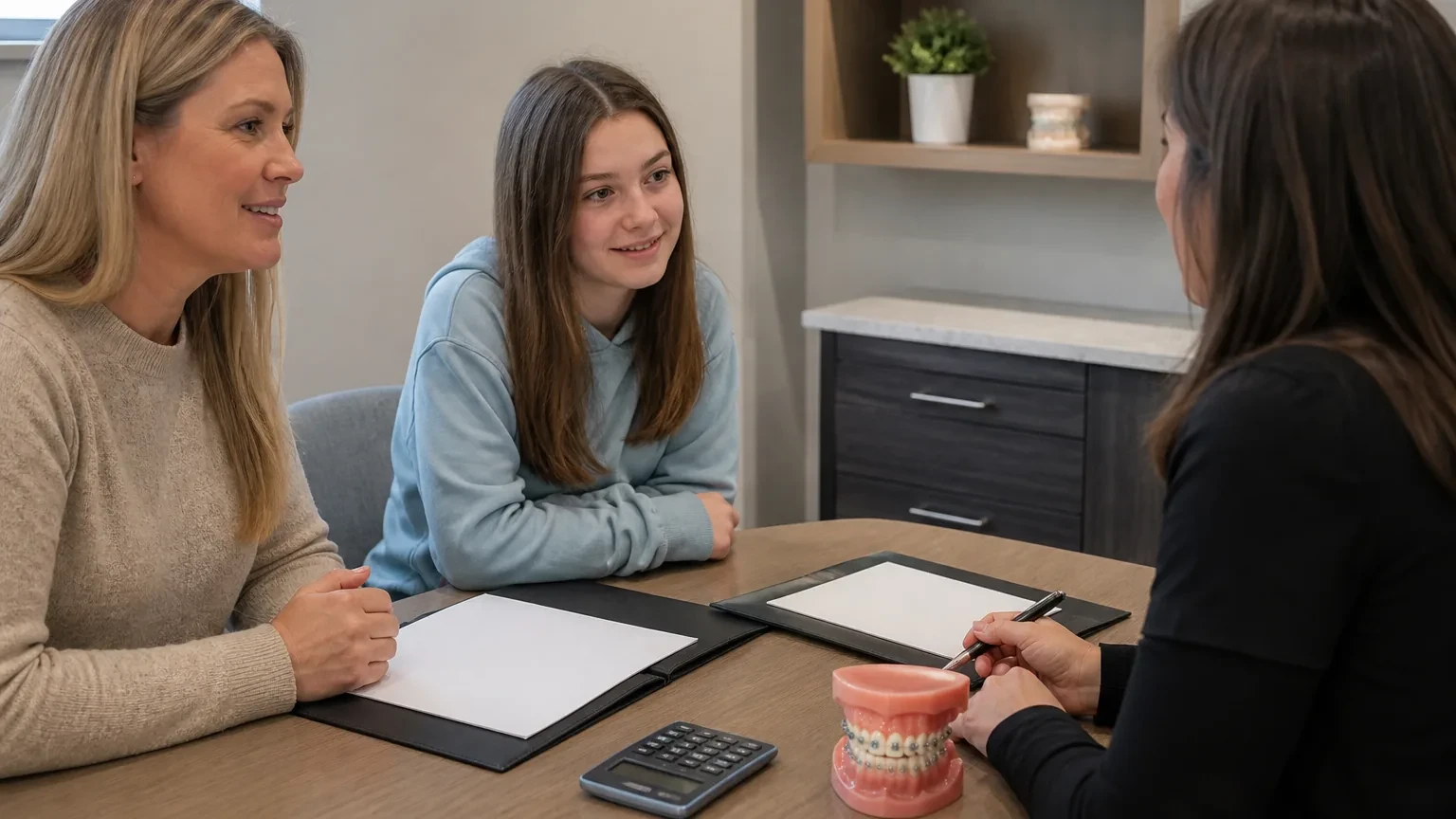
How Much Do Braces Cost?
A braces fee is not only the brackets. Records, visits, appliance choices, retainers, and repair policies all shape the number you compare.
Read article
Can Adults Get Braces?
Adult braces are common, but the consultation has a different tone: gum health, restorations, bite wear, and realistic goals come first.
Read article