
Can You Use An FSA Or HSA For Dental Work?
FSAs and HSAs can often pay qualified dental expenses like cleanings, fillings, and crowns. Learn how the accounts work and which cosmetic care may not qualify.

Reviewed by Dr. Sean Myran, DMDDoctor of Dental Medicine, University of Pennsylvania
Yes—flexible spending accounts (FSAs) and health savings accounts (HSAs) can often be used for qualified dental expenses such as exams, cleanings, fillings, crowns, root canals, dentures, and many other treatments that diagnose, treat, or prevent dental disease. IRS Publication 502 describes dental treatment as a deductible medical expense when it is for the prevention or alleviation of dental disease. Purely cosmetic work that does not treat disease—such as whitening for appearance alone—usually does not qualify. Employer plan documents and card administrators can add their own substantiation rules on top of IRS definitions.
How the accounts work differs. An FSA is typically employer-sponsored with a use-it-by deadline (subject to any limited carryover or grace period your employer offers). An HSA pairs with a high-deductible health plan, belongs to you, and can roll forward year to year. Both can sit beside dental insurance: insurance pays according to the dental policy first or in coordination with your claims process, and the account can cover deductibles, coinsurance, and non-covered qualified care—including balances left after an annual maximum is reached.
Eligible Care Versus Common Exclusions
- Often eligible: preventive visits, restorations, periodontal therapy, oral surgery, dentures, and medically necessary orthodontics when they treat a dental condition.
- Often ineligible: teeth whitening for appearance, pure cosmetic veneers, and supply items your administrator rejects—see which procedures are considered cosmetic.
- Gray zones: some services need a dentist’s letter of medical necessity; save chart notes and receipts.
- Insurance overlap: you generally cannot double-dip the same dollar as an insurance-paid amount and an FSA reimbursement.
HealthCare.gov explains that FSAs let you set aside pre-tax money for qualified medical expenses. Keep itemized receipts, explanations of benefits, and the provider’s name and address. Card swipes can still be audited later, so a clean paper trail matters as much as the purchase itself.
 Itemized receipts survive audits.
Pay the qualified balance, keep the paperwork
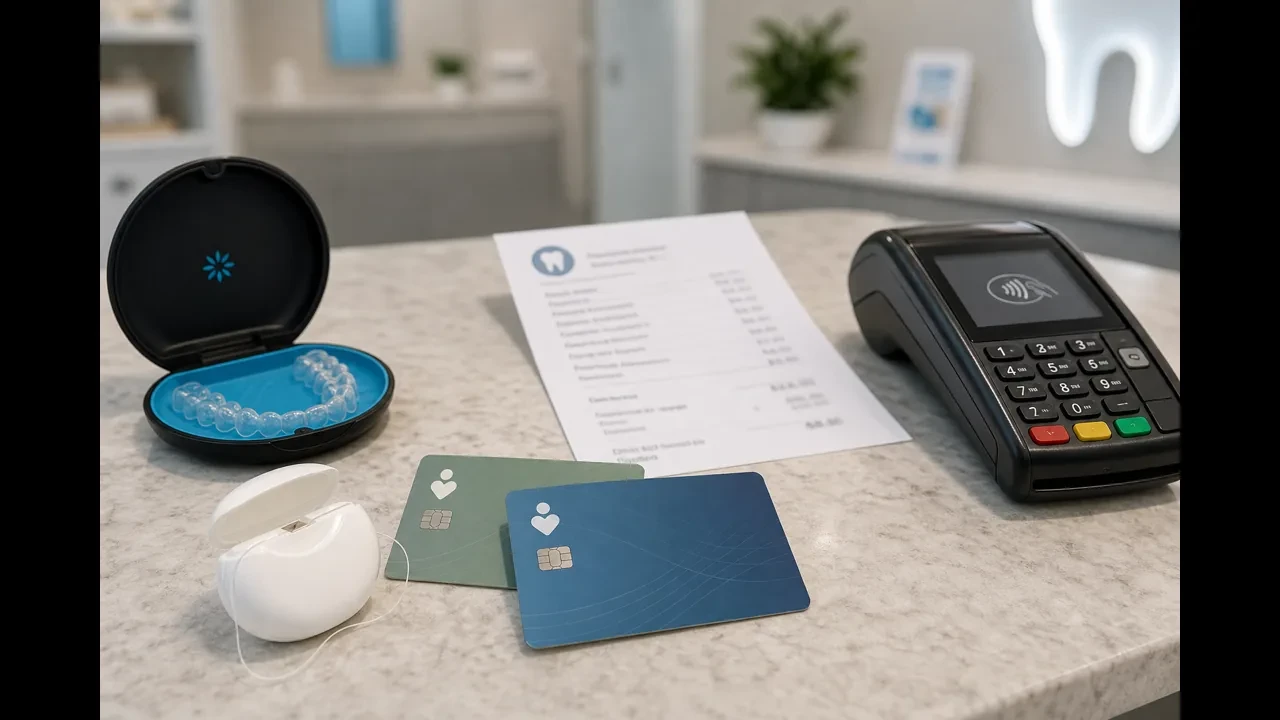
Ask the front desk for an itemized receipt that names the procedures, dates, and amounts—not only a card terminal slip. If insurance is still processing, you may pay your estimated share and reconcile when the explanation of benefits arrives. For large treatment plans, ask whether the office can split charges across visits so FSA timing matches your plan year. If a cosmetic add-on is bundled with medically necessary work, request separate line items so you do not accidentally run ineligible fees through the account. When in doubt, check with your administrator before the visit.
How-It-Works Tips For Dental Cases
- Confirm open enrollment contribution limits and any FSA run-out or carryover rules with HR.
- Estimate likely dental spending—including unpaid implant or crown balances—before you elect FSA dollars.
- Use HSA funds carefully if you also want the account to grow for future medical costs.
- Coordinate with office payment plans so you are not double-committing the same dollars.
- Ask whether implant or crown treatment will leave a balance your account should reserve for later visits.
Year-end FSA pressure is real: if your employer offers only a limited carryover, map unfinished dentistry to dates that still fall inside the plan year when clinically safe. HSAs do not share that same use-it-or-lose tension, yet large withdrawals still deserve a receipt file you could show in an audit years later. Keep digital copies of EOBs beside the account transaction list so reimbursements and insurance payments tell one consistent story.
 Eligibility follows the diagnosis.
Separate necessary care from cosmetic extras
During treatment planning, highlight which codes are disease-related and which are elective cosmetics. That short list guides both insurance expectations and account eligibility. If your administrator denies a claim you believe qualifies, ask what documentation would help and whether your dentist can clarify diagnosis. For an office that itemizes clearly and helps patients use benefits thoughtfully, use Find a Dentist and mention FSA or HSA payment when you schedule. Bring your card and administrator phone number to larger visits.
FSAs and HSAs are powerful tools for qualified dental care when you respect IRS categories, employer deadlines, and documentation rules. Use them for disease-related dentistry, keep receipts, and verify cosmetic exclusions before you swipe.
Related articles
Keep exploring related topics from Dental Country.

Does Dental Insurance Cover Implants?
Implant benefits are plan-specific: many policies limit or exclude them, while others pay a share after waiting periods, annual maximums, and missing-tooth clauses.
Read article
What Is A Dental Insurance Annual Maximum?
The annual maximum is a yearly ceiling on what the dental plan pays toward covered services; once it is reached, remaining allowed fees are usually yours.
Read article
PPO Vs HMO Dental Insurance: What's The Difference?
Dental PPOs trade higher flexibility and variable out-of-network costs for choice; dental HMOs emphasize assigned networks, scheduled copays, and tighter referral paths.
Read article
Does Dental Insurance Cover Braces?
Braces benefits hinge on age caps, lifetime orthodontic maximums, waiting periods, and whether your plan treats alignment as covered or excluded care.
Read article