

Does Dental Insurance Cover Implants?
Dental implant coverage varies by plan year, waiting periods, and medical necessity rules. Learn which decision factors to check before you schedule surgery.

Reviewed by Dr. Sean Myran, DMDDoctor of Dental Medicine, University of Pennsylvania
Dental insurance sometimes helps pay for implants, but coverage is never automatic and often incomplete. Plans differ by employer, insurer, state marketplace rules, and calendar year. Some policies exclude implants entirely; others cover a portion of the crown, abutment, or surgical placement after a waiting period—and only when the procedure meets that plan’s definition of covered care. MouthHealthy notes that dental benefits vary widely and that you should review your plan details before treatment. Treat every percentage you hear in a brochure as a starting point to verify, not a guarantee.
Coverage decisions usually turn on several factors at once: whether implants appear in your schedule of benefits, whether a missing-tooth clause blocks payment for a tooth lost before the policy began, whether an annual maximum will be exhausted by surgery alone, and whether the plan prefers a bridge or denture as an alternate benefit. Preauthorization paperwork can clarify the estimate before you sit in the chair—see what dental preauthorization involves. Your explanation of benefits after claim submission is still the final word for that claim.
Decision Factors That Change Implant Benefits
- Explicit implant language: look for codes or benefit lines for implant body, abutment, and crown—not only “major services.”
- Waiting periods: major services often unlock after months of continuous coverage; switching mid-year can restart clocks.
- Annual maximum: even a “covered” implant can leave a large balance once the yearly cap is hit—review how annual maximums work.
- Alternate benefits: a plan may pay only what a removable partial or bridge would have cost.
- Frequency and tooth history: replacements, failed implants, or teeth extracted before enrollment may be limited or denied.
- Medical vs dental payer: rare trauma or reconstructive cases sometimes involve medical insurance; most routine tooth replacement stays on the dental side.
Ask the office for a written pre-treatment estimate that lists fees, expected plan payment, and your estimated share. Confirm whether the dentist is in-network under your PPO or HMO dental plan, because out-of-network balances can erase an optimistic coverage percentage. Plans also change each renewal, so last year’s coworker experience may not match your booklet this year.
 Booklets beat hallway rumors.
Read the implant line, not only the slogan
Open the summary of benefits and search for implants, oral surgery, and prosthetics. Note any exclusion tables, age limits, and “not covered if missing before effective date” clauses. Call the member number on your card with the tooth number and proposed codes so the representative speaks to your case, not a generic script. Save the reference number from that call. If two departments give conflicting answers, ask for the answer in writing or through the portal before you schedule surgery. Bring that printout to the consult so the treatment coordinator is not guessing from memory.
Questions Worth Asking Before You Book
- Does my plan list implant placement and the implant crown as covered services this year?
- Is there a waiting period, missing-tooth clause, or alternate benefit that reduces payment?
- How much of the annual maximum will this case use, and what remains for other care?
- What is my estimated out-of-pocket if the claim pays less than expected?
- Would staging extraction, bone graft, and crown across plan years change my share?
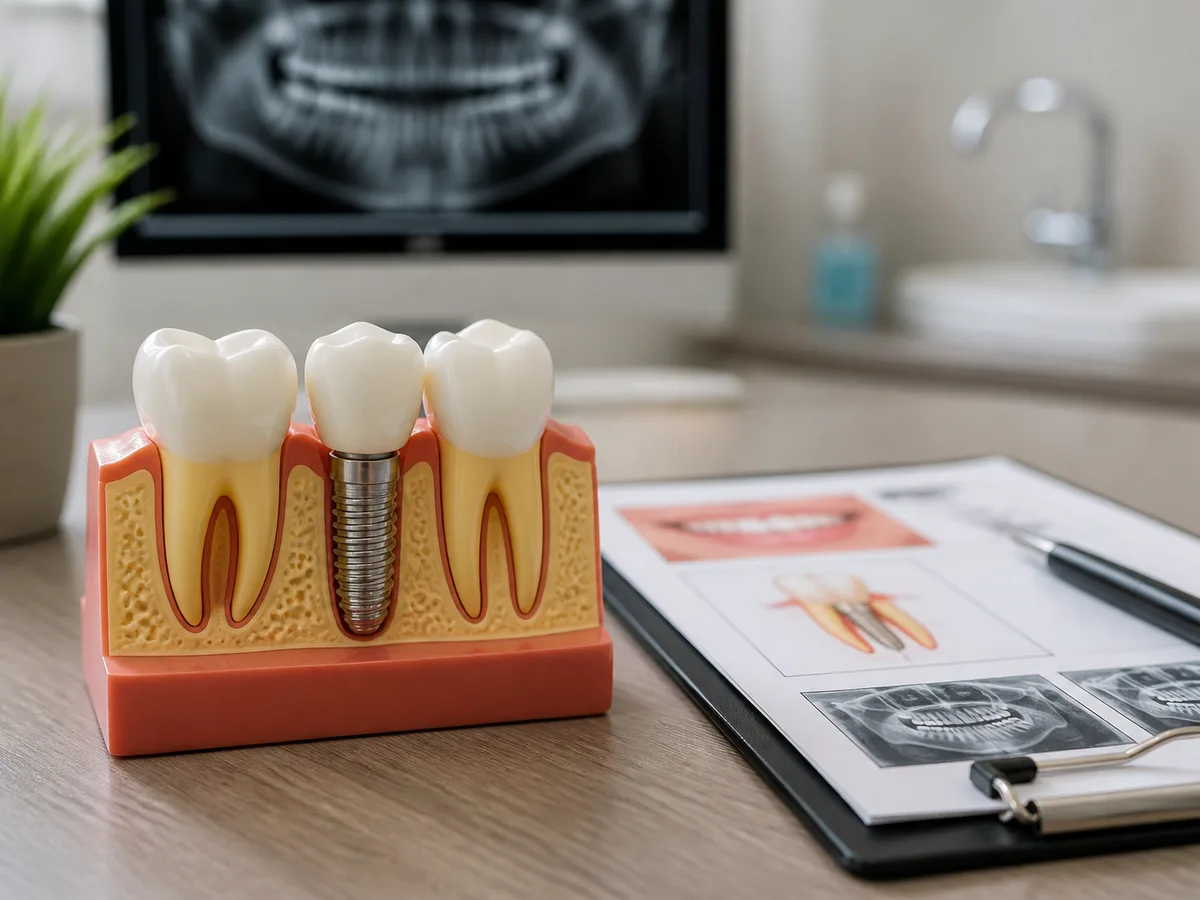 Estimates reduce surprise balances.
Get numbers in writing before surgery day
A solid estimate separates office fees from projected insurance payment and lists exclusions the front desk already sees often. Ask whether bone grafts, temporary teeth, or CT scans are billed separately. If cash timing is tight, ask about sequencing and whether payment plans are available for the balance insurance will not touch. For a practice that will walk through benefits without pressure, use Find a Dentist and request an implant consult that includes a benefits check. Bring your insurance card, a recent explanation of benefits, and any prior denial letters so the team can spot patterns early.
Implants can be an excellent clinical choice even when insurance contributes little or nothing. Coverage is a financing detail layered on top of diagnosis, bone volume, bite, and long-term maintenance—not the sole reason to proceed or delay. Verify this year’s plan documents, get a written estimate, and decide with both the clinical plan and the real out-of-pocket number in view.
Related articles
Keep exploring related topics from Dental Country.

What Is A Dental Insurance Annual Maximum?
The annual maximum is a yearly ceiling on what the dental plan pays toward covered services; once it is reached, remaining allowed fees are usually yours.
Read article
PPO Vs HMO Dental Insurance: What's The Difference?
Dental PPOs trade higher flexibility and variable out-of-network costs for choice; dental HMOs emphasize assigned networks, scheduled copays, and tighter referral paths.
Read article
Does Dental Insurance Cover Braces?
Braces benefits hinge on age caps, lifetime orthodontic maximums, waiting periods, and whether your plan treats alignment as covered or excluded care.
Read article
Can You Use An FSA Or HSA For Dental Work?
FSAs and HSAs generally reimburse qualified dental care that treats or prevents disease, while purely cosmetic procedures are usually ineligible without a medical need.
Read article