
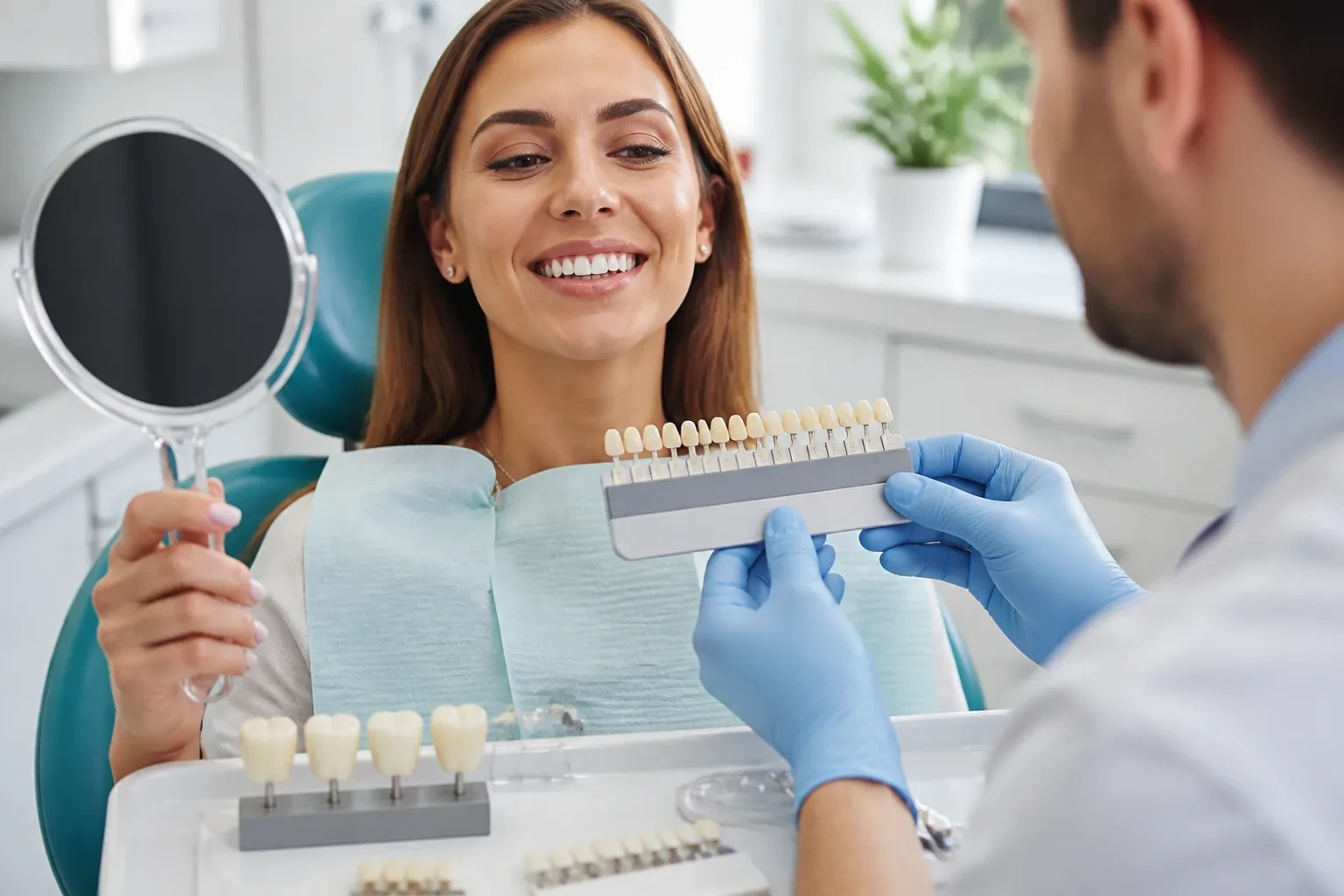
Cosmetic Dentistry: Procedures, Costs & Finding the Right Specialist.
Explore cosmetic dentistry options like veneers, whitening, bonding, and aligners — with cost ranges and tips to choose a specialist.

What Is Cosmetic Dentistry?
Cosmetic dentistry focuses on improving the appearance of your teeth, gums, and smile. While general dentistry addresses oral health needs, cosmetic procedures are primarily elective — though many also provide functional benefits like restored bite, easier cleaning, improved speech, and reduced wear on remaining teeth.
A skilled cosmetic dentist combines artistic eye with technical precision to transform stained, chipped, crooked, or missing teeth into a confident, beautiful smile that fits your face naturally. Unlike general dentistry, where the goal is health, cosmetic dentistry blends health with aesthetics — meaning the practitioner needs both clinical excellence and an artist’s sense of proportion, color, and balance.
The American Academy of Cosmetic Dentistry estimates that nearly one-third of US adults are dissatisfied with their smile, with discoloration, crooked teeth, and missing teeth ranking as the top concerns. Modern cosmetic procedures address all of these — often with minimally invasive techniques that preserve more natural tooth structure than treatments of even a decade ago.
This guide covers every major cosmetic procedure, real cost ranges, how to choose a qualified specialist, what to expect during treatment, and the technology shaping the field in 2026. Whether you’re considering a single whitening session or a complete smile makeover, this resource will help you make an informed decision.
Common Cosmetic Procedures
From quick single-visit treatments to multi-phase transformations, modern cosmetic dentistry offers procedures for every budget, concern, and timeline. The eleven procedures below represent virtually every cosmetic intervention available in 2026.
Teeth Whitening
In-office whitening lightens teeth several shades in a single visit using professional-strength hydrogen peroxide gel and sometimes a special light. Take-home kits with custom trays work over 1–2 weeks and often last longer.
$100–$1,000
Dental Veneers
Thin porcelain shells bonded to the front of teeth. Correct discoloration, chips, gaps, and minor misalignment in 2–3 visits. Lifespan: 10–15 years with proper care.
$900–$2,500 per tooth
Dental Bonding
Tooth-colored composite resin applied to repair chips, cracks, discoloration, or small gaps. Most cases completed in a single visit. Less expensive than veneers but lasts 5–7 years.
$100–$400 per tooth
Clear Aligners
Virtually invisible removable aligners (Invisalign, ClearCorrect, others) that gradually straighten teeth without metal braces. Treatment typically 6–18 months.
$2,000–$8,000
Dental Implants
Permanently replace missing teeth with a titanium post and natural-looking crown. Preserves jawbone structure. The gold standard for tooth replacement — can last a lifetime.
$3,000–$5,000 per tooth
Gum Contouring
Reshapes uneven or excessive gum line for a balanced smile. Performed with laser (less bleeding, faster healing) or traditional scalpel. Often paired with veneers.
$200–$3,000
Tooth Reshaping
Also called enameloplasty — subtle removal of small amounts of enamel to fix length, shape, or surface irregularities. Painless, single-visit, immediate results.
$50–$300 per tooth
Composite Fillings
Tooth-colored fillings that blend invisibly. The cosmetic upgrade over silver amalgam. Can replace old metal fillings while restoring decayed teeth in one visit.
$150–$450 per tooth
Inlays & Onlays
Porcelain or composite restorations for teeth too damaged for a filling but not enough for a crown. Custom-made in a lab or milled in-office same day.
$650–$1,200 per tooth
Cosmetic Crowns
Full-coverage caps in all-porcelain or zirconia. Used for severely damaged or discolored teeth. Modern crowns are indistinguishable from natural teeth.
$1,000–$3,500 per tooth
Smile Makeover
A coordinated combination of procedures (e.g. whitening + veneers + gum contouring) designed as a single transformation. Multiple visits over weeks to months.
$5,000–$50,000+
Cosmetic Dentistry vs. General Dentistry
All licensed dentists can perform basic cosmetic procedures, but not all cosmetic work requires a specialist. Understanding the distinction helps you decide who to see.
General Dentistry
Primary focus: Oral health and disease prevention.
Typical services: Cleanings, fillings, root canals, extractions, crowns for damaged teeth, basic whitening.
When to see: Regular checkups, cavity treatment, dental pain, gum disease, missing teeth.
Cosmetic Dentistry
Primary focus: Appearance, aesthetics, and smile design.
Typical services: Veneers, advanced whitening, smile makeovers, cosmetic bonding, gum contouring, smile design.
When to see: Discoloration, chips, gaps, crooked teeth, gummy smile, overall smile transformation.
Importantly, cosmetic dentistry is not a recognized dental specialty by the American Dental Association — meaning any licensed dentist can advertise themselves as one. This makes selecting a qualified practitioner especially important, which we cover in detail below.
Real-World Cost Breakdown
What affects the cost
Several factors influence the price you’ll pay for cosmetic dentistry, often resulting in 2–5x variation between practices for the same procedure:
$Geographic location. Procedures in major metros (NYC, LA, Miami, San Francisco) routinely cost 30–60% more than the same work in mid-sized cities.
$Materials. Premium porcelain (e.max, feldspathic) costs significantly more than composite. Zirconia premium more than standard porcelain. The lab handling fabrication matters too.
$Practitioner experience. Top cosmetic dentists with AACD accreditation and decade-plus experience charge 40–100% more than newer practitioners — for good reason.
$Complexity of the case. A single veneer to match an existing tooth is harder (and pricier) than a set of 8 veneers designed together.
$Technology used. Practices with digital smile design, CAD/CAM same-day fabrication, and 3D printing typically charge a premium — but offer faster results and better-fitting work.
Insurance and financing
Most cosmetic procedures are not covered by dental insurance because they are classified as elective. However, three exceptions worth checking with your insurer:
Composite fillings may be partially covered if replacing a failed amalgam filling. Crowns are often covered when treating a damaged tooth, even if you select a more aesthetic option. Implants may be partially covered when replacing a tooth lost to injury or decay (not for purely cosmetic missing teeth).
For purely cosmetic procedures, financing options include CareCredit (medical credit card with deferred-interest promotions), in-house payment plans offered by many cosmetic practices, dental school clinics (50–70% off market rates with supervised student work), and HSA/FSA funds for medically-necessary portions.
Choosing Procedures by Concern
Start with what bothers you about your smile. Each concern has multiple solutions at different price points.
I Want Whiter Teeth
Start with professional whitening (cheapest, fastest). If teeth are intrinsically discolored or have damage, consider veneers or bonding.
I Have Chips or Cracks
Bonding for minor chips (fast, affordable). Veneers for larger issues. Crowns for severely damaged teeth.
I Have Crooked Teeth
Clear aligners for moderate misalignment. Traditional braces for complex cases. Veneers for minor cosmetic-only correction.
I Have Missing Teeth
Dental implants (gold standard). Bridges (for adjacent teeth). Partial dentures (lowest cost, removable).
I Have a Gummy Smile
Laser gum contouring (quick, minimal recovery). Crown lengthening for more dramatic results. Botox in some cases.
I Want a Complete Transformation
A smile makeover combines whitening, veneers, gum contouring, and other procedures into a coordinated plan.
Smile Makeovers
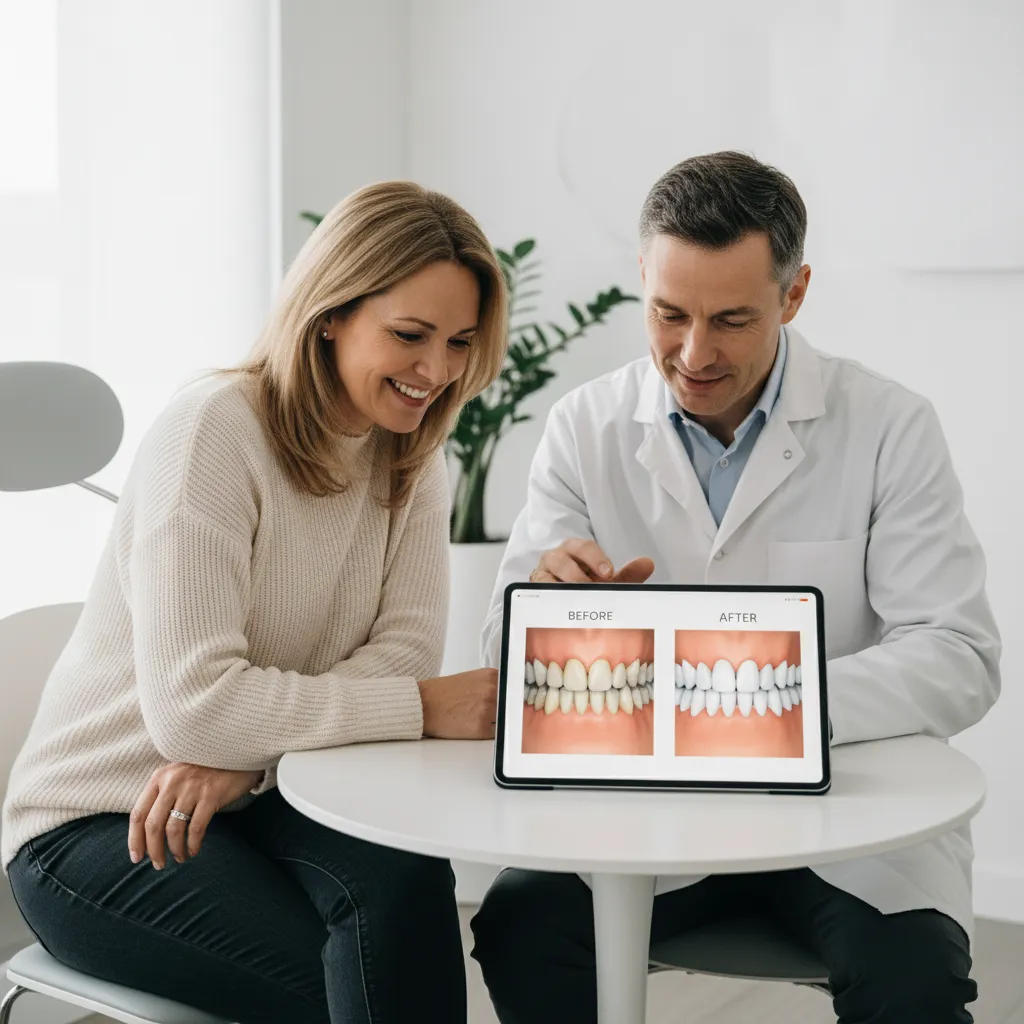
A smile makeover combines multiple cosmetic procedures into a comprehensive treatment plan to achieve a complete transformation. Your dentist evaluates your goals, facial features, lip line, tooth proportions, and existing dental work, then designs a coordinated sequence of procedures.
A typical sequence might be whitening to establish a base shade, followed by veneers on the front teeth, gum contouring for symmetry, and bonding to fix any remaining details. The best smile makeovers look natural, not “too perfect.” A well-designed result respects your face shape, skin tone, and personality. Modern digital smile-design software lets you preview your expected results in 3D before committing to treatment — an enormous advantage over the trial-and-error approaches of even ten years ago.
Typical timeline: initial consultation and smile design (1–2 weeks), preparation appointments (1–3 visits), and final placement of the cosmetic work (1–2 visits). Total elapsed time runs 6–16 weeks. Cost ranges from $5,000 for limited makeovers to $50,000+ for full-mouth reconstructions with premium materials.
Are You a Good Candidate?
Most adults with healthy teeth and gums are candidates for cosmetic dentistry. Specific procedures have specific requirements, but the foundations are universal:
✓Healthy gums. Active gum disease must be treated before cosmetic work — otherwise the foundation isn’t stable enough.
✓Stable bite. Major bite problems may need orthodontic correction first, or veneers will fail prematurely from uneven forces.
✓Realistic expectations. Cosmetic work dramatically enhances your smile, but won’t make it match a stock photo. The best results look like the best version of your face, not someone else’s.
✓Good oral hygiene. Cosmetic work requires the same daily care as natural teeth to last. Skipping flossing will shorten the lifespan of any cosmetic work.
✓Sufficient enamel and tooth structure. Some procedures (especially veneers) require enough enamel to bond to. Severely worn teeth may need crowns instead.
✓Adult age. Most cosmetic work requires fully-developed teeth and jaws. Children and teens are usually steered toward orthodontics first.
✓No active grinding or clenching. Untreated bruxism will crack veneers and crowns quickly. A night guard may be required as part of treatment.
✓General health considerations. Certain medications, pregnancy, and uncontrolled chronic conditions may require delaying cosmetic procedures.

What to Expect: The Cosmetic Dentistry Process
Whether you’re getting a single veneer or a full smile makeover, the cosmetic dentistry process follows a consistent six-phase structure designed to protect your interests at every step — from initial consultation through long-term maintenance.
Consultation
Discuss your goals, review medical history, examination, X-rays, and intraoral photos. Often free or low-cost. Bring smile photos you like for reference.
Smile Design
Digital smile preview, wax-up models, and treatment plan with sequenced procedures and cost. Approval before any irreversible work begins.
Preparation
Tooth preparation, impressions or digital scans, and temporary veneers or crowns while permanent restorations are fabricated by the lab.
Placement
Final restorations are bonded or cemented into place. Adjustments for fit, bite, and color matching. Final polishing and photographs.
Recovery
Most procedures: 1–3 days of mild sensitivity. Implants: 3–6 months for full osseointegration before final crown.
Maintenance
Twice-yearly cleanings, daily flossing, night guard if needed, and periodic replacement (10–20 years for porcelain work).
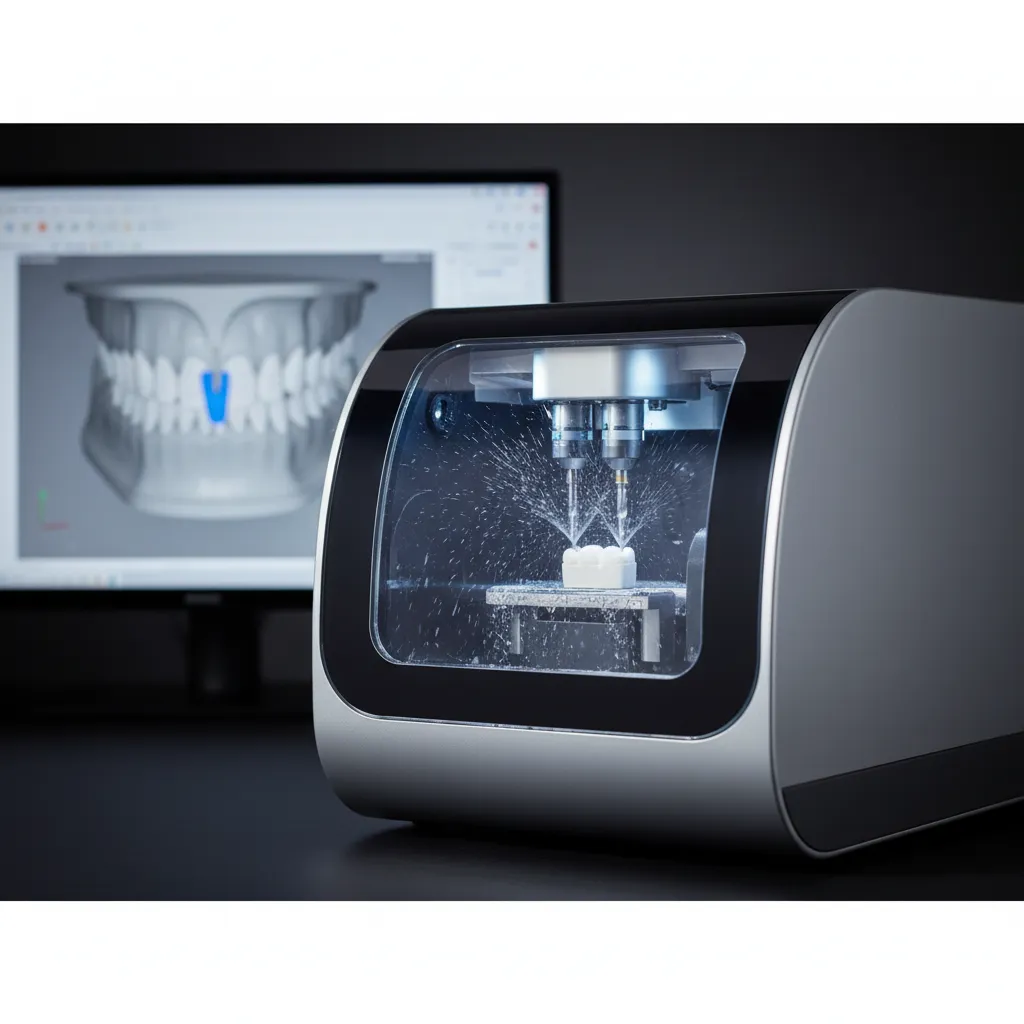
Cosmetic Dentistry Technology in 2026
The technology behind cosmetic dentistry has advanced dramatically in the last five years. Leading practices now use digital workflows that produce better-fitting, more natural-looking results in less time than ever before.
Digital Smile Design
3D modeling shows your expected results before any work begins. You can adjust shape, color, and proportions to your preference.
Same-Day CAD/CAM
Systems like CEREC and Planmeca PlanMill let dentists design and mill ceramic restorations in-office in 60–90 minutes — no temporary crowns needed.
AI Treatment Planning
AI software analyzes your face, smile line, and proportions to suggest cosmetic improvements proven to enhance natural attractiveness.
3D-Printed Try-Ins
Practice-printed temporary veneers let you “test drive” your new smile for days before the permanent restoration is made.
Laser Dentistry
Soft-tissue lasers perform gum contouring with less bleeding, faster healing, and often without anesthesia.
Intraoral Scanners
Replace messy putty impressions with a 60-second 3D scan. More accurate, more comfortable, and faster lab turnaround.
Risks and Important Considerations
Cosmetic dentistry is generally safe with low complication rates when performed by qualified practitioners, but every procedure has tradeoffs you should understand before committing.
Reversibility
Bonding and whitening are essentially reversible. Veneers and crowns require permanent enamel removal — you cannot easily “undo” them. Always confirm whether your chosen procedure is reversible before committing.
Sensitivity
Whitening can cause temporary sensitivity to hot and cold for a few days. Veneers may produce sensitivity for 1–3 weeks during adjustment. Persistent sensitivity beyond a month warrants follow-up.
Lifespan and Replacement
Veneers and crowns last 10–20 years on average. Replacement costs roughly the same as original placement. Factor this into long-term budgeting — cosmetic work is a recurring investment, not a one-time purchase.
Color Matching with Aging
Natural teeth darken slowly with age, but veneers do not. After 10–15 years, your veneers may look brighter than surrounding natural teeth. Whitening adjacent teeth periodically helps maintain harmony.
How to Choose a Cosmetic Dentist
There’s no formal specialty board for cosmetic dentistry, so quality varies dramatically between practices. Look for these specific signals:
Real Portfolio
Ask to see before-and-after photos of actual patients — not stock images or manufacturer marketing. The portfolio should show their own cases.
AACD Membership
Members of the American Academy of Cosmetic Dentistry commit to ongoing education and professional standards. Accredited (FAACD) members have passed rigorous exams.
Digital Smile Preview
Leading practices use software (or wax-up models) to show your expected results before treatment begins. If they can’t show you a preview, ask why.
Premium Lab Partner
Quality of veneers and crowns depends heavily on the dental lab. Ask which lab they use and why. The best cosmetic dentists work with elite domestic labs.
Continuing Education
Top cosmetic dentists pursue postgraduate training at institutions like the Kois Center, Dawson Academy, or Pankey Institute. Ask where they trained.
Transparent Pricing
A reputable practice provides a detailed written treatment plan with itemized costs before you commit. Beware of pricing that changes mid-treatment.
Patient Reviews
Cross-reference Google, Yelp, and Healthgrades reviews. Look for specific mentions of cosmetic work, not just general dental care.
Comprehensive Consult
Quality cosmetic consults run 60–90 minutes. A 15-minute rushed assessment is a red flag — cosmetic decisions deserve careful planning.
Maintaining Your Cosmetic Dental Work
Cosmetic dentistry is an investment, and protecting that investment requires intentional care. The same habits that protect natural teeth also extend the life of cosmetic work.
Daily Care
Brush twice daily with a soft-bristled brush and non-abrasive toothpaste. Floss daily — cosmetic work fails fastest where plaque accumulates.
Avoid Staining Foods
Coffee, red wine, tea, curry, and tomato sauce stain bonding and natural teeth (but not porcelain veneers). Rinse with water after consumption.
Night Guard
If you grind or clench, a custom night guard is essential. Replacement veneers without one are typically not covered by the practice’s warranty.
Professional Cleanings
Twice-yearly hygiene visits. Inform the hygienist about your cosmetic work — they may use special instruments that won’t scratch porcelain.
Avoid Damaging Habits
No chewing ice, pens, or fingernails. No using teeth to open packages. These habits crack veneers and chip bonding.
Touch-Up Whitening
If you have whitening or some veneers (but not all), occasional touch-up whitening keeps natural teeth matched to the brighter restorations.
Frequently Asked Questions
How long does cosmetic dentistry last?
Lifespan varies dramatically by procedure. Professional whitening lasts 6 months to 2 years before touch-ups. Dental bonding lasts 5–7 years. Porcelain veneers last 10–15 years on average, with some lasting 20+ years with excellent care. Dental implants can last a lifetime. Composite fillings last 7–10 years. Crowns typically last 10–20 years.
How much does cosmetic dentistry cost?
Costs range from $100 for a single composite bonding repair to $50,000+ for a complete smile makeover with premium veneers and implants. Most common procedures fall between $500 and $3,000 per tooth. Geographic location, materials, dentist experience, and case complexity all significantly affect pricing.
Is cosmetic dentistry covered by insurance?
Most cosmetic procedures are not covered because they’re classified as elective. Exceptions: composite fillings replacing failed amalgams, crowns treating damaged teeth (even when an aesthetic option is selected), and implants replacing teeth lost to injury or decay. Always verify coverage with your insurer before treatment.
What’s the difference between veneers and crowns?
Veneers cover only the front surface of a tooth and require minimal enamel removal — they’re ideal for cosmetic issues on otherwise healthy teeth. Crowns cover the entire tooth and require substantial enamel removal — they’re used for severely damaged, decayed, or worn teeth. Veneers are cosmetic; crowns are restorative.
Is cosmetic dentistry painful?
Most cosmetic procedures cause minimal discomfort because dentists use local anesthesia. Whitening and bonding are essentially painless. Veneers and crowns may cause mild sensitivity for a few days after preparation. Implant placement involves a few days of soreness similar to a routine extraction. Severe pain is not normal and warrants follow-up.
Are dental veneers reversible?
Traditional porcelain veneers require permanent removal of 0.5–0.7mm of enamel and are not reversible — you’ll always need veneers (or crowns) on those teeth going forward. Newer “no-prep” veneers (Lumineers, DURAthin) require no enamel removal and are theoretically reversible, though they don’t work for every case.
How do I find a good cosmetic dentist?
Look for AACD membership (Accredited members have passed exams), a real portfolio of patient before/after photos, digital smile design capabilities, premium dental lab partnerships, continuing education at institutions like Kois or Dawson, and transparent itemized pricing. Always schedule a 60–90 minute consultation before committing.
Can cosmetic dentistry fix crooked teeth?
Yes, with caveats. For minor cosmetic-only correction, veneers can mask the appearance of crooked teeth without orthodontic treatment. For moderate-to-severe misalignment or bite issues, clear aligners (Invisalign, ClearCorrect) or traditional braces are the appropriate solution. Combining orthodontics with cosmetic work often produces the best overall result.
How long does a smile makeover take?
A typical smile makeover runs 6–16 weeks from initial consultation to final placement. Limited makeovers (whitening + bonding) can be completed in 2–4 weeks. Full-mouth reconstructions with implants and multiple procedures can take 6–12 months. Same-day veneers and crowns using CAD/CAM can compress some timelines significantly.
Can I get cosmetic dentistry during pregnancy?
Routine cleanings and emergency dental work are safe during pregnancy and important for oral health. However, elective cosmetic procedures are typically postponed until after delivery to avoid X-ray exposure, certain anesthetics, and pregnancy-related gum sensitivity that can affect outcomes. Discuss timing with both your dentist and OB-GYN.
Find a Cosmetic Dentist Near You
Browse vetted cosmetic dentists in cities across the United States. Each city directory lists the top-rated providers, recent patient reviews, and contact information.